Many beginners focus on watering, sunlight, and fertilizers when their plants start struggling.
But there’s one hidden reason most people completely overlook — the quality of gardening tools.
If your potted plants are suddenly dying, not growing, or turning yellow, even after proper care, the problem might not be your routine…
👉 it could be the tools you’re using.
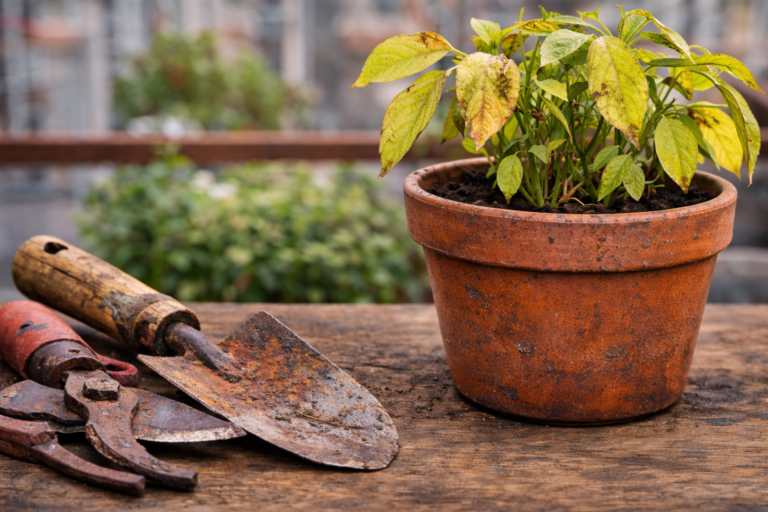
Cheap gardening tools may seem like a good way to save money. But in container gardening, they often do the opposite.
- You end up replacing them again and again
- They don’t function properly in tight pots
- And worse — they silently damage your plants
Low-quality tools can:
- Tear or crush roots instead of loosening soil
- Create wounds on stems during pruning
- Disrupt soil structure inside small containers
In balcony and terrace gardening, where plants grow in limited space, even small damage can lead to:
- Root stress
- Stem rot
- Sudden plant decline
The hardest part?
👉 Many plants don’t show immediate symptoms. By the time you notice, the damage is already severe.
This is where most beginners unknowingly hurt their own healthy plants.
In this blog, you’ll clearly understand:
- Why cheap tools fail quickly
- How they affect plant health in pots
- And how to choose affordable but safe tools without overspending
What Is Happening to the Plant with Cheap Tools?
Aspect | Quality Gardening Tools | Cheap / Low-Quality Tools |
Metal Quality | Strong, rust-resistant metal that stays smooth and intact | Wears out quickly, develops rust, scratches, and cracks |
Tool Edges | Clean, sharp, and precise edges that work gently | Rough, dull, or damaged edges that cause unintended cuts |
Impact on Plants | Loosens soil without harming roots or stems | Tears roots, cuts stems, and creates plant wounds even with careful use |
Soil Interaction | Enters soil easily without extra pressure | Requires force, disturbing soil structure and compacting roots |
Access in Pots | Designed for tight container spaces and precise movement | Bulky or poorly shaped, hard to use in small pots |
Hygiene & Safety | Smooth surfaces don’t trap pests or diseases | Cracks and rust areas can store pests, fungi, and bacteria |
Handle Quality | Firm, sturdy grip with comfortable material | Slippery, weak, or hard handles that reduce control |
User Control | Allows gentle, controlled handling | Poor grip leads to overpressure and accidental damage |
Effect on Roots | Protects fine feeder roots during soil work | Damages roots → leads to root stress and poor nutrient uptake |
Effect on Stems | Clean cuts that heal quickly | Rough cuts → higher risk of stem rot and infection |
Plant Recovery | Minimal stress, faster recovery after handling | High stress → growth pauses, slow recovery, or plant decline |
Visible Plant Signs | Healthy growth, stable leaves, good water absorption | Yellow leaves, wilting, dull growth, water sitting too long in soil |
Long-Term Impact | Supports consistent plant health and growth | Silent damage → plant decline or sudden death over time |
Why Does This Problem Happen in Containers?
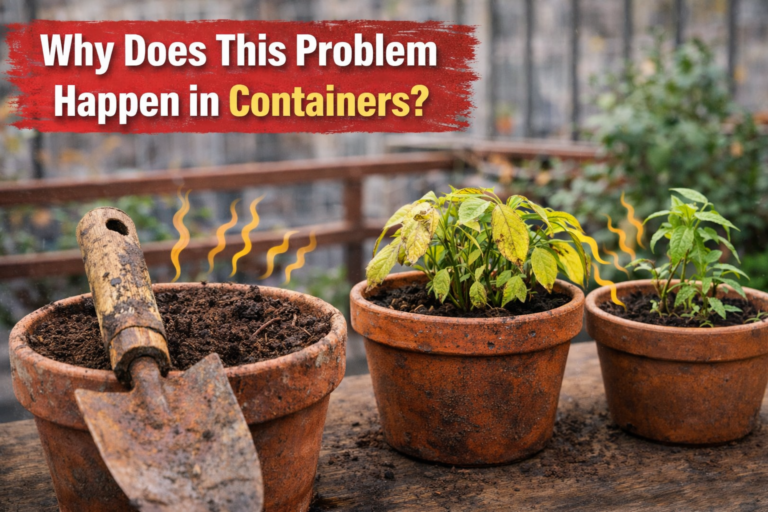
This issue is far more common in container gardening than ground gardening.
In pots, plants grow in a limited root space, which means:
- Limited access to nutrients, water, and oxygen
- Slower recovery from stress or damage
- Higher sensitivity to even small disturbances
Because of this, container plants:
👉 Take longer to settle
👉 Get stressed easily
👉 Recover slowly from root or stem damage
1. Small Root Zone = High Sensitivity
In containers, roots are tightly packed within a small space.
When you use cheap tools:
- They pull and shake roots instead of working precisely
- Rough surfaces and poor design disturb root systems unnecessarily
For example:
- A low-quality rake or fork often pulls roots first, then loosens soil
- Instead of gently aerating, it damages fine feeder roots
Also, even a well-aerated potting mix becomes slightly compact over time.
With cheap tools:
- You apply extra pressure
- This leads to soil compaction + root damage together
👉 Result: Immediate root stress
2. Poor Tool Design Damages Soil Structure
Container tools are meant for precision work, not force.
Quality tools:
- Enter soil smoothly
- Require less pressure
- Maintain soil structure
Cheap tools may look similar, but:
- The metal quality is weak or blunt
- Under pressure, tools may bend or drag through soil
This causes:
- Uneven soil structure
- Compacted areas in pots
- Damaged root zones
Also:
- Poor handle quality reduces control
- You end up applying more force, increasing damage
3. Heat + Stress Combination (Balcony/Terrace Factor)
In Indian balcony and terrace gardening:
- High heat + humidity fluctuations are common
- Pots heat up quickly and dry faster
This creates a stressful environment for roots.
Now combine that with cheap tools:
- Roots already damaged cannot absorb water properly
- Soil becomes harder and more compact
Also:
- Cheap tools degrade faster when exposed to sun and moisture
- They rust, crack, or weaken quickly
👉 So each use adds more damage over time
4. Over-Handling During Gardening
Cheap tools don’t work efficiently, so tasks take longer.
This leads to:
- Repeated digging
- Pulling instead of loosening
- More time disturbing roots
In contrast, quality tools:
- Finish work quickly and precisely
With cheap tools:
- You unknowingly over-handle soil and roots
- Stress builds up gradually
For pruning:
- Dull blades take longer to cut
- Increase chances of uneven cuts and plant wounds
👉 This raises the risk of:
- Stem rot
- Delayed healing
- Overall plant decline
Key Takeaway for Beginners
In container gardening, the problem is not just the tool —
👉 it’s how the limited space + tool quality + handling together affect the plant
Even small mistakes become bigger issues because:
- Roots have no extra space to recover
- Soil structure is easily disturbed
- Stress accumulates faster
How Can Beginners Fix or Prevent This?
As a beginner, you don’t need premium or expensive branded tools for gardening. But at the same time, going for very cheap tools will cost you more in the long run. Instead, you can invest in affordable but good-quality tools with the right build and material.
This is not a waste of money. A decent-quality tool can easily last 5–6 years, and if you maintain it properly with cleaning and storage, it can even last close to a decade. More importantly, it helps you handle plants safely without causing hidden damage.
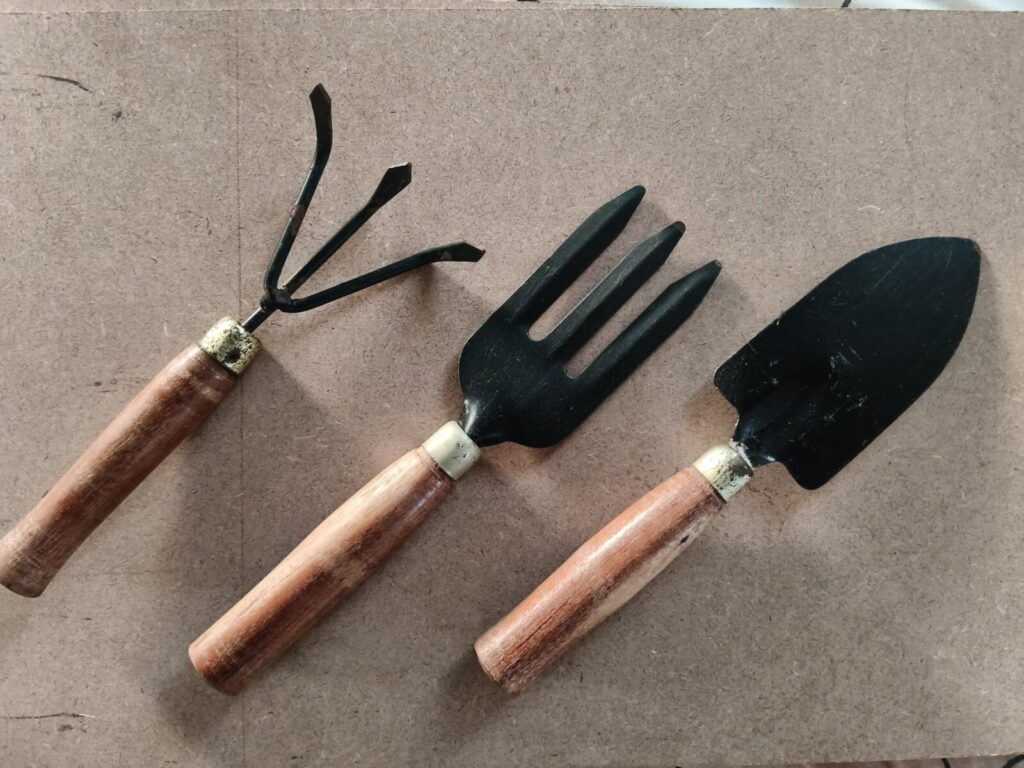
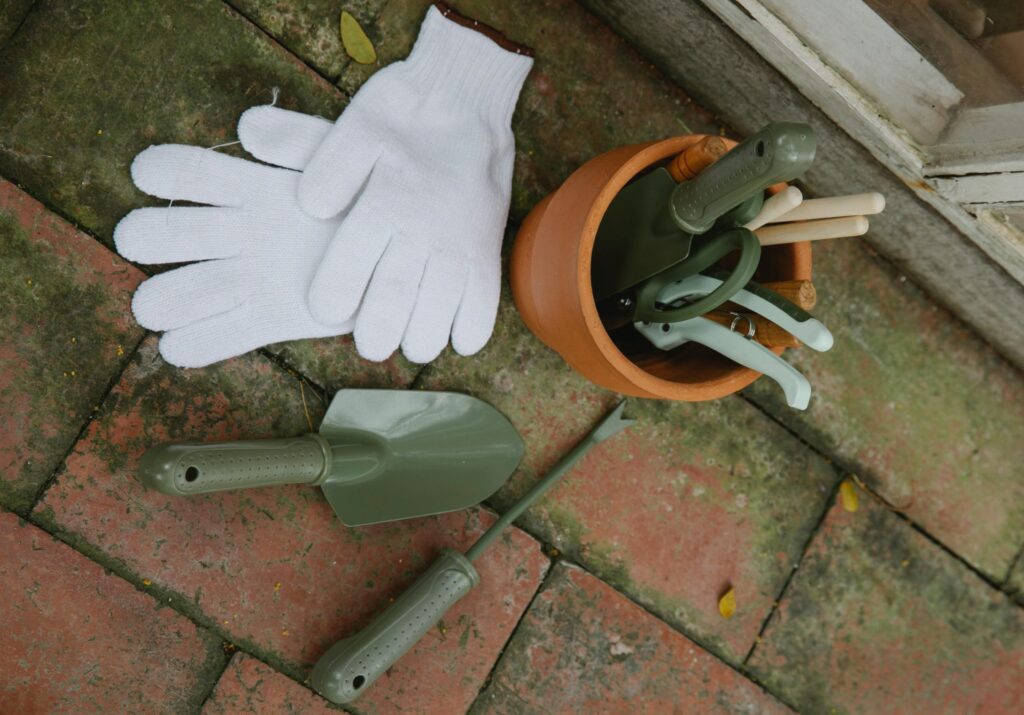
When it comes to basic gardening work in pots, you don’t need many tools. Just three are enough — a trowel for planting and transplanting, a hand fork for loosening soil, and a hand rake for breaking soil lumps. What matters is not the number of tools, but their quality. The metal part should be strong and preferably rust-resistant, and the handle should be thick with a comfortable grip so you can work without slipping or applying extra pressure.
One important shift beginners need to make is stopping the habit of pulling plants or soil directly. When you pull, you are actually tearing roots in real time. Instead, use a hand fork or a weeder to loosen the soil first, and then gently remove or adjust. With the right tools, this becomes easy and controlled, and you avoid unnecessary root damage.
In container gardening, roots need stability. The more you disturb the soil and roots, the more stress the plant experiences. Try not to dig frequently or mix the soil unless it is really needed. Even for fertilizing or weeding, use tools carefully and only when required. Frequent repotting just for changing pot appearance also creates stress. When roots are disturbed often, the plant focuses on healing instead of growing, and in some cases, it may decline completely.
The condition of the soil also plays a big role. If the soil is too dry, it becomes hard and compact, and you end up using force, which damages roots. If the soil is too wet, the roots become soft and can break easily. The best time to work is when the soil is slightly moist. Watering the plant a day before repotting, or two days before for bigger pots, helps create a manageable root ball that can be handled gently.
Cleaning tools is another simple habit that makes a big difference. After using them, removing soil and moisture prevents rust and damage. Proper storage without stacking or pressure keeps the tools in good shape. Before using them again, wiping with a disinfectant or alcohol helps prevent spreading pests or diseases between plants. This small step protects both your tools and your plants.
Finally, always observe your plants after using tools. Any repotting, pruning, or soil work should be followed by a few days of close monitoring. Look for signs like wilting, yellowing, or stem damage. When you slow down and pay attention, you can catch stress early and avoid bigger problems later.
In container gardening, small actions have a bigger impact because the plant has limited space to recover. With the right tools and careful handling, you can prevent most of the silent damage that beginners often don’t notice until it is too late.
Conclusion
If your plants are suddenly struggling, it may not always be your watering or sunlight. Sometimes, the real issue is much simpler — it’s in how you’re handling the plant and the soil during your regular gardening work.
In container gardening, especially in balcony and terrace setups, even small mistakes can create bigger stress for the plant. Since roots have limited space, they cannot recover easily from damage caused during digging, loosening, or pruning.
The good part is, this is completely fixable.
Once you start using better-quality tools, handle the soil more gently, and reduce unnecessary root disturbance, you will notice a clear difference. Plants begin to settle faster, recover better after repotting, and grow more consistently without sudden yellowing or stress.
Gardening in pots is not about doing more — it’s about doing things with care and the right approach. Small improvements in your handling can protect your plants from silent damage and help them stay healthy for the long term.
🪴 I wasted money on tools that looked “perfect”… until they failed in real use. Curious which ones? 👉 See my 7-year tool regrets