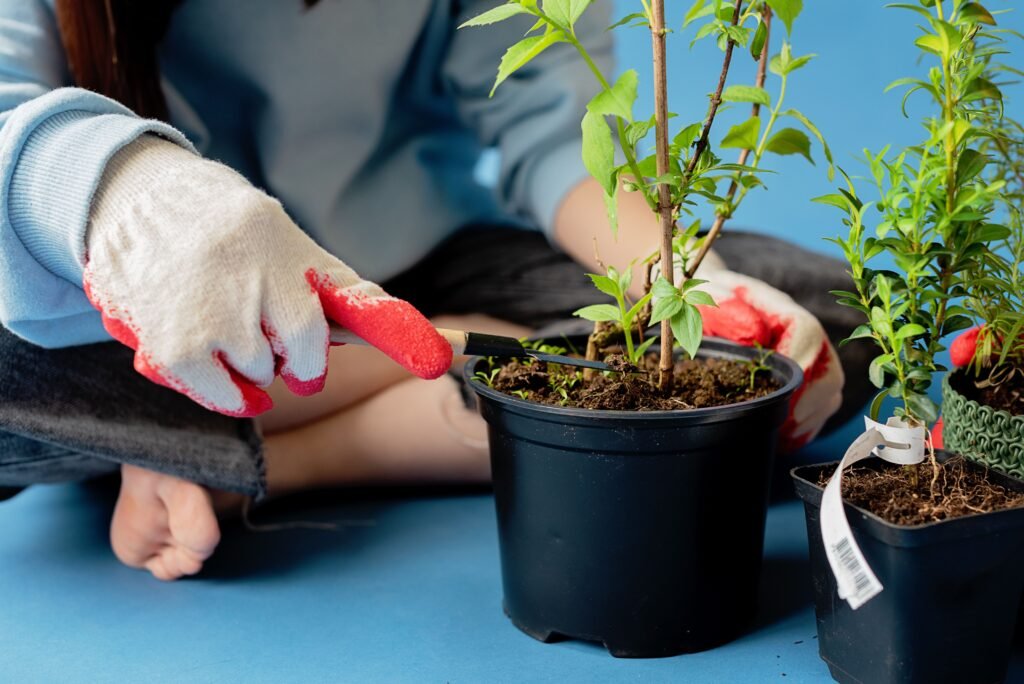
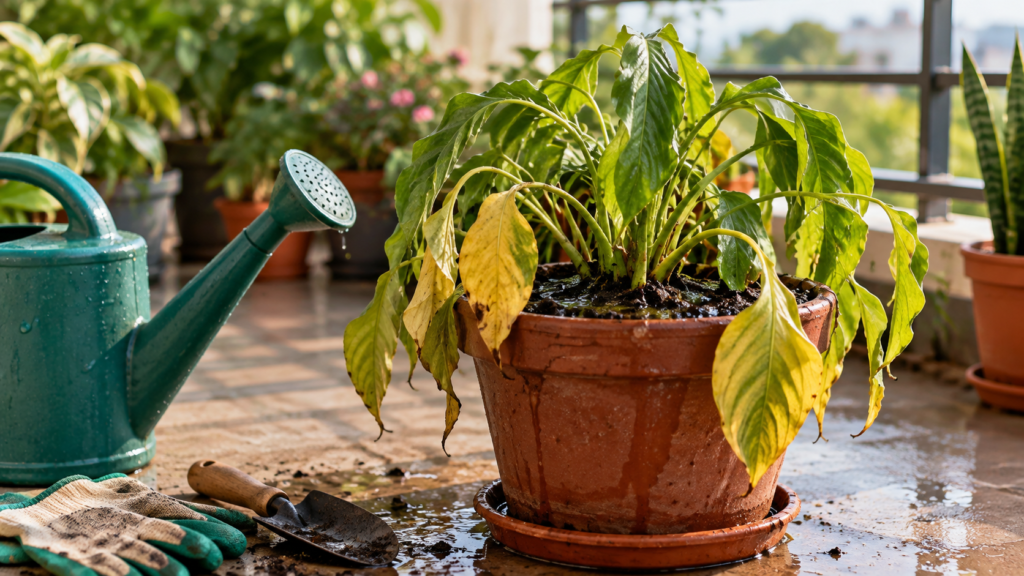
When a potted plant suddenly looks droopy, pale, or yellowish, you might wonder what happened. It was fine yesterday, so what changed today? This can happen after a rainy night, several hot, sunny days, or repotting.
It’s hard for a beginner gardener to judge whether these are normal signs or a problem that needs attention. Without understanding what’s wrong or how to handle the plant problem, both actions can put your plant at risk. If you leave the plant unchecked, thinking the change is normal, a small issue may become a bigger problem. On the other hand, panicking and trying to fix everything can also stress the plant.
The intention of this blog is to help you understand which plants need observation, which need a care adjustment, and which need immediate intervention.
You can’t treat every sign the same way without first understanding what it means.
So, what’s the right approach?
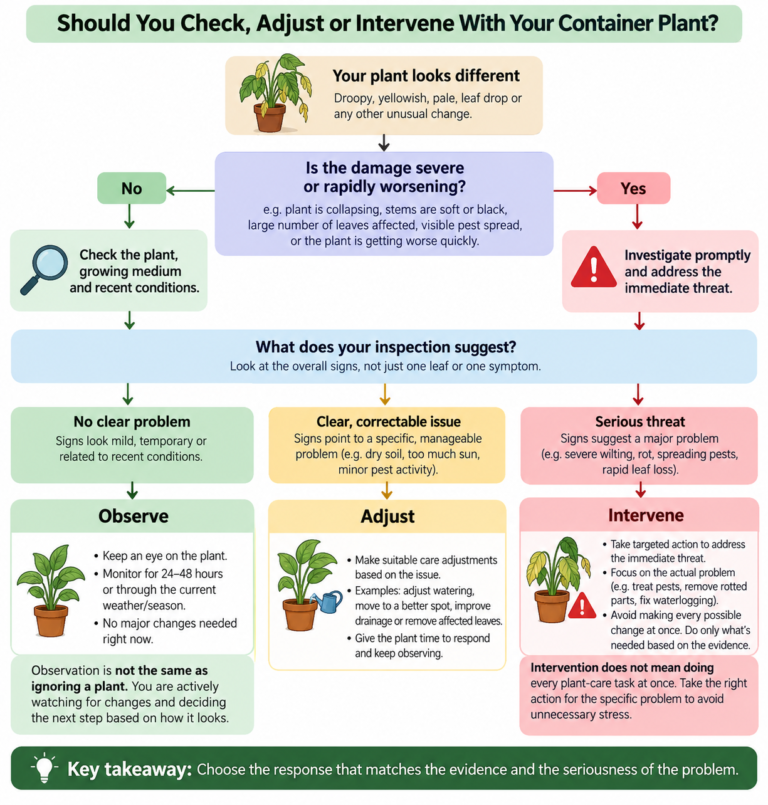
There are only three responses to consider when you notice a potted plant suddenly wilting or looking droopy: check, adjust, and intervene. Check the plant for clues to understand what might be wrong. Adjust its care based on the problem you identify. Intervene with the right action when the plant needs urgent attention, without causing unnecessary stress.
Not every yellow leaf is a threat, but leaving a plant unchecked can also allow a problem to get worse. The right approach is to recognise the signs, understand what they might mean, and decide what kind of care the plant needs.
This blog will help you understand these three steps clearly, so you can identify which plant problems need attention and which situations call for observation. Read on to learn how to make the right decision without stressing your plants.
This isn’t a plant care routine. It’s a guide to understanding whether your potted plant needs attention or simply needs time and observation, helping you avoid unnecessary care that could stress it.
How can you tell when your container plant needs checking or immediate attention?
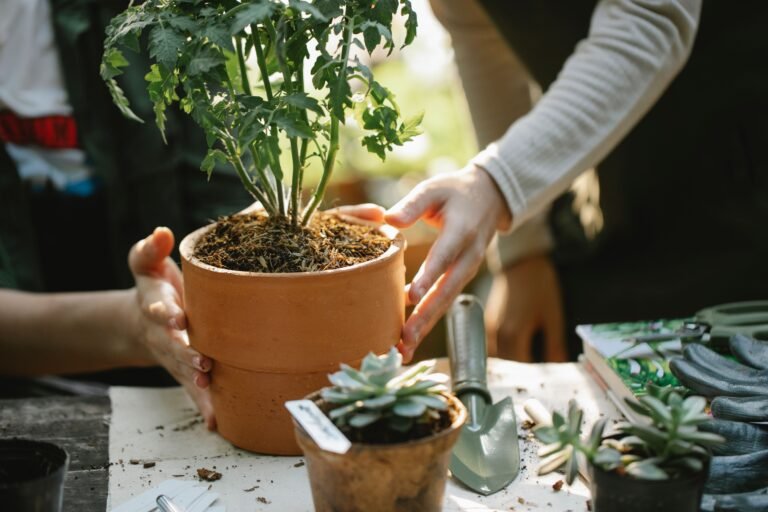
You can’t judge a plant’s condition by looking at just one sign. In potted plants, yellow leaves can indicate many different problems, so you need to check the leaf texture, colour patterns, and other signs together to understand what that yellow leaf might mean.
Which changes in your plant are normal, and which deserve a closer look?
When older leaves turn yellow, or a plant sheds a few weaker leaves after repotting, it can be part of the normal adjustment process, especially if you see new leaves starting to grow.
A droopy plant isn’t always a wilting plant. After a hot, sunny day, plants may look droopy because of the heat. This doesn’t automatically mean they need immediate watering or treatment. If the plant is in a spot that’s getting too much heat, moving it to a more suitable location may be enough. But if a plant looks droopy without exposure to strong sunlight, or remains droopy for days after repotting, it needs a closer check.
Sometimes, seasonal changes slow down plant growth while the plant adjusts to the new conditions. But if the plant keeps shedding leaves, developing yellow leaves despite being in a suitable spot, or becoming progressively weaker, it’s time to investigate the problem.
Sometimes, a single leaf may get sun-scorched or show tiny insect bites without causing serious harm to your potted plant. But if the entire plant looks droopy, the leaves curl unusually, there’s an unpleasant smell, or the leaf colour changes noticeably, these could be signs of pests, disease, or another underlying problem that needs attention.
The pattern of damage also matters. If the leaf edges curl or become crispy during hot weather, check the growing medium and the plant’s exposure before deciding whether to adjust watering or move the pot. But if you notice blackened stems, soft areas near the stem base, or other signs of decay, investigate promptly.
I can’t explain every possible plant symptom in detail here, but these are some common signs that gardeners often misinterpret, along with warning signs that can lead to serious plant damage if left unchecked. You can refer to my other plant-care blogs for more specific problems and their solutions.
When should hot weather, heavy rain or a change in sunlight make you check your plants?
Seasonal changes call for closer observation of potted plants. As growing conditions change, your usual care may need adjustments, and plants can become more vulnerable to environmental stress. Some conditions can also favour pest and disease problems.
Hot, sunny weather: On hot days, check how quickly the growing medium dries and whether the leaf edges show signs of heat or moisture stress. In India, pots can heat up from the terrace floor as well as direct sunlight. Observe the plant and check the soil before watering. If the plant is exposed to excessive heat, moving it to a more suitable spot may help. Avoid letting the growing medium become excessively dry, but don’t water automatically just because the weather is hot.
Heavy rain: Rainy weather can make things more complicated for potted plants, especially when sunny days are followed by humid nights. The growing medium may stay wet longer than expected, particularly during the monsoon. Check the soil before watering, and avoid leaving water collected in bottom trays.
Windy days: Check whether smaller pots have toppled, branches have broken, or the growing medium is drying faster than usual. Broken stems may become vulnerable to further damage, so inspect them rather than assuming the plant will recover without attention.
These weather conditions are reasons to observe your plants and act if needed, not signals that you must immediately change something. Understanding the likely problem before taking action helps you avoid unnecessary care.
Which plant symptoms mean you should act without waiting too long?
Some plant problems need prompt attention, especially when the damage is severe or getting worse. Watch for these warning signs:
- Severe wilting that doesn’t improve as expected.
- A stem or plant base becoming soft, dark, or unstable.
- Leaf damage spreading rapidly or extensive leaf drop happening suddenly.
- A persistently waterlogged pot accompanied by a worsening plant condition.
- Visible pest activity that is spreading or causing significant damage.
- Physical damage that threatens the plant’s survival.
A single symptom doesn’t always tell you exactly what’s wrong. Look at the combination of signs, how quickly they appeared, and whether the plant’s condition is getting worse. The urgency depends on the severity of the problem, not simply the presence of one unusual leaf.
When you notice a possible plant problem, observe the plant closely and check its growing medium and recent growing conditions. This helps you judge how serious the situation might be.
If the damage is severe or progressing rapidly, investigate and act promptly rather than waiting. If the signs are mild, the plant is otherwise stable, and there’s no clear problem requiring immediate action, continue observing it over the next 24–48 hours. If it doesn’t improve or the symptoms worsen, investigate the likely cause and adjust your plant care accordingly.
Remember, the aim isn’t to wait a fixed amount of time before taking action. It’s to understand the signs, judge the seriousness of the problem, and choose the right response for your plant.
Your plants don’t need constant attention, but they do need consistent care. Learn how to get the balance right: How Often Should You Care for Container Plants?
Why can container plants show problems that are difficult to interpret?
Even with 8 years of container gardening experience on my Indian terrace, I still misread some plant signs. It took me around 4–5 years to get a better understanding of how my potted plants react and how to read their signs.
Only in the last 2–3 years, after I started taking notes, did the process become much easier. I no longer need to rely on my memory. I have already recorded the plant problems I faced, the signs I noticed, the seasons they occurred in, and the care methods that worked or failed.
So, it’s all about observing and recording the signs to interpret your potted plants better.
Why can the growing medium in a pot become too dry or too wet unexpectedly?
In potted plants, the growing medium, or potting soil, plays a bigger role than you might think. This potting mix is your plant’s micro-environment, and it influences root growth and health.
The type of pot holding the growing medium also changes how it behaves. If you’ve experienced a plant wilting in one pot, the same explanation may not apply to another. Even if the plant is the same, the pot can change how the growing medium responds to its surroundings.
The growing medium can dry faster or slower depending on the microclimate, seasonal changes, and how the pot’s size, material, and shape affect moisture retention.
These differences influence how a particular pot responds to sunny days, handles heavy rain, and loses moisture during windy weather. So, understanding your growing medium and observing it closely can help you identify the actual problem instead of relying on random gardening advice.
Why can yellow leaves and wilting have more than one cause?
As I mentioned earlier, yellowing leaves are a very common sign in potted plants. But there can be several reasons behind them. An older leaf may turn yellow before falling off, while pests, diseases, light stress, watering imbalances, nutrient deficiencies, root stress, or repotting stress can also cause yellowing.
So, you can’t interpret a yellow leaf in isolation. You need to look for other signs alongside the yellowing to understand the possible problem.
For example, yellow leaves combined with persistently wet growing medium may indicate a watering or root-related problem. Looking at multiple signs together gives you a better understanding of what’s happening than relying on leaf colour alone.
A symptom is a clue to identifying a plant problem, not the entire diagnosis. Just as a doctor considers different symptoms before reaching a diagnosis, you’ll get better at understanding your plants as you spend more time observing them and recording your findings.
Why can changing several things at once make it harder to help your plant?
If you water, fertilise, prune, repot, and treat for pests on the same day just because you’ve dedicated that day to plant care, it’ll become difficult to identify the actual cause of a plant problem.
After all that care, if a plant starts wilting, how will you know whether it was caused by watering, fertilising, pruning, or repotting?
Try spacing out your plant-care activities when possible, so you can better understand what caused a change in your plant’s condition.
For example, if a plant wilts after repotting, it becomes easier to identify possible repotting stress when you haven’t made several other changes at the same time. You can then focus on understanding the signs and deciding what care the plant actually needs.
How should you decide what to do when your container plant looks unhealthy?
What should you inspect before changing your plant’s care?
- Look at the whole plant. Check whether the change affects one leaf, several leaves, new growth, stems, or the entire plant.
- Check how quickly the problem developed. Did it appear suddenly after a weather event, or has it been getting worse gradually?
- Feel the growing medium below the surface. Determine whether it is dry, moist, or unusually wet before deciding whether water is needed.
- Check the pot and drainage. Look for standing water, blocked drainage, or a container that stays wet for an unusually long time.
- Recall recent changes. Consider watering, sunlight, heat, rain, wind, relocation, or other recent changes in care.
- Look for visible damage. Inspect the leaves and stems for pests, physical injury, unusual marks, or soft areas.
Even after checking all these things, you don’t need to identify the exact cause immediately. The aim is to gather enough clues to understand the possible problem before deciding what care is needed.
Taking notes and photos can help you identify the problem more accurately later. You can compare the signs, recall what happened before the problem appeared, and understand which care methods worked or failed.
When should you leave the plant alone, make a small adjustment or intervene immediately?
If you notice minor changes and the entire plant still looks healthy, with active new shoots, simply observe it instead of over-caring for it and causing unnecessary stress.
Most of the time, careful observation and small changes in care are better than changing the entire routine. Potted plants respond to their microclimate, and seasonal changes can alter that environment. These changes may cause minor issues that need closer observation or a little rearrangement, rather than a complete change in the plant’s care routine.
For example, if a plant starts showing mild signs of stress after a change in sunlight, moving it to a more suitable spot may be enough. You don’t need to change its watering, fertilising, and other care at the same time.
Changing a plant’s growing conditions can take time to show results. If you keep making new changes before the plant has had time to respond, it becomes harder to understand what is helping or harming it.
However, if the plant shows severe or rapidly worsening symptoms, don’t wait just to observe. Investigate the problem and take the appropriate action promptly.
How can you tell whether your plant is improving after a change?
After making a care adjustment, observe the plant and look for these signs of improvement:
- Take pictures to compare before and after. This helps you see whether the plant’s condition is improving, staying the same, or getting worse.
- Look for active new leaf growth. Healthy new shoots can be a positive sign that the plant is recovering, although growth may take time to appear.
- Observe how the growing medium dries. If it is drying at a suitable rate for the plant and current conditions, that can be a useful clue about the root-zone environment. However, drying time alone doesn’t confirm that the roots are healthy.
- Check whether the original problem is improving. Look for signs that the damage has stopped spreading and that the underlying issue has been addressed.
- Give the plant time to respond. There is no standard recovery timeline for every plant problem. Some plants recover quickly, while others need more time.
- Watch for new or worsening symptoms. If the plant develops more signs of trouble, your initial interpretation may have been incorrect, or the care adjustment may not have worked. Go back, observe the plant again, and look for more clues before deciding what to do next.
Remember, damaged leaves may not return to their original appearance even after the problem is corrected. Look at the plant’s overall condition and whether new damage continues to appear, rather than judging recovery by one leaf alone.
How can you make better decisions about your container plants? Here
You don’t need to react to every yellow leaf, droopy stem, or temporary change in your potted plants. Sometimes, these are normal signs, while other times, they indicate a problem that needs attention. The key is to understand what your plant is showing before deciding what to do.
Whenever you notice something unusual, start by checking the whole plant, the growing medium, and any recent changes in weather or growing conditions. If you don’t find a clear problem and the plant looks healthy overall, observe it instead of making unnecessary changes. If you identify a correctable issue, adjust its care accordingly. But if the plant shows severe or rapidly worsening signs, investigate and intervene promptly.
Remember, plants growing on Indian balconies and terraces can respond differently to heat, heavy rain, wind, pot size, and their individual microclimates. What works for one pot may not work for another.
With experience, observation, and a few notes about the signs you notice and the care that works, you’ll get better at understanding your plants.
The next time your potted plant looks unusual, pause and check before changing anything. Learn to read the signs, choose the right response, and give your plant the care it actually needs.
Want to give your container plants the right care without guessing every day? Learn how to build a consistent plant care routine that works for your plants and growing conditions.