This is one of the first watering myths beginners need to break in container gardening. Most of us assume that when we water a pot, the water spreads evenly through the entire potting mix. But that is not always true.
The watering can you use, the potting mix you use, the pot size, and even the drainage holes can all affect how water moves inside a pot. This is why two plants growing in similar conditions can respond very differently after watering.
You may think, “I don’t really need to know how water moves through soil.” But the truth is that this hidden movement of water often decides whether a plant becomes overwatered or underwatered. It affects how roots receive moisture, how long the soil stays wet, and how easily plants can access the water you provide.
Water is not just something that keeps a plant alive. It transports the sugars produced during photosynthesis throughout the plant, helps break down nutrients into forms roots can absorb, and keeps stems and leaves firm and healthy.
This is where potting mix plays a huge role. Some soil mixes hold moisture for a long time, while others let water flow through quickly. Some create soggy conditions around roots, while others dry out faster than beginners expect. That is why choosing a well-draining soil mix is such an important part of container gardening.
Drainage holes also have their own job. A pot with proper drainage and a good potting mix will hold the moisture roots need while allowing excess water to escape. But seeing water come out of the drainage holes does not automatically mean the watering was correct.
You may have asked yourself:
Why is my plant wilting even after watering?
Why does the soil stay wet at the bottom of the pot?
Why is my potted plant dying even though I water it regularly?
These are common beginner plant care problems, especially in balcony gardening and terrace gardening where containers, soil mixes, sunlight, and drying speeds can vary so much.
The reason is simple. We can see the water going into the pot. We can see water coming out of the drainage holes. But we cannot easily see what happens inside the soil afterward.
How long does the potting mix stay wet?
How quickly does the soil dry out?
Did the water spread evenly through the root zone?
Did excess water drain properly, or is it sitting around the roots?
This is often the missing piece. Many beginner watering mistakes happen because we are unaware of how water actually moves through container soil.
Not all plants, pots, or potting mixes handle water in the same way. Plant type, pot size, soil mix ratios, root systems, and even the watering tools you use can change how moisture moves and stays inside a container.
Once you understand how water moves inside a pot, it becomes much easier to understand what type of watering is actually helping your plants. It also becomes easier to spot the early signs of watering issues before they turn into yellow leaves, slow growth, weak roots, soggy soil, or stressed container plants.
In container gardening, it is often difficult to fix a problem after root damage has already happened. But it is much easier to notice the warning signs early and prevent the problem before it becomes serious.
In this blog, I’ll explain how water moves through pots, what affects that movement, what problems happen when water doesn’t move properly, and how you can avoid or fix those issues. Once you understand this simple concept, many common potted plant problems start making much more sense.
💧 Still confused about watering even after doing it regularly? These beginner watering truths may explain why your plants keep struggling. Read them here.
What Signs Show That Water Is Not Moving Properly Inside My Pot?
Most beginners don’t pay much attention to these signs because they seem normal at first. The problem is that when these signs continue for days or weeks without being noticed, you miss the early warnings your plants and soil are giving you.
Many container gardening problems such as yellow leaves, slow growth, root rot, soggy soil, or constantly dry soil don’t appear suddenly. The plant usually shows small clues long before serious damage happens.
Learning to recognize these signs early makes it much easier to prevent problems instead of trying to fix them later.
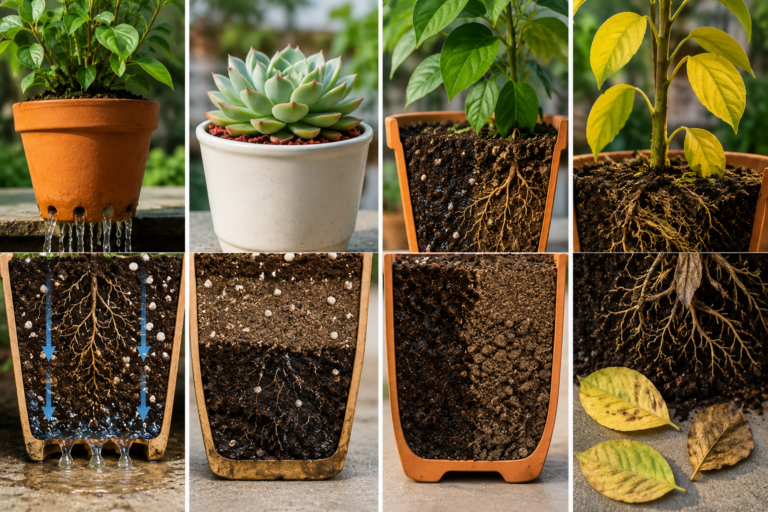
Water Runs Straight Out of the Drainage Holes Too Quickly
Many beginners think this means the soil is well-draining. Not always.
A well-draining potting mix should absorb and hold enough moisture for roots while allowing excess water to leave through the drainage holes. If water immediately rushes through the pot, it can indicate a few different problems.
One common reason is a soil mix that contains too many drainage amendments like perlite, river sand, or pumice and not enough moisture-holding soil components.
Root-bound plants can also cause this issue. When roots occupy most of the container and very little soil remains, water often finds quick pathways through the pot instead of soaking into the root zone.
Another possibility is stressed roots that are no longer absorbing water properly. If this continues unnoticed, root rot may already be developing underneath the soil, leaving very few healthy roots to take up moisture.
The Top Soil Dries Fast but the Bottom Stays Wet
Many gardeners immediately blame the soil mix, but often the real reason is the container’s microclimate.
Strong wind, direct sun, reflected heat from terrace floors, and hot balcony conditions can dry the top layer of soil surprisingly fast while deeper layers remain moist.
I made this mistake myself years ago. I would touch only the top soil, assume the entire pot was dry, and water again. Unfortunately, I lost a few plants before realizing what was happening underneath.
That experience taught me not to rush watering decisions. Now I always check deeper moisture using a toothpick before watering.
This issue is especially common with succulents. The top one or two inches may feel completely dry, but the root ball deeper inside the pot can still hold plenty of moisture.
Sometimes pot shape contributes to the problem too. Shallow-rooted plants often perform better in wider containers, while deep-rooted plants need deeper pots. When the pot shape doesn’t match the root system, moisture can remain trapped in unused areas of the container and slowly create root problems without you realizing it.
Some Areas of the Pot Stay Soggy While Others Stay Dry
This problem is harder to notice, but it happens more often than many beginners realize.
Usually, it occurs when the potting mix isn’t balanced properly or when soil amendments were not mixed evenly throughout the container. Some sections end up holding too much moisture while other areas dry much faster.
Watering technique can also contribute to uneven moisture distribution.
Using a mug, bottle, or forceful watering can often concentrates water in one area while leaving other parts of the root zone dry. Over time, one side of the pot stays wet while the opposite side receives very little moisture.
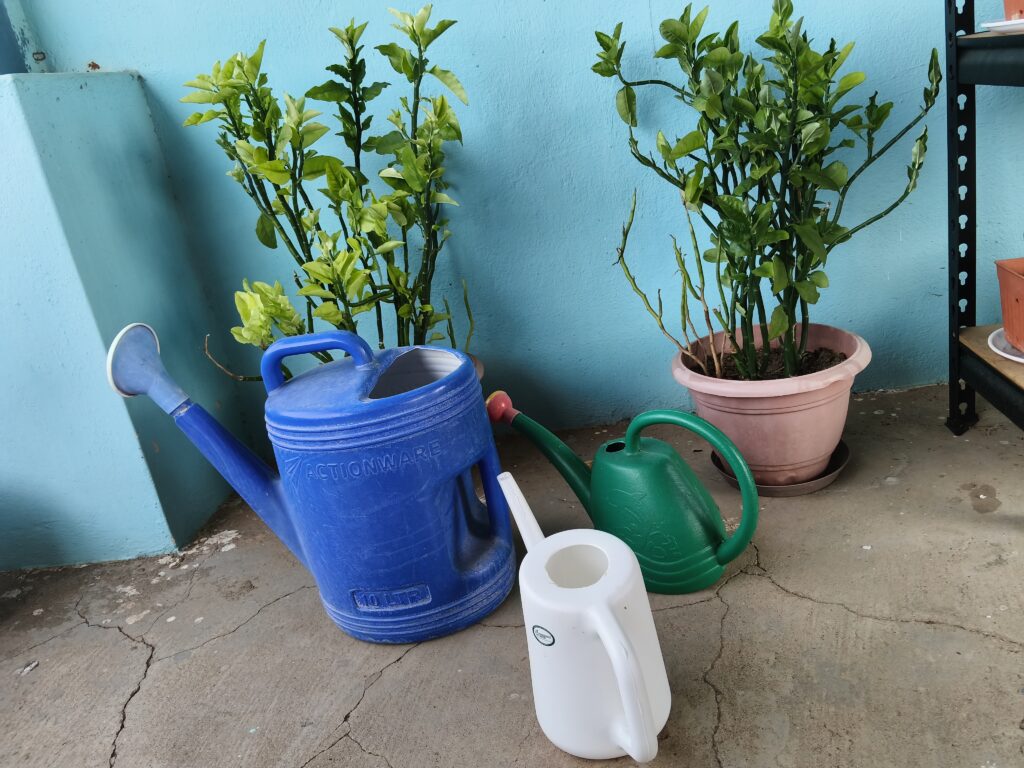
This is one reason I prefer a long-spout watering can with a rose head. Watering slowly and moving across the soil surface gives the potting mix more time to absorb water evenly instead of creating wet and dry pockets.
Yellow Leaves, Root Rot, or Weak Plant Growth After Watering
By the time these symptoms appear, the roots have often been stressed for quite some time.
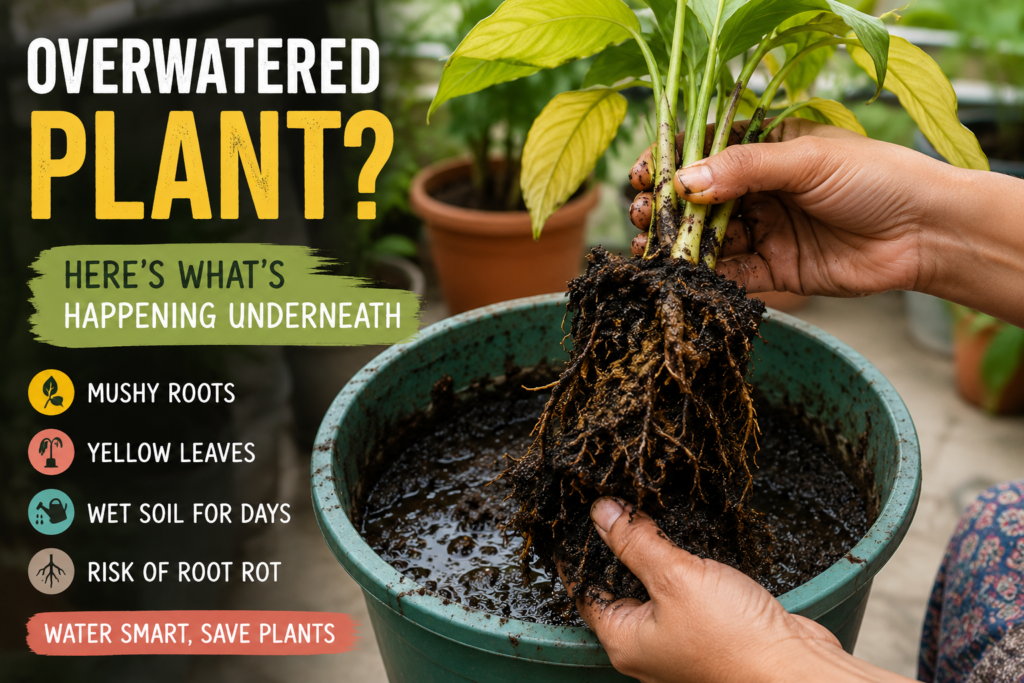
In many cases, the soil stays wet longer than needed, the roots receive less oxygen, and their ability to absorb water and nutrients gradually declines.
You may notice yellowing leaves, weak growth, drooping foliage, mushy stems, or obvious root rot after the damage becomes serious.
But the earliest signs usually appear in the soil, not the plant.
The pot takes much longer to dry than before.
The soil remains constantly damp.
Leaves become pale rather than vibrant.
Fungal spots begin appearing on foliage.
These subtle changes are often easier to fix than advanced root rot. That’s why paying attention to how moisture behaves inside the container is just as important as watching the plant itself.
Yellow leaves, drooping, or sudden plant decline after watering may point to hidden root problems. Learn why: Why Potted Plants Die Even After Watering?
How Does Water Actually Move Through Potting Soil in Containers?
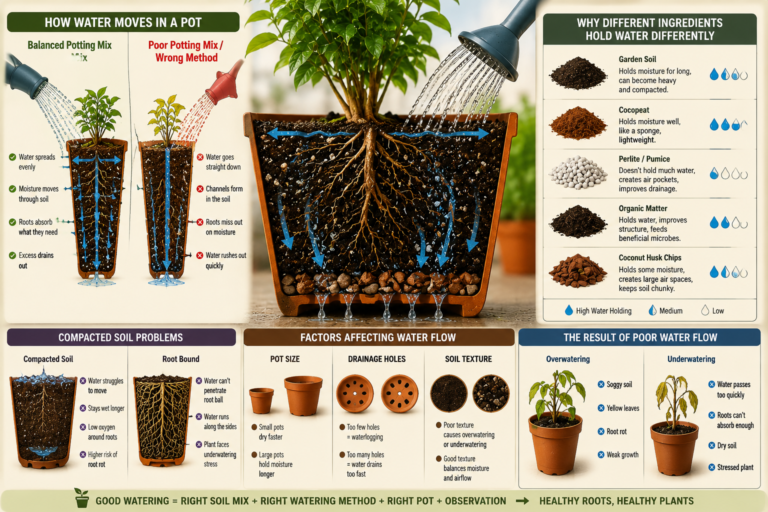
Does Water Move Downward First Before Spreading Sideways?
Not in a balanced potting mix.
Many beginners assume water should immediately flow straight down through the pot after watering. But if most of the water rushes directly to the drainage holes, it often indicates a problem with the soil mix, root system, or watering method.
A balanced potting mix absorbs water first, holds enough moisture around the roots, and slowly makes that moisture available to the plant over the next 24–48 hours. The water doesn’t simply disappear downward.
Instead, after watering, moisture spreads through the surrounding soil and fills the small spaces between soil particles. This happens fairly quickly, usually within seconds or a few minutes depending on pot size, soil texture, and watering speed.
The watering method also matters.
If you pour water too quickly into one spot, the force can create channels through the soil. Instead of spreading evenly through the root zone, the water follows the easiest route downward and exits through the drainage holes.
This is why slow, deep watering with a watering can fitted with a shower head often gives better moisture distribution than pouring water forcefully into one area.
Why Different Potting Mix Ingredients Hold Water Differently
Every soil amendment behaves differently around water. That is why container plants grow better in a balanced potting mix rather than pure garden soil or a single ingredient.
Garden soil usually contains fine particles that hold moisture for a long time. While this works in the ground, it can become heavy and compacted inside containers. When used alone, it often increases the risk of soggy soil and root rot.
Cocopeat holds moisture well without becoming as heavy as garden soil. It acts almost like a sponge while still maintaining some structure. However, the amount used matters because excessive cocopeat can keep the soil wet for too long.
Perlite and pumice contribute differently. They don’t hold much water themselves, but they create air pockets that improve soil structure and root aeration. They also take years to break down.
Organic matter can improve soil structure and support beneficial microbial activity. It also holds moisture, which is why the quantity matters in a container soil mix.
Coconut husk chips hold some moisture but not as much as cocopeat. Their main advantage is creating larger air spaces inside the potting mix, helping water drain while keeping the soil loose and airy.
Every soil amendment has its own behavior around water. Understanding these differences helps you build a potting mix that supports healthy watering habits instead of creating watering problems.
What Happens When Potting Soil Becomes Compacted in Containers?
Soil compaction is one of the most overlooked causes of watering issues in pots.
This commonly happens when containers are filled with garden soil alone or when the mix contains too much heavy soil and not enough drainage materials.
When soil becomes compacted, water movement through the container changes. Instead of spreading evenly through the root zone, water struggles to move through the dense soil structure.
The soil may still absorb water, but it often stays wet for much longer than necessary. As oxygen levels decrease around the roots, the risk of root rot increases.
Compaction can also happen in root-bound plants. In this situation, the roots become so dense that water cannot easily penetrate the root ball. Instead of soaking into the soil, the water quickly runs along the sides of the pot and exits through the drainage holes.
This creates a confusing situation where the plant experiences underwatering stress even though water is being applied regularly.
Why Do Pot Size, Drainage Holes, and Soil Texture Affect Water Flow?
These are some of the biggest factors influencing how water behaves inside a container.
Pot size affects how much moisture the soil can store and how quickly it dries. Small pots usually dry faster because they contain less soil volume. Larger pots often hold moisture longer because there is more soil available to retain water.
Drainage holes are equally important. Their purpose is to allow excess water to leave the container and prevent waterlogging around the roots.
However, drainage holes alone cannot fix a poor soil mix. A container with excellent drainage holes but poor soil texture can still suffer from watering problems.
Soil texture plays a major role because it determines the balance between moisture retention and airflow. A well-balanced texture allows water to move through the pot while still keeping enough moisture available for roots.
When soil texture is poor, the result is often one of two common container gardening problems: overwatering symptoms caused by soil staying wet too long, or underwatering symptoms caused by water passing through too quickly.
This is why successful watering isn’t just about how much water you give. It’s also about how the pot, soil, roots, and drainage system work together to move that water through the container.
Compact, sticky, or heavy soil texture can slowly stress roots inside containers. Learn why: Why Plants Stop Growing in Pots: Soil Texture Matters
How Can I Help Water Spread More Evenly Through My Balcony or Terrace Pots?
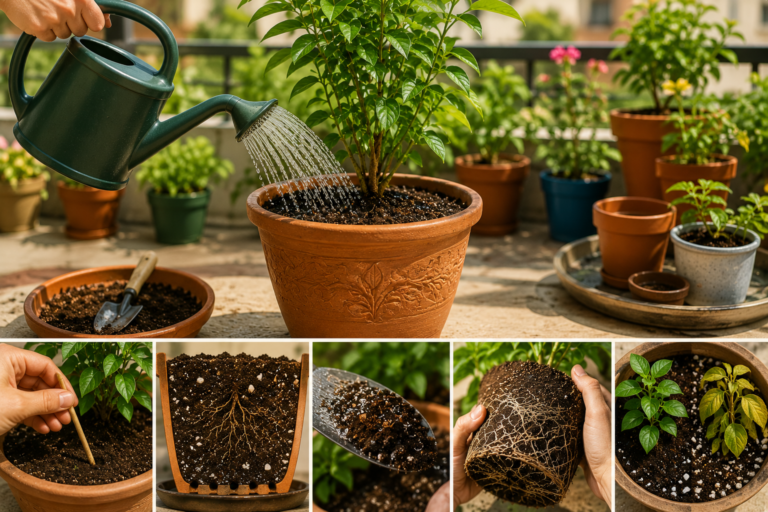
How to Water Slowly So the Entire Root Zone Gets Moisture
Many watering problems in container gardening happen not because of how much water we give, but because of how fast we give it.
One thing I learnt over the years is that gardening is already a slow hobby. Most of us started balcony gardening or terrace gardening because we enjoy spending time with plants. But when watering becomes a rushed task before work or during busy days, problems start appearing.
Watering too quickly often causes water to run through one path and escape through the drainage holes before the surrounding soil has time to absorb it.
Try to allocate a few quiet minutes for watering instead of treating it like a chore to finish quickly.
Before watering, always check the soil moisture. Then use a medium or smaller watering can with a shower head attachment and water slowly across the soil surface.
The video below shows how slow watering allows the potting mix to absorb moisture more evenly.
The goal is not to make the soil soggy. The goal is to let the entire root zone become evenly moist. Slow watering with a low-pressure watering can usually creates much better deep watering than pouring a large amount of water all at once.
Why Checking Soil Moisture at Different Depths Matters
This is especially important in Indian balcony and terrace gardens.
The top soil can dry very quickly because of direct sunlight, reflected heat, and constant wind exposure. If you only look at the soil surface, it is easy to assume the whole pot is dry when it is not.
That is why I prefer using a simple toothpick test.
A toothpick pushed a few inches into the soil tells you much more than the top layer ever can. It helps you understand what is happening around the root zone instead of making watering decisions based only on the soil surface.
If the soil more than 2 inches deep is still moist, the plant usually does not need another watering yet.
This simple habit has helped me avoid many overwatering mistakes that I made when I was a beginner.
Choosing a Container Potting Mix That Absorbs Water Properly
I can’t completely explain soil drainage in a few paragraphs because it is a much bigger topic. If you want to understand it in detail, I already have an entire blog dedicated to soil drainage and potting mix structure.
But the basic idea is simple.
A good container soil mix should absorb water, hold enough moisture for roots, wet evenly throughout the pot, and still avoid becoming soggy.
The soil acts as a temporary storage space for water. The roots then absorb that moisture gradually as the plant needs it.
Without proper soil structure, it becomes very difficult to maintain balanced watering. This is why many potted plant problems are actually soil problems in disguise.
When Should You Refresh or Loosen Old Potting Soil?
The signs usually appear before major plant damage happens.
If water is not soaking into the soil properly, the top layer stays wet for a long time, the pot remains unusually heavy several days after watering, or you notice yellowing leaves and mushy stems, soil compaction may already be developing.
Even a good potting mix changes over time.
Cocopeat breaks down. Organic matter decomposes. The soil slowly loses structure and becomes denser than when you first filled the container.
This is when refreshing or replacing the potting mix becomes necessary.
Also pay attention to how the soil behaves after watering.
If it suddenly starts drying much faster than before, or if water rushes through the pot unusually quickly, a watering imbalance may already be developing.
In older container plants, extremely fast drainage often points to a root-bound plant where roots have filled most of the pot. In that case, repotting is usually the better solution.
Easy Watering Habits That Reduce Dry Spots and Soggy Soil Problems
Most watering issues become easier to prevent when a few simple habits become routine.
- Use a balanced potting mix that can hold moisture while still draining properly.
- Water slowly with a low-pressure watering can instead of pouring water forcefully.
- Make sure drainage holes remain open and functioning.
- Check soil moisture before watering instead of watering on a fixed schedule.
- Observe your plants regularly and water when they actually need it.
- Place plants where airflow is good so soil does not stay wet for several days.
- Empty saucers or trays after watering to prevent water from sitting around the roots.
None of these habits are complicated, but together they make a huge difference.
Many problems like yellow leaves, weak roots, soggy soil, slow growth, and stressed container plants often start with small watering imbalances that go unnoticed for weeks. The sooner you learn to observe how water behaves inside your pots, the easier it becomes to prevent those problems before they affect your plants.
If you’re never sure whether your plant needs water or not, you’re not alone. Read: Why Watering Feels So Confusing in Container Gardening
Do I Need Perfect Watering Every Time to Keep Container Plants Healthy?
No gardener waters perfectly every single time, especially when starting container gardening. The good news is that most watering mistakes can be corrected early if you learn to observe the soil and plants before serious damage happens.
One of the biggest beginner mistakes is assuming every pot dries at the same speed. In reality, every container behaves differently depending on the plant, pot size, soil mix, sunlight, wind exposure, and season. Learning how your pots dry out is a skill that develops through observation, not guesswork.
Instead of focusing on watering schedules, focus on understanding how water moves through your potting mix and how long the soil actually stays moist. This simple shift can help prevent many common problems like yellow leaves, soggy soil, weak roots, slow growth, and stressed balcony or terrace plants.
If you’re still struggling with plants that wilt, yellow, or decline even after regular watering, the next thing to understand is why potted plants die even after watering. You may also find it helpful to read our guides on well-draining soil mixes and container drainage, since all three topics work together to create healthier roots and healthier plants.
🪴 Most beginners fail because they skip the basics. Don’t make that mistake. See the step-by-step container gardening guide