Introduction — Why Soil Is the Real Container, Not the Pot
In container gardening, the soil mix replaces the ground bed. It becomes the primary system for holding moisture, storing and releasing nutrients, and allowing oxygen to reach the roots. In simple terms, the soil in a pot is the life system we create for our plants. The container itself only supports this system through suitable pot size and pot material, but it does not replace what the soil is responsible for.
Because of this, the soil mix becomes the key factor in container gardening, and how we prepare it matters more than most beginners expect. Many new gardeners focus first on pot size, pot material, fertilizers, or even plant varieties. That focus is not wrong, but it often skips the most critical layer. Soil is where a plant breathes, lives, and adapts to its growing environment. Choosing the right soil mix is the next important step after selecting the growing space and the plant type, especially in small-space or balcony container gardening.
Without a clear understanding of how soil works in containers, beginners often treat soil as just a filler. Not knowing what soil amendments are needed, or what role each amendment plays in potted plants, leads to common soil mistakes. These mistakes usually show up as poor root health, water stress, or plants declining despite regular care. In many cases, plant death in containers is not caused by pests or lack of fertilizer, but by soil that cannot balance moisture, air, and nutrients properly.
This is why understanding container soil basics is essential before following any soil mix recipes or troubleshooting plant problems. Knowing how soil behaves in pots, how it changes with climate, and how it supports root growth helps gardeners make better soil choices over time. Whether gardening through hot summers, seasonal rains, or limited budgets, learning how your soil functions is what allows plants to grow steadily instead of just surviving.
Container Soil Is a System — Not Dirt, Not Compost, Not a Mix Alone
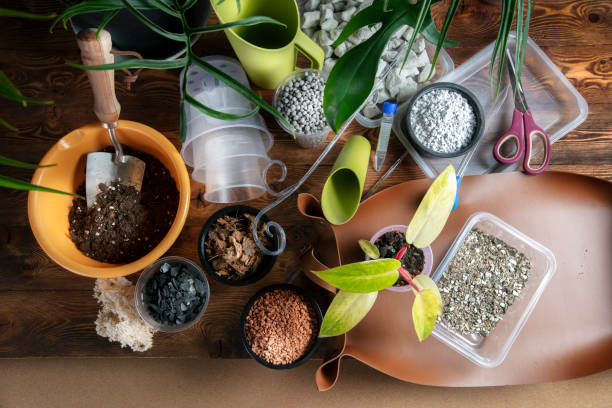
Our lifestyle is a system. Government, infrastructure, and social rules form systems that help us live safely and function smoothly. Without the right systems in place, survival itself becomes difficult. The same principle applies to plants.
In container gardening, soil is the system. This soil system must support both the plant and its roots in adapting to the local weather or microclimate. It needs to hold moisture without becoming soggy, support proper aeration, and allow oxygen to move freely through the root zone to reduce the risk of fungal infections. At the same time, the soil mix must store nutrients and make them accessible to roots for steady growth. This is why understanding how soil works in containers matters more than simply filling a pot.
When even one part of this soil system collapses, plants begin to suffer. Reduced tolerance to climate changes often shows up first, followed by visible stress symptoms such as pest attacks, disease issues, overwatering or underwatering problems, nutrient deficiencies, and slow or uneven growth. For beginners, these problems can feel sudden, but they usually trace back to soil imbalance. This is why learning the basics of container gardening soil systems is essential before experimenting with soil mixes.
Why Garden Soil Logic Fails in Containers
If you have experience with ground bed gardening, like I do, this truth is important to understand. Ground bed gardening rules do not apply directly to container gardening. The growing mechanism is completely different.
In ground beds, plant roots have access to a much larger space. Water retention is naturally balanced by soil depth, and the risk of overwatering is lower. At the same time, issues like underwatering, pests, and soil-borne diseases can be more common. Ground bed plants also adapt better to weather changes because they develop deeper and stronger root systems than potted plants.
Applying this ground bed logic to containers—especially by using garden soil alone—often leads to problems. In ground beds, a simple combination of garden soil and compost, along with fertilizers, may be enough. In containers, however, aeration and soil porosity become critical. Proper drainage is essential, which is why soil amendments such as perlite, cocopeat, or vermiculite come into the picture. The list of amendments may seem long, but what truly matters is their function, not their number.
The Difference Between Ingredients and Function
There is a long list of potting soil amendments used in container gardening—cocopeat, perlite, compost, vermiculite, LECA balls, peat moss, bark, coconut husk, and more. But using more ingredients does not automatically create a better soil mix.
What matters is understanding each ingredient and its role in the soil mix. A well-made soil mix supports a plant’s natural growth and long-term stability. Choosing the right ingredients means matching their function—such as moisture retention, drainage, or aeration—to the specific needs of the plant and the container environment. This shift from collecting ingredients to understanding function is where most beginners see real improvement.
How Climate Changes Shape Container Soil Behavior
Climate has a direct impact on how soil behaves in containers, which is why soil mixes should adapt to local weather and microclimates. A soil mix that works well in one region may struggle in another.
In hot regions, soil needs better moisture retention while still maintaining aeration and drainage. Combinations using cocopeat, coconut husk, and compost often perform better under heat stress. In high-humidity areas, prioritizing drainage becomes more important to prevent excess moisture from sitting in the soil and causing root or fungal issues.
For gardeners living in areas with strong seasonal shifts—hot summers, heavy monsoons, or cooler winters—a balanced soil mix works best. Seasonal adjustments can then be made through top dressing rather than changing the entire mix. Adding a coconut husk layer in summer helps retain moisture and reduce heat stress, while extra drainage support during monsoon or winter—such as improved soil porosity or drainage layers—helps prevent overwatering and disease problems. These small adjustments allow container soil to stay functional throughout seasonal changes.
Air, Water, and Weight — The Invisible Balancing Act Inside Pots
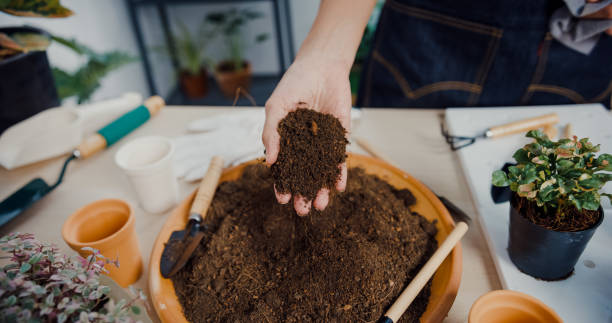
Why Do Roots Need Oxygen More Consistently in Containers?
When you look at a plant, it may appear green and healthy on top. But below the soil surface, oxygen is doing the real work that keeps the plant alive. Soil-related problems rarely show early signs because damage usually starts at the root level. By the time symptoms appear above the soil, the roots are often already stressed.
Roots need oxygen to breathe, live, and grow. While leaves release oxygen and take in carbon dioxide during photosynthesis, roots depend on the oxygen present in the soil. This oxygen is essential for plant respiration—the process where sugars produced by the leaves are broken down to release energy. That energy supports new root growth and helps roots absorb water and nutrients efficiently for overall plant development.
Plants do not have lungs. Instead, air pockets in the soil mix act like breathing spaces for roots. A well-balanced container soil mix naturally creates these air pockets. When the soil structure collapses or stays waterlogged, oxygen flow reduces, and roots begin to suffocate, even if the plant looks fine above the soil.
How Water Behaves Differently in Confined Soil
Water behaves very differently in ground beds compared to containers. In ground bed gardening, water spreads across a larger area and moves deeper into the soil profile, which lowers the risk of overwatering. In containers, both soil space and root space are restricted by pot size. Even larger pots hold moisture longer than what appears on the soil surface.
This trapped moisture increases the risk of overwatering in container gardening and encourages fungal problems in the soil. Because of this, watering potted plants requires more observation than routine. In most cases, watering only when the top two inches of soil feel dry helps maintain a better balance between moisture and airflow, especially in warm or humid climates.
Weight, Compaction, and Settling Over Time
Soil compaction usually develops in two common situations. The first is using garden soil alone without proper aeration or drainage amendments. Garden soil—especially clay-based soil—becomes heavy over time. With repeated watering, air pockets collapse, water fills those gaps, and the soil hardens.
This heaviness reduces airflow and oxygen availability, leading to overwatering symptoms even when watering seems controlled. Roots struggle to move through compacted soil, making it harder to absorb water and nutrients. Growth slows gradually, and root health declines long before visible damage appears on the plant.
The second situation happens when old soil mix is reused without replenishing nutrients or soil amendments. In containers, lightweight soil components slowly break down or wash away during watering. Reusing depleted soil without restoring structure and nutrients often leads to compaction, poor drainage, and weak plant growth.
There is also a practical side to soil weight. Using garden soil alone in terrace gardens, balconies, or hanging containers adds unnecessary load. Over time, this excess weight can stress floors, ceilings, and walls. This is where lightweight soil mixes become important—not just for aeration, drainage, and nutrient balance, but also for structural safety in small-space gardening setups.
Budget Reality: Why Cheap Mixes Often Collapse Mid-Season
There is a common myth that expensive potting mixes guarantee success, while cheap ones always fail. In reality, neither extreme works consistently. Even costly ready-made mixes can collapse mid-season, just as low-cost mixes can struggle under climate stress.
Instead of relying completely on ready-made potting soil, a more practical approach is to buy only the soil amendments your garden actually needs and store them properly through the season. This method is neither cheap nor expensive—it is affordable and flexible.
It allows you to prepare soil mixes based on plant type, container size, and seasonal conditions when needed. With basic storage care, soil amendments remain usable for long periods, making this approach more sustainable for long-term container gardening.
Soil Changes Over Time — What Beginners Don’t Expect After Planting
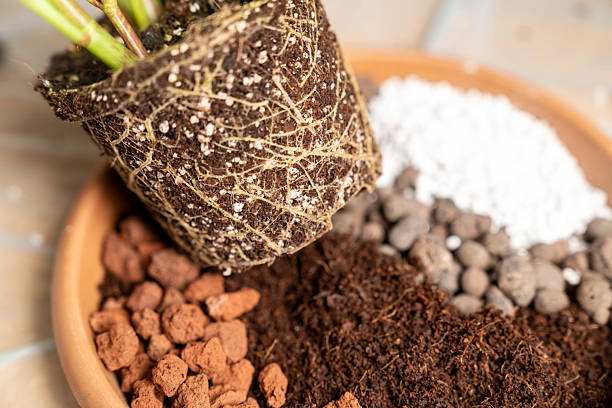
Soil is not static once planting is done. Over time, nutrients gradually wash out with regular watering, and fine soil particles are lost due to wind and surface disturbance. This happens more in terrace container gardening and open outdoor pots than in indoor plants, where exposure is lower.
When garden soil is used alone, it becomes compacted over time due to repeated watering. Clay-heavy soil lacks soil amendments that help maintain structure, so air spaces collapse, and the soil hardens. A proper container soil mix does not compact as quickly, but it still loses nutrients and fine particles over time, especially due to climate effects like heat, rain, and wind.
If you are using hard water or applying chemical fertilizers, salt buildup in container soil can develop over time. These salts usually accumulate on the topsoil layer and slowly clog air pockets. This reduces oxygen flow and interferes with nutrient availability, making the soil mix less supportive for healthy plant growth.
This is why plants often decline months later, even when care routines stay the same. Repotting every few months is not necessary unless the plant clearly shows signs that it needs it. During repotting, compost and soil amendments can be added to replenish nutrients, and the root ball can be loosened gently to encourage fresh root growth.
So, What Can You Do Without Repotting?
To add nutrients, a small handful of compost can be applied every four to six weeks as a topsoil dressing, spread evenly and kept away from the root base. For pots smaller than six inches, a tablespoon is usually enough. If you understand the plant’s growth stage, matching organic fertilizers to that stage supports steady growth. I’ll share more detailed fertilizer guides in future articles.
Want to understand soil without confusion?
Get my free beginner soil guide for container gardening, based on real mistakes and learnings since 2018.
You’ll also receive future blog updates as I publish deeper guides on soil, climate, and plant health.
👉 Sign up here — no spam, only practical gardening insights.
For salt buildup caused by hard water, letting tap water sit overnight before use helps reduce surface salt stress. When watering, use only the top water and avoid the settled residue at the bottom. If salt deposits are already visible, gently remove the crusted layer with a hand rake and replace it with fresh soil mix.
In the case of chemical fertilizer salt buildup, watering deeply until excess salts flush out of the soil can help. After this, allow the soil to dry properly before adding a mild layer of compost to restore nutrients. For potted plants, organic slow-release fertilizers tend to work better long term and reduce the risk of soil damage compared to chemical fertilizers.
When soil loss becomes visible—usually noticeable by a gap between the soil surface and the pot rim—add a fresh soil mix as top dressing. This helps maintain proper root coverage and soil balance without disturbing the plant unnecessarily.
Common Beginner Soil Misunderstandings That Slow Growth
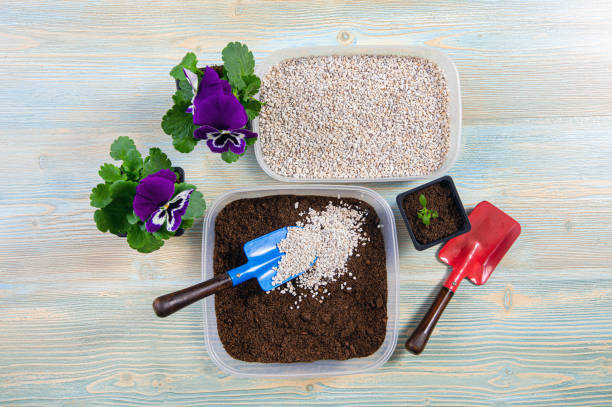
One Soil Works for Everything
This is the biggest myth about soil mixes—using one soil for all plants. Different plant types have different needs when it comes to water retention, drainage tolerance, and nutrient availability. Using the same soil mix for everything often leads to nutrient deficiencies or fertilizer burn, overwatering or underwatering problems, and drainage issues. Every plant has its own preferred soil balance.
You might wonder why this works in ground bed gardening, where one soil seems to support many plants. In ground beds, roots have access to a much larger space, so water spreads and drains naturally, reducing overwatering issues. However, soil-borne disease risk is higher in ground beds. Ground bed plants also require larger quantities of fertilizer, and excess feeding still affects them over time.
In container gardening, we create an artificial microclimate inside a pot. Space is limited, roots cannot escape poor conditions, and soil mistakes show faster. Because of this confined environment, the wrong soil mix almost always leads to chaos, even when plant care looks correct from the outside.
Drainage Holes Alone Solve Soil Problems
Drainage holes are essential in potted plants. They allow excess water to escape and help roots breathe—there’s no doubt about that. But drainage holes alone do not fix soil problems. Simply adding drainage amendments like perlite to poor soil will not automatically create healthy plant conditions.
Too much drainage material can cause underwatering, while poor soil structure can still hold moisture longer than expected. A healthy container soil mix needs balance—proper structure, aeration, drainage, and nutrient availability working together. No single element makes plants thrive on its own; soil health is always a combination of factors.
Using cheap soil mixes or garden soil alone cannot solve drainage issues, even with drainage holes. Poor soil structure retains moisture internally, so while water may exit through the holes, the root zone can remain wet for too long, leading to root stress and fungal issues.
More Compost = Better Soil
This is another common misconception. Even organic compost, when used in excess, can cause problems in container soil. Too much compost increases moisture retention, creates foul smells, encourages excess microbial activity, and can attract bugs or pests. It can also lead to uneven plant growth, such as excessive foliage with poor flowering, salt buildup, and even root or leaf burn.
The right ratio is what matters. Plants can generally be grouped by their feeding needs: heavy feeders like edible crops grown for short periods, medium feeders such as flowering plants with a few years of life, and low feeders like foliage houseplants, shrubs, and succulents. Matching compost levels to plant type helps maintain soil balance and supports steady growth instead of forcing it.
Conclusion — Learning Soil First Makes Every Other Guide Work Better
Container gardening becomes easier to understand once soil is seen as the foundation, not an afterthought. Pots, plants, watering schedules, and fertilizers all depend on how well the soil system functions inside the container. When the soil supports air, water, nutrients, and root movement in balance, plants respond more predictably. When it does not, even careful plant care starts to feel confusing and inconsistent.
This is why learning how soil works in containers makes every future guide more useful. Soil mix recipes, soil amendments, reuse methods, and crop-specific soil needs only make sense when the underlying soil behavior is clear. Without this understanding, it’s easy to follow instructions without knowing why they work—or why they fail in certain climates, spaces, or seasons.
As you continue container gardening, try shifting your attention from plant symptoms alone to soil behavior. Notice how long soil stays wet, how it settles over time, how roots respond after watering, and how weather changes affect moisture and airflow. These small observations help you adjust your soil choices before plants show stress.
If you’re new here, this article fits into a bigger learning path.
Start with the Container Gardening Basics: Beginner Roadmap to understand how space, light, and plant choice shape every decision in container gardening.
From there, these related guides help you build clarity step by step:
- Container Gardening Space Mistakes Beginners Make — to understand how space really works in pots
- Beginner Rules for Choosing Container Garden Plants — to avoid mismatches before planting.
With this soil foundation in place, these guides will feel less like rules to follow and more like tools you can adapt to your own containers, climate, and budget.
Pingback: Plants Not Growing in Pots? Check Your Soil First - Not_So_Green_Thumb
Pingback: Using Garden Soil in Pots? It Can Damage Roots
Pingback: Why Poor Drainage Suffocates Potted Plants
Pingback: Plants Not Growing? Try These Potting Mixes
Pingback: Why Plants Stop Growing in Pots: Soil Texture Matters
Pingback: Why the Same Soil Helps One Plant but Kills Another - Not_So_Green_Thumb
Pingback: Beginner Soil Mistakes That Slowly Damage Potted Plants
Pingback: Why the wrong pot size makes container plants fail early