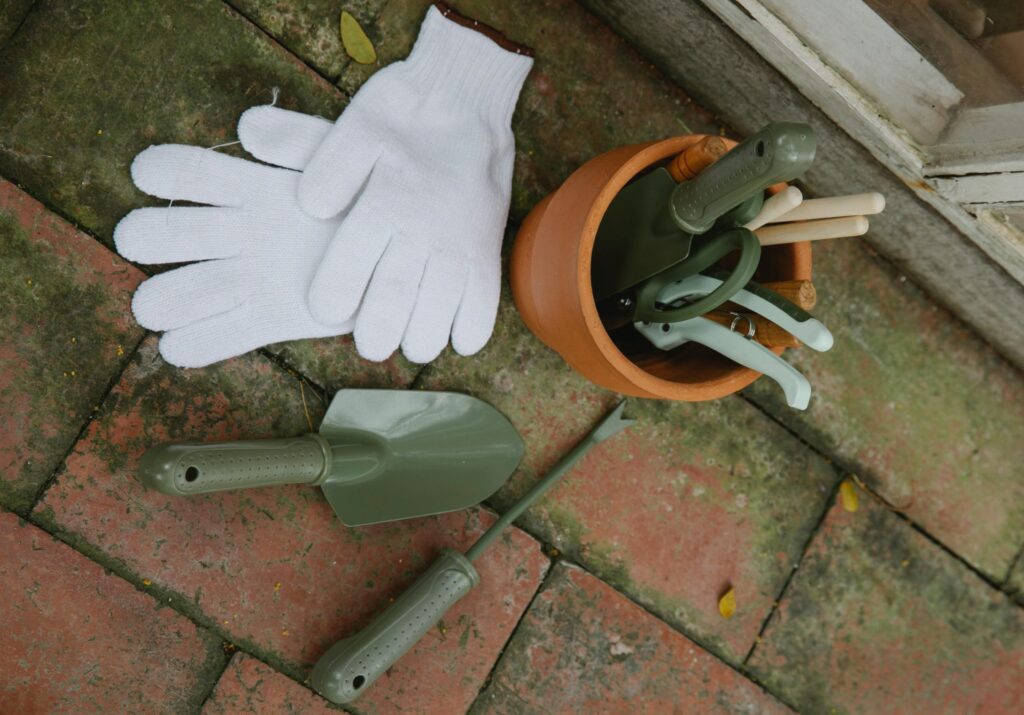
When beginners start searching for tools for container gardening, they often feel overwhelmed and confused by the endless options and suggestions from influencers.
This confusion shows up in plant shops too. There are many tools available, but it’s not always clear how they actually work for pots. Most tools sold are designed for ground gardening — they are strong, but not precise enough for small containers or balcony gardening setups.
When you turn to social media for suggestions, many of the tools recommended are either expensive or suited for a specific influencer-style garden setup. As a beginner, this often leads to buying unnecessary tools that don’t really fit your small space gardening needs.
There’s also a big difference between investing in good quality gardening tools and buying premium tools just for the brand name. On the other hand, choosing very cheap tools and expecting them to last only leads to repeated spending, because they wear out quickly or even damage plants during use.
Beginners don’t need high price tag tools or cheap tools that break easily. What you actually need is durable, affordable gardening tools for beginners that can handle regular use in container setups. With proper cleaning, maintenance, and storage, even simple tools can last much longer in Indian balcony and terrace conditions.
You also don’t need a long list of tools for every specific gardening task. Instead, focus on a few essentials that support the three core areas of container gardening — the tasks you’ll repeat almost every day.
These are:
- Soil-related work
- Pruning and plant care
- Watering
These three areas cover most of your daily plant care routine in pots, especially in small spaces where access and control matter more than tool size or strength.
In this blog, I’ll give you a clear view of these three categories of basic gardening tools for container gardening beginners, so you can choose tools that actually work in balconies, terraces, and tight pot spaces without strain.
You don’t need a full toolkit to start or maintain a garden. In most cases, 5–6 essential gardening tools for small space gardening are enough to handle regular care without making the process complicated.
→ “If you’re starting container gardening, these are the only tools you’ll actually use in the first few months.”
🌱 Container gardening needs precision — and that’s where tools come in. Click to understand their real role
Soil Tools (Your Daily Use Tools in Pots)
Why Do Soil Tools Come First in Container Gardening?
Gardening is basically handling soil in different ways, whether it’s in pots or ground. These tools make soil handling easier and less messy, especially in container gardening for beginners.
Gardening is all about planting, repotting, loosening soil, and mixing soil amendments. These are repetitive tasks no matter what plants you grow. If you use soil as a growing medium in pots, you will need the right soil tools.
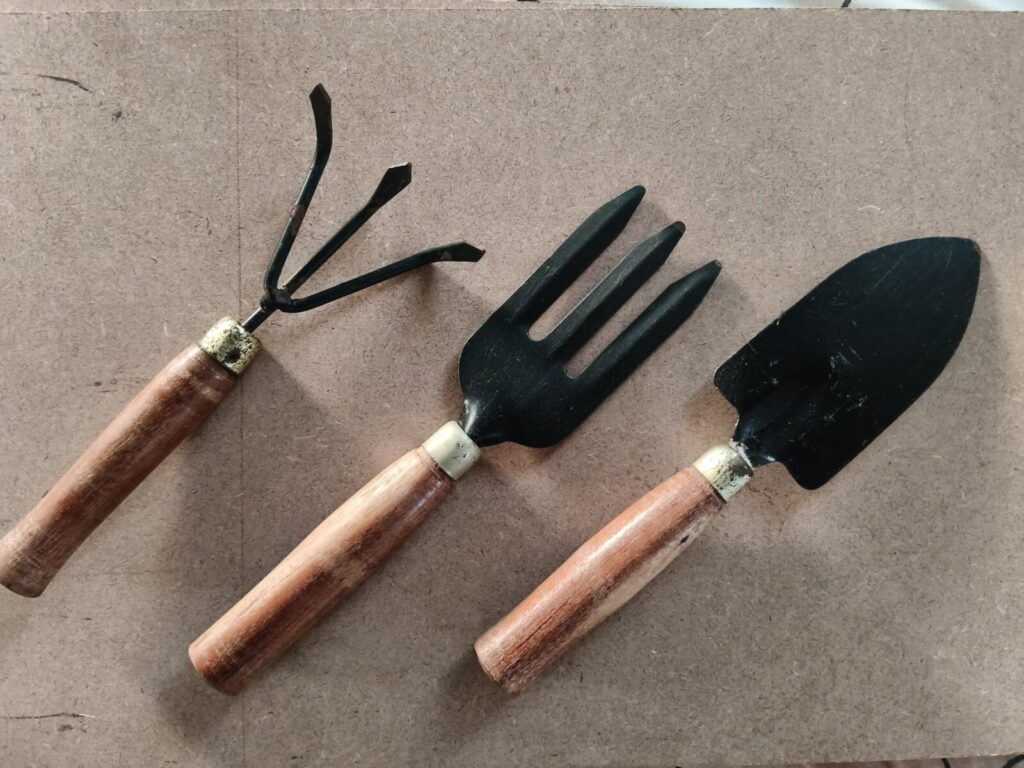
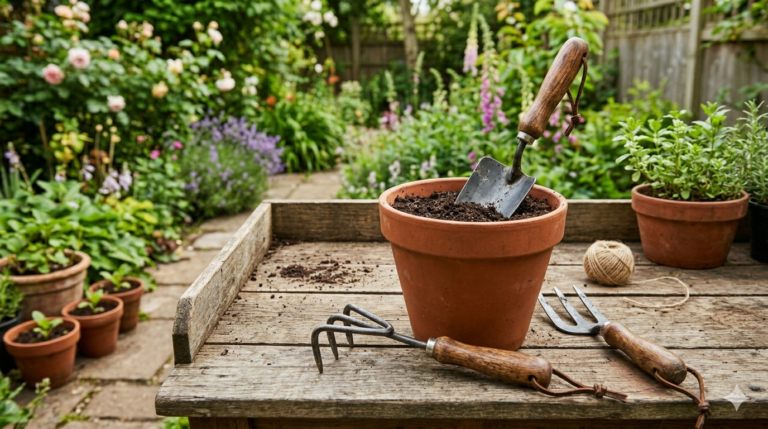
Soil tools are not fancy or complicated — it’s just a trowel, hand rake, and hand fork. These tools help with planting, repotting, transplanting, making potting mix, loosening compacted soil, feeding fertilizers, weeding, and mixing amendments.
The purpose of soil tools is to make gardening faster, easier, and more precise without creating a mess that’s hard to clean — which matters a lot in balcony and terrace gardening setups. These are not occasional tools; they are part of your regular gardening routine.
Core Soil Tools You Actually Need to Buy
Hand trowel:
This tool comes in two useful types. One is wider, which is good for planting, filling soil, and handling larger amounts of potting mix. It also helps while transplanting root balls.
The second type is a narrow, deep metal-head trowel. This is especially useful for small pots and tight spaces in container gardening. It makes it easier to add fertilizers, adjust soil, and work neatly in compact areas.
Hand rake:
A hand rake helps break lumps in the soil mix and mix them evenly. It’s useful for setting soil before seed sowing. You can also use it to loosen topsoil while feeding fertilizers or when the soil becomes compacted. It’s one of the simplest tools for maintaining a well-aerated potting mix without clumps.
Hand fork:
A hand fork is often underrated in container gardening, but it’s very useful. It helps break cocopeat blocks, loosen topsoil, and gently loosen root ball edges during repotting without damaging roots. You can also use it for light weeding in pots.
How to Choose the Right Tools for Your Pots
While choosing tools, don’t focus only on looks or colour. Read the product description if buying online, or check the material if you’re buying from a local shop.
Choose tools with metal heads instead of plastic. Metal tools last longer and handle compact soil better. Make sure the metal has a rust-resistant coating, especially for humid Indian balcony gardening conditions.
For handles, choose good-quality plastic with a comfortable grip, or smooth-finished wood that won’t hurt your hands during regular use.
Also, make sure the size is compact and lightweight. Bigger tools are harder to use in small pots and tight spaces, which is common in small space gardening setups.
Common Mistakes Beginners Make While Buying Tools
Most beginners hesitate to spend and fall for cheap deals, thinking they are saving money. But cheap tools wear out quickly, and you end up replacing them often — which increases your overall cost instead of reducing it.
On the other hand, some beginners buy premium brand tools thinking they will make gardening easier. That’s not how it works. Tool handling comes from experience and practice. Even expensive tools won’t perform well if they are not used properly or maintained well.
What actually works is choosing affordable, good-quality gardening tools for beginners — not the cheapest and not the most expensive. The lifespan of any tool depends on how you clean, store, and maintain it after use.
✨ If your tools don’t last long, this guide will change how you care for them. Explore the full rust-prevention guide
Pruning Tools (Plant Health & Control in Container Gardening)
Why Pruning Tools Are Essential Early
If you think pruners are only for experienced gardeners or occasional use, that’s a common misunderstanding. Pruning tools are part of a regular routine, even in container gardening for beginners.
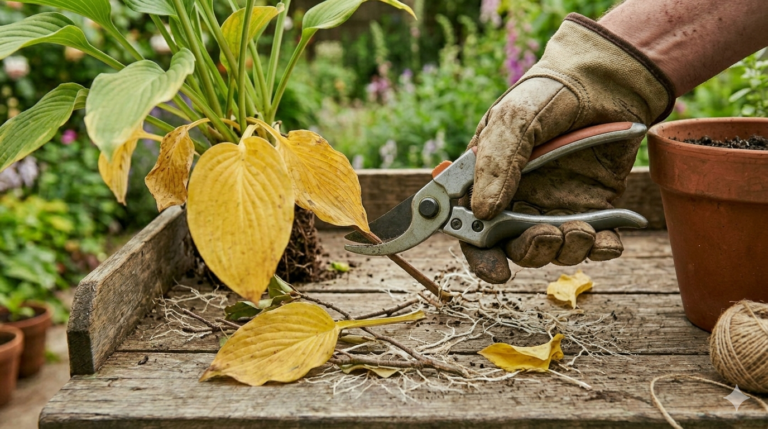
Pruners are used to remove yellow leaves, dead parts, and any plant growth that no longer supports healthy development. This simple pruning routine prevents the plant from wasting energy on dead or unproductive parts.
In pots, root space is limited. So instead of letting plants grow excessively, managing foliage through pruning helps maintain balance and keeps plants healthier in small space gardening setups.
For flowering and fruiting plants, light pruning helps redirect energy toward blooms and fruit formation. Herbs and leafy greens also benefit from regular pinching to grow fuller and healthier — and for that, you need clean, precise cutting tools for plants.
Dense foliage can easily become a hiding spot for pests and can also increase the risk of plant diseases. Regular pruning keeps the plant open, clean, and easier to monitor, especially in humid balcony gardening conditions in India.
Core Pruning Tools to Buy for Beginners
Pruners (secateurs):
You don’t need complicated or expensive ergonomic designs when starting out. A simple, standard pruner is enough for regular container gardening. Avoid buying multiple types in the beginning — one reliable pruner can handle most pruning needs in pots.
Sharp scissors:
Keep one good-quality, sharp metal scissors only for gardening use. Don’t use it for cutting packages, threads, or anything else. This helps maintain blade sharpness and hygiene. Scissors are especially useful for small plants and delicate stems where pruners feel too bulky.
How to Choose the Right Pruning Tools for Pots
You don’t need specialized or advanced pruning tools like narrow-tip or nose pruners as a beginner. A regular pruner with curved blades is enough — it gives clean, precise cuts without damaging the plant.
Choose tools with rust-resistant blades and a comfortable grip. This is important for regular use in balcony and terrace gardening environments, where humidity can affect tool lifespan.
If you are tempted to buy specialized tools, remember they are usually designed for experienced gardeners who know exactly where and how to cut. Using them without proper understanding can lead to incorrect cuts, stem wounds, and a higher risk of plant damage.
Common Beginner Mistakes in Pruning Plants
- Using bare hands to remove stems or leaves, which puts pressure on the plant, disturbs roots, and causes unnecessary stress
- Using household scissors or dull tools, which create rough cuts and increase the risk of stem rot
- Pruning with rusted or unclean tools, which can spread disease to healthy plants
- Not cleaning tools before and after use, leading to pest and infection spread
- Leaving tools uncleaned after use, which reduces their lifespan and effectiveness
Healthy pruning is not just about cutting — it’s about making clean, controlled cuts that protect plant health in container gardening.
🌿 If your plants struggle after repotting or pruning, your tools might be the hidden reason. Discover the real impact of low-quality tools
Watering Tools (Control Over Watering, Not Just Watering)
Why Watering Tools Matter More Than Beginners Think
Watering tools are not just for pouring water — they directly affect plant growth and health. The way you water decides whether the soil stays evenly moist or becomes overwatered or underwatered, which is a common issue in container gardening for beginners.
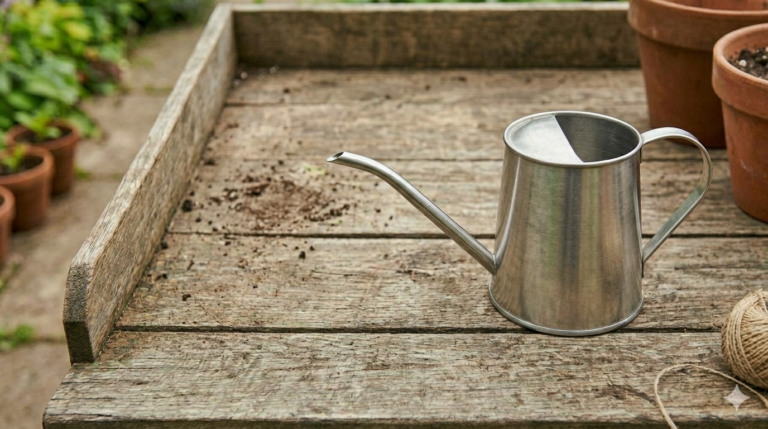
The right watering can with a long spout helps you reach tight spots and water evenly across pots. A rose (shower head) attachment allows water to fall gently, preventing soil erosion and protecting fine roots near the surface.
In container gardening, smaller watering cans work better. While you may find cans up to 10L, they often feel too heavy for regular use. A 3L to 5L watering can for balcony gardening is more practical — easier to carry, control, and store.
If you have many plants, it might mean a few extra trips to refill, but it reduces strain. I personally used a 10L can earlier and shifted to a 3L can because of the strain, even while managing 50+ plants. That control and comfort matter more in daily watering routines.
Core Watering Tools to Buy for Beginners
Watering can:
For beginners, a plastic watering can (up to 5L) is the most practical choice. It’s lightweight, easy to carry, and gives better control while watering. A proper spout and rose help with even watering, allowing deep watering in pots without disturbing soil.
Sprayer (mist bottle):
A sprayer is a multipurpose tool. You can use it for watering seedlings, misting plants during hot weather, and applying pest control solutions. One good-quality sprayer can handle multiple tasks if used and maintained properly.
How to Choose the Right Watering Tools for Pots
Choose durable, good-quality plastic over metal for regular use. Material and design matter more than appearance. Keep it simple — overly fancy designs often reduce functionality in daily gardening.
For watering cans, focus on comfortable grip, balanced weight, and a proper spout with a removable rose.
For sprayers, go for a basic manual sprayer. Make sure it sprays evenly and is easy to clean. Regular cleaning is important to keep it working well, especially when used for different purposes like misting and pest sprays in balcony and terrace gardening setups.
Common Beginner Mistakes in Watering Plants
- Using mugs, buckets, or hoses, which cause uneven watering, soil erosion, and root disturbance
- Choosing watering cans or sprayers based on looks instead of functionality
- Buying expensive metal watering cans expecting better results — watering technique matters more, and metal tools can rust over time
- Using heavy watering cans that strain your hands, leading you to avoid proper watering routines
- Not cleaning sprayers regularly, which affects performance and can spread residue or pests
Simple, functional tools make watering easier and more consistent — which is key for maintaining healthy plants in small space container gardening.
Begin with Essentials, Upgrade Based on Experience
The reason I narrowed down these tools into three categories and kept the count within 5–6 is to reduce confusion when choosing gardening tools for beginners.
The more options you add, the more complicated it becomes. Keeping it minimal helps you save money, avoid clutter, and maintain your tools easily — especially in small space container gardening setups. More importantly, gardening skills come from using the tools regularly, not from the price tag attached to them.
Once you gain experience, you can upgrade your tools based on your actual garden needs — not random suggestions. But these tools are the basics. No gardener skips them, and as a beginner, you can easily manage 30–50 plants in a balcony or terrace garden with just these if you use them properly.
Start gardening with minimal tools so you don’t feel overwhelmed and can focus on learning through experience.
🌱 Starting container gardening feels overwhelming — this roadmap shows exactly where to begin.
Read the beginner’s complete roadmap