Beginners often feel overwhelmed and confused by the number of gardening tool options available online. In local shops or nurseries, most tools are designed for ground-bed gardening—bigger, heavier, and not always practical. But in container gardening, especially in small balcony or terrace setups, you need tools that are compact, precise, and easy to handle in tight spaces.
Not just beginners—even regular container gardeners benefit from using container-specific basic tools. But that doesn’t mean you need advanced or overly specialized tools for every small task. Having multiple pruners or too many tool variations usually adds confusion, not value.
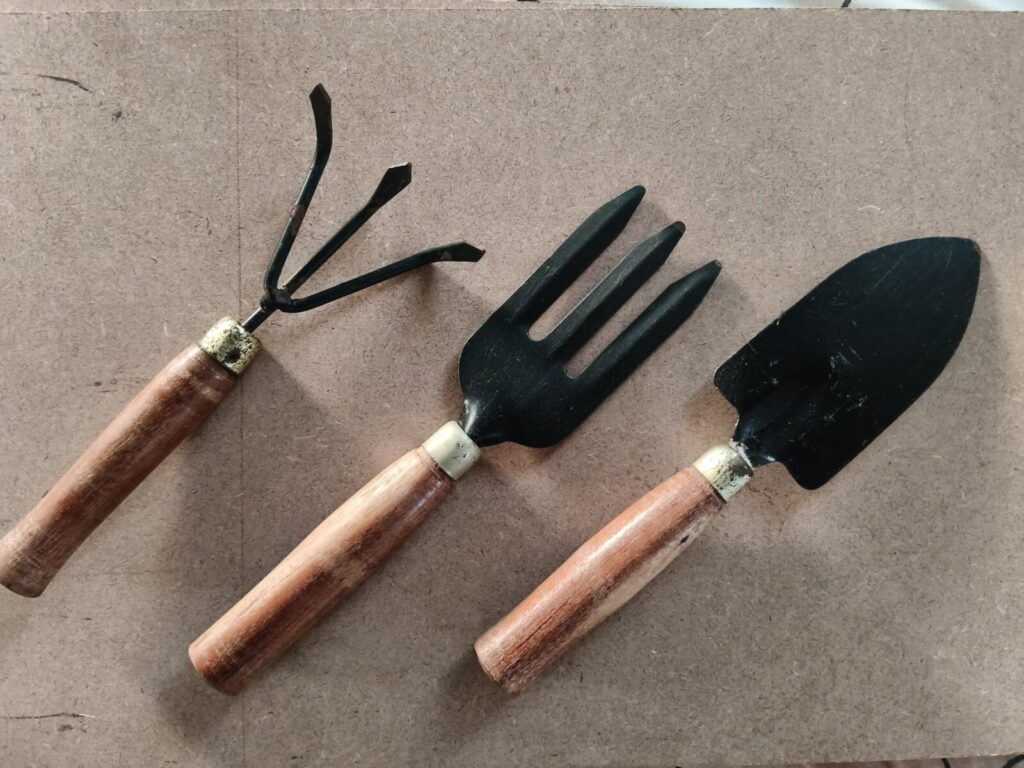
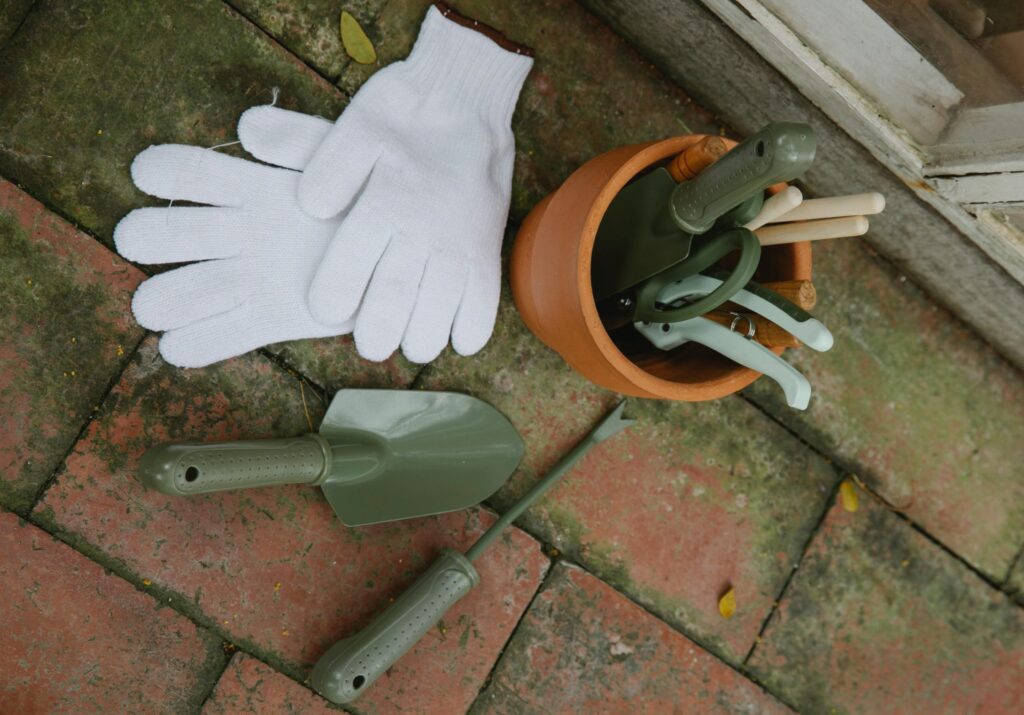
All you really need are affordable, quality basic gardening tools for beginners:
- A wide trowel for medium-sized pots
- A narrow, deep trowel for small pots
- A hand rake
- A hand fork
- One good quality pruner
- A small watering can with a long spout and rose
- A gardening mat and gloves to manage soil spillage and avoid staining
This simple setup is enough to handle most balcony or terrace gardening needs. I’ve personally used this basic combination to manage 60+ plants in a terrace container garden, without needing extra tools.
Adding more tools without enough hands-on experience in container gardening often leads to clutter. Most of them won’t be used daily—they just take up space and make maintenance harder.
The tools listed above cover daily needs for full-time gardeners and even weekly care routines for hobby gardeners. Keeping your tools minimal and basic makes it easier to maintain them, use them properly, and gradually understand their purpose.
Once you gain experience, you can upgrade your tools based on your actual gardening needs—not based on premium branding or influencer recommendations.
🪴 You don’t need many tools to start — just the right ones.
See the best beginner tools here
Tool Selection Confusion (What to Buy vs What Matters)
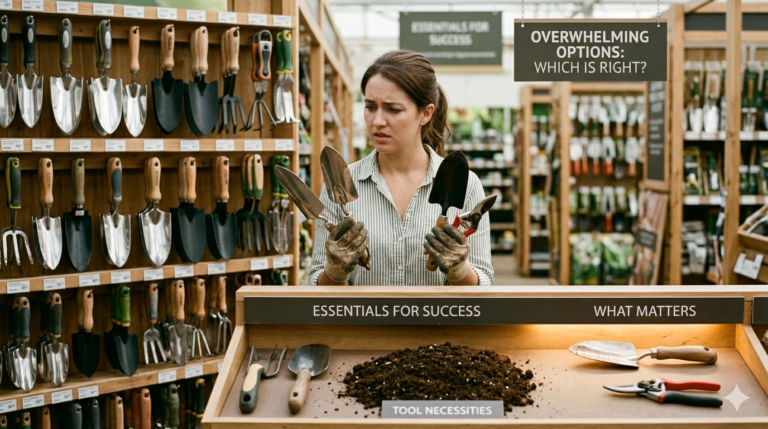
Beginners often feel overwhelmed and confused by the number of gardening tool options available online. In local shops or nurseries, most tools are designed for ground-bed gardening—bigger, heavier, and not always practical. But in container gardening, especially in small balcony or terrace setups, you need tools that are compact, precise, and easy to handle in tight spaces.
Not just beginners—even regular container gardeners benefit from using container-specific basic tools. But that doesn’t mean you need advanced or overly specialized tools for every small task. Having multiple pruners or too many tool variations usually adds confusion, not value.
All you really need are affordable, quality basic gardening tools for beginners:
- A wide trowel for medium-sized pots
- A narrow, deep trowel for small pots
- A hand rake
- A hand fork
- One good quality pruner
- A small watering can with a long spout and rose
- A gardening mat and gloves to manage soil spillage and avoid staining
This simple setup is enough to handle most balcony or terrace gardening needs. I’ve personally used this basic combination to manage 60+ plants in a terrace container garden, without needing extra tools.
Adding more tools without enough hands-on experience in container gardening often leads to clutter. Most of them won’t be used daily—they just take up space and make maintenance harder.
The tools listed above cover daily needs for full-time gardeners and even weekly care routines for hobby gardeners. Keeping your tools minimal and basic makes it easier to maintain them, use them properly, and gradually understand their purpose.
Once you gain experience, you can upgrade your tools based on your actual gardening needs—not based on premium branding or influencer recommendations.
🪴 You don’t need many tools to start — just the right ones.
See the best beginner tools here
Tool Hygiene & Disease Spread (Hidden Mistake)
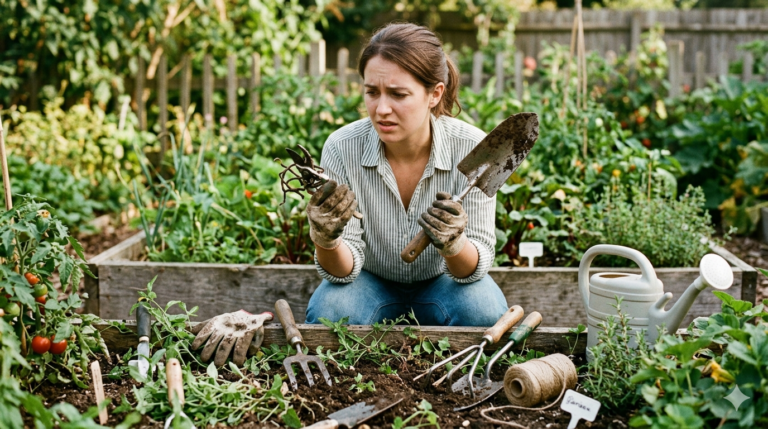
Tool hygiene is something beginners are usually not aware of—until they start facing repeated issues like pests coming back out of nowhere.
Even after treating diseases and changing the soil, problems can still return. Most beginners focus only on visible symptoms first. Only after repeated failure do they realize that unclean gardening tools can be the hidden cause behind recurring pest and disease issues in container plants.
Tool hygiene matters for two main reasons. First, unclean tools have a shorter lifespan—they rust faster, become dull, and wear out quickly. Second, and more importantly, dirty tools can spread pests and diseases from one plant to another, especially in small balcony or terrace gardens where plants are placed close together.
The more regularly you clean and maintain your tools, the longer they last—and your garden stays safer. Common container gardening pests like mealybugs can easily bounce back if even a tiny egg sticks to your tools.
Using tools without proper cleaning after pest or disease treatment can silently transfer the problem to healthy plants. Tools may look clean after a quick wash, but pests or fungal residue can still remain in tight joints and edges. A simple, practical method is to wipe tools with cleaning alcohol and dry them in direct sunlight, which helps reduce the risk of spread—especially during humid or monsoon conditions.
If possible, keep a separate pruner or scissors for handling infected plants. And always clean tools after each use in such cases. Avoid using damaged or low-quality tools for pest or disease treatment—these tools often create rough cuts on plants and are harder to clean properly, increasing the chances of infection spreading.
🪴 Your tools aren’t just getting old — your balcony conditions are speeding up rust. See why tools rust faster here
Damage Due to Improper Handling (Biggest Killer)
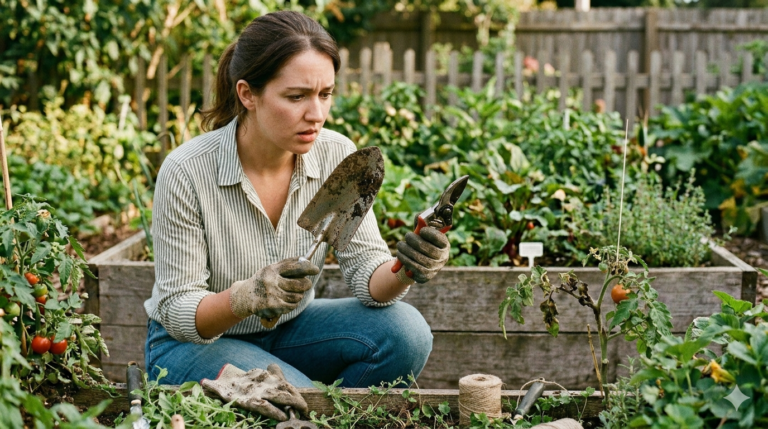
Most plant damage in container gardening doesn’t happen because of pests or fertilizers—it happens during simple tasks like repotting, root handling, and loosening soil. These are routine jobs, but if done without the right approach, they create stress that shows up days later as wilting, yellowing, or sudden decline.
🌱 Where Most Damage Happens
Repotting:
Removing a plant from its pot is where most beginners go wrong. Instead of loosening the soil, they pull the plant out forcefully. This breaks fine feeder roots that are responsible for water and nutrient uptake.
Root Handling:
Roots are delicate. Shaking off all the soil or pressing them too hard while repotting can damage their structure. In container plants, roots are already limited to a small space, so even slight damage affects recovery.
Soil Loosening:
Using the wrong tool—or no tool—can cause the soil to collapse unevenly. This disturbs root stability and airflow inside the pot.
⚠️ Common Problems You’ll Notice
- Roots breaking during plant removal
- Soil falling apart instead of holding shape
- Plant becoming loose or unstable after repotting
- Sudden drooping or leaf drop after a few days
These issues don’t always show immediately. Many beginners think the plant was fine during repotting, but the stress appears later.
❌ Beginner Mistakes That Cause This
Using hands instead of tools
Pulling plants directly or digging with fingers may feel easier, but it leads to uneven pressure and root damage. A simple trowel or hand fork helps loosen soil gently and evenly.
Using wrong-sized tools
Large tools in small pots disturb too much soil at once. Very small tools in tight root-bound pots don’t loosen enough. Using the right-sized, compact tools for container gardening makes a big difference in control.
Rushing the process
Repotting quickly, especially in hot terrace conditions, increases plant stress. When you rush, you skip steps like loosening edges, checking roots, or placing the plant properly in the new pot.
🌿 Practical Insight from Experience
In container gardening, especially in balcony or terrace setups, plants don’t get the same recovery support as ground plants. That’s why gentle handling matters more than speed.
Instead of pulling:
- Loosen the edges of the pot first
- Tilt the pot and support the base of the plant
- Let the root ball come out naturally
Small changes like this prevent unnecessary damage and help plants settle faster after repotting.
🪴 Using your hands feels natural — but it might be harming your plant’s roots. Read why this common habit causes damage
Tools Are Helpers, Not Shortcuts
Tools don’t guarantee success in container gardening—correct usage does. Even the best tools can damage plants if they’re used without understanding, while simple, basic tools can give great results when handled properly.
As a beginner, it’s easy to think more tools will make gardening easier. But in reality, fewer tools with better handling always work better than collecting too many tools without knowing how to use them.
Focus on:
- Using a small set of basic gardening tools for container gardening
- Handling them gently and correctly during daily tasks
- Keeping them clean and well-maintained so they last longer
When your tools are simple and familiar, you naturally get better at using them. That’s where real improvement happens—not from upgrading tools, but from understanding how your actions affect the plant.
Over time, this approach helps you build confidence in your gardening routine, especially in balcony or terrace setups where space, precision, and consistency matter more.
👉 Instead of collecting tools, focus on understanding how to use them properly.
✨ If gardening feels messy, tiring, or inconsistent, your tools might be the missing piece. Explore the complete tools guide