The Real Problem Isn’t Tools, It’s How We Use Them
Beginners often buy gardening tools expecting an instant fix — like a premium tool will solve plant problems or dramatically reduce their workload in a small container garden. But the reality is different. No tool can remove the regular chores in gardening. What tools actually do is make those tasks easier, more controlled, and manageable over time.
Tools start giving real benefits only when you understand them properly — what each tool is used for, how to use it correctly, and when to use it in your daily or weekly plant care routine. Without that clarity, even the best gardening tools for beginners can feel confusing instead of helpful.
Even choosing the right tools for container gardening is a task in itself. The right tools can support plant health, reduce damage, and improve efficiency in balcony or terrace gardening. But when there is no clear understanding of how often to use them or how they fit into your gardening routine, it leads to unnecessary effort, exhaustion, and a feeling that gardening is becoming hard instead of enjoyable.
Tools work best when the gardener connects each tool to a specific task — pruning, watering, soil care, or cleaning. Repeating their use in the right way helps you learn naturally through experience, instead of guessing each time. This is what slowly reduces effort in day-to-day gardening.
In this blog, the focus is to help you reduce that exhausting feeling by understanding how to use your gardening tools better, especially in small-space container gardening setups. You’ll also learn how to build a simple routine that makes your tools more effective and your plant care more manageable.
Most beginners either buy too many tools… or the wrong ones. Discover what you actually need
Why Even the Best Tools Feel Useless Without Purpose
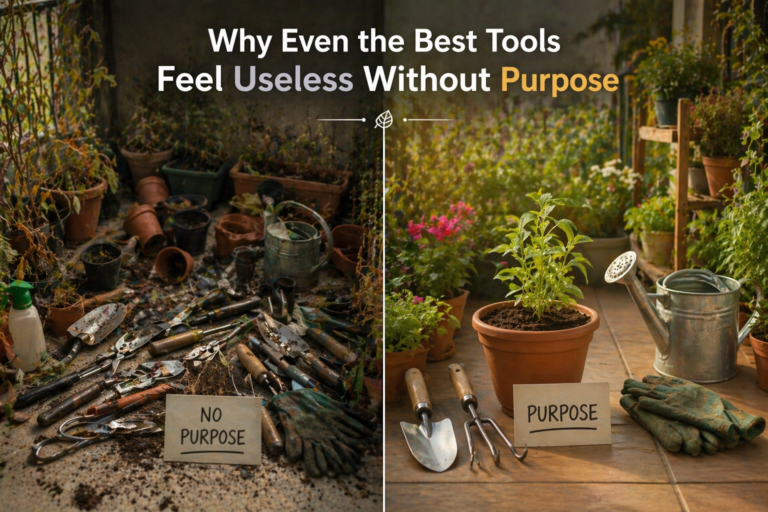
The right tools support the process of maintaining your garden with less effort and without stressing the plant. But tools are not something that can magically fix plant health. In container gardening, they simply make tasks easier and more controlled — they don’t replace proper care.
With the right tools, you can plant more easily, prune with better precision, and water more evenly. They act as a support system to help plants grow well. But what actually improves the effectiveness of these tools is understanding their purpose and observing your plants closely.
Knowing tools doesn’t mean just knowing their names or brands. It means understanding how they function across different tasks. For example, a trowel is not only for planting. In small-space container gardening, it can also be used to:
- mix soil
- transplant plants
- remove small weeds
- break compacted soil
- fill pots and add fertilizer
- loosen topsoil for better airflow
It’s about how you use one tool across multiple gardening tasks. Over time, through simple trial and observation, you’ll understand whether a tool is helping your plant or causing stress.
Not all plants respond the same way. Some are more sensitive to root disturbance or frequent handling. Choosing how and when to use tools requires paying attention to plant response, especially in balcony or terrace gardening where conditions change quickly.
Sometimes beginners buy gardening tool kits or combos with many tools. But most of them are not needed in the beginning. They get used once or twice, then ignored. This leads to wasted money and unnecessary clutter, without actually improving plant care.
This is where awareness matters — knowing the purpose of each tool and choosing only what your gardening routine actually needs.
It’s not that gardening is hard… it’s that your setup is making it harder than it should be.
👉 See why it still feels exhausting (and how to fix it): https://mypotsgarden.com/gardening-feels-too-much-work/
👉 A trowel, pruner, and watering can won’t magically fix your garden — but when used right, they change everything. Want to see the ones I’ve actually relied on for years?
Overuse vs Underuse of Tools
In practice, most gardening tools fall into two simple categories: routine-use tools and occasional-use tools.
Routine-use tools are used regularly in day-to-day plant care:
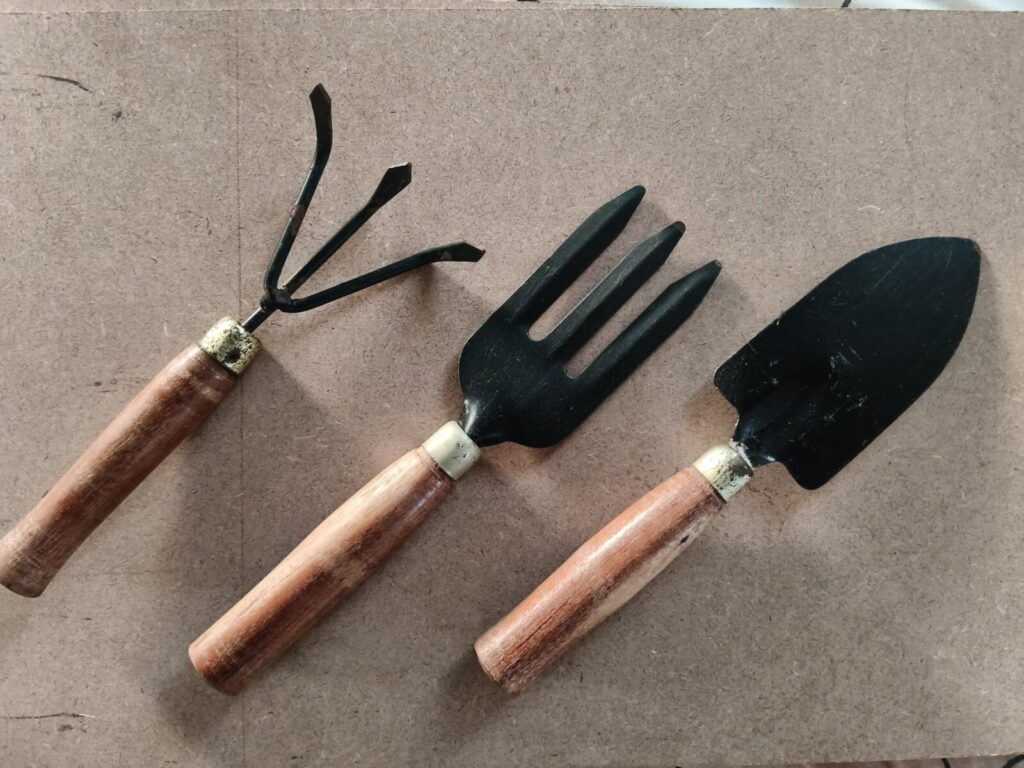
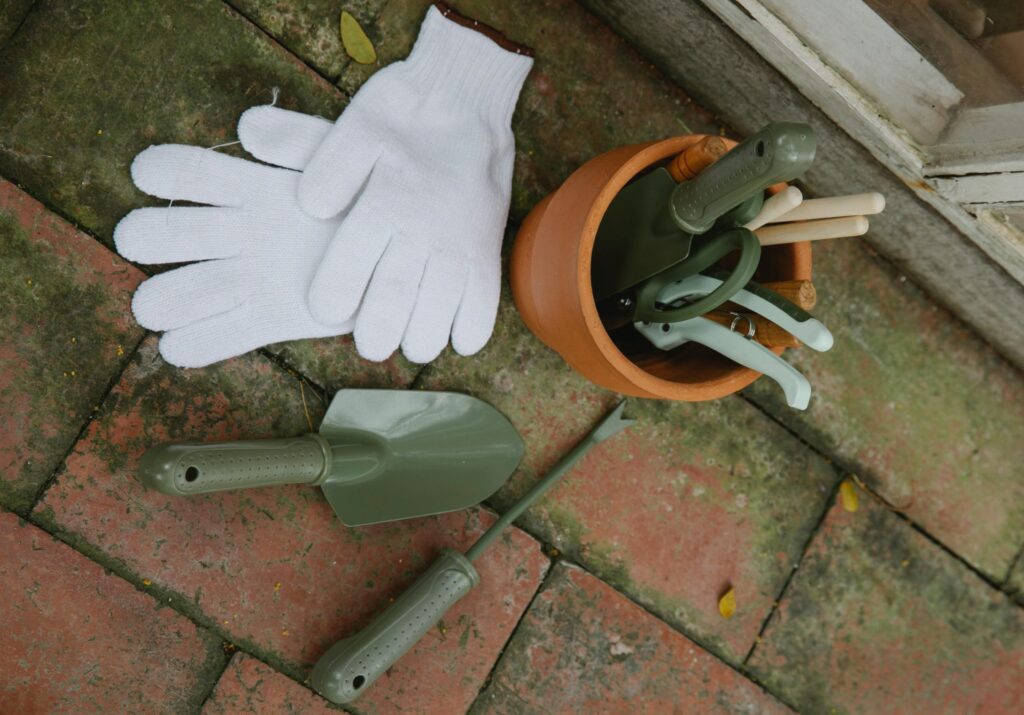
- soil tools (trowel, hand rake, fork)
- watering tools (watering can, sprayer)
- pruners
- gardening gloves
These are essential for basic gardening tasks and form the foundation of a beginner-friendly gardening setup.
Occasional-use tools are still useful but not needed daily:
- gardening mat for mess-free repotting
- snip pruners for light trimming or harvesting
- extra sprayers for pest treatment
- puncture-proof gloves (for thorny plants or cactus)
These depend on your plant types, seasonal changes, and specific needs in your garden.
There are many tool variations available in the market. For example, multiple types of pruners or weeding tools. But in container gardening, weeds are minimal, so many weeding tools are unnecessary.
Buying tool combos may seem like a cost-saving option, but real savings come from choosing only the tools you actually use. Understanding tools and selecting them based on your needs is what makes gardening more efficient, not owning more tools.
🌿 Most beginners waste money on tools they never use. Discover the essential starter tools
“Tools support decisions, they don’t replace them”
Why Lack of Routine Makes Gardening Feel Exhausting
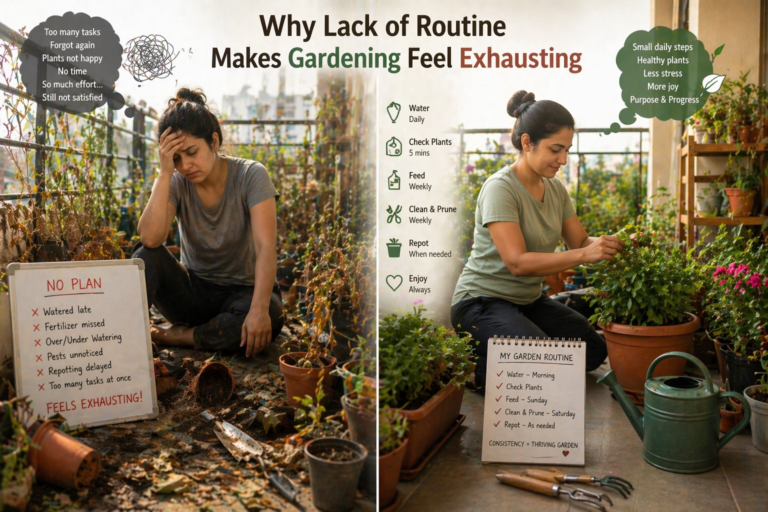
✨ If your garden feels messy no matter what you do, this simple routine will bring structure and ease — read it here: https://mypotsgarden.com/gardening-routine-for-beginners/
Gardening fatigue doesn’t come from the tools itself — it comes from the lack of routine and planning behind it.
Many beginners confuse “routine” with just watering or fertilizing. But those are only tasks. A real gardening routine is about observation, tracking, and planning.
It can be as simple as:
- Checking plants daily or once every 2–3 days
- Noting what needs attention
- Planning tasks for weekends
- Keeping a small record of watering, feeding, and pruning
This simple system changes everything.
When you track your plant care, you:
- Avoid watering or feeding the same plant multiple times
- Don’t forget plants that need attention
- Start understanding how your garden behaves across seasons
A basic calendar or notebook helps you follow up instead of guessing. It reduces repetition, prevents neglect, and saves energy.
The Mental Fatigue of No Planning
Imagine two gardeners.
The Reactive Gardener
This gardener works randomly — no notes, no plan.
- Waters only when soil looks dry
- Sometimes waters the same plant twice
- Forgets pruning or feeding
- Keeps searching for tools again and again
- Walks back and forth unnecessarily
- Gets tired quickly and leaves tasks incomplete
Because there’s no consistent checking, pests and diseases go unnoticed. Plants lose energy due to missed care. The garden slowly becomes overwhelming.
The Planned Gardener
Now imagine a gardener with a simple routine.
- Checks plants regularly
- Writes down what needs to be done
- Plans tasks before starting
- Keeps tools ready in one place
- Works with clarity instead of confusion
There’s no mental load of deciding “what to do next.”
No wasted movement.
No repeated tasks.
No missed care.
Everything flows smoothly.
Plants stay healthier because they are observed consistently. The gardener feels calmer because the system supports the work.
Why Routine Changes Everything
A structured routine:
- Reduces mental fatigue
- Prevents repeated or missed tasks
- Saves physical energy
- Improves plant health
- Makes gardening feel lighter, not heavier
Random gardening leads to burnout.
Planned gardening builds rhythm.
“If your garden feels exhausting instead of peaceful, the problem isn’t the plants — it’s the lack of a simple routine.”
🌿 More effort doesn’t always mean healthier plants — sometimes it does the opposite. Discover the hidden power of plant routines
How to Build a Simple Tool Routine That Reduces Effort
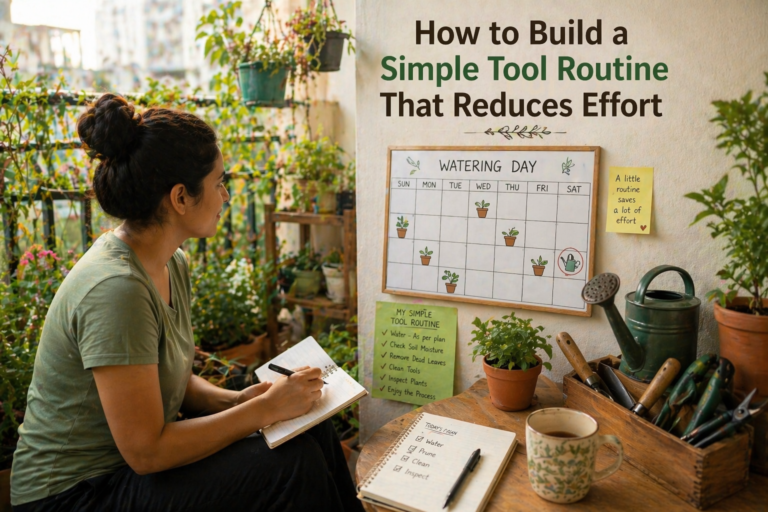
A good routine doesn’t need expensive systems — just a calendar and a simple notebook.
- Use a calendar to track watering and feeding
- Use a notebook to plan tasks and create a to-do list
This removes the biggest energy drain in gardening: deciding what to do every time you step into your garden.
Plan Before You Start (Not While You’re Tired)
Instead of doing random tasks, plan your work in advance.
- Note what needs attention during daily checks
- Create a weekend task list
- Gather tools before starting
This way, you don’t waste energy figuring things out mid-work or walking back and forth.
Group Tasks to Reduce Tool Fatigue
One of the simplest ways to reduce effort is task grouping.
Instead of doing everything at once, assign days or sessions:
- Pruning day
- Watering day
- Cleaning day
This helps you use only the tools needed for that task.
For example:
- Pruning day → pruners, scissors, cleaning alcohol, tissues, dustbin
- No need to carry trowel or watering can
This reduces clutter, keeps tools clean, and avoids unnecessary handling.
Daily (or 2–3 Day) Checks Are Non-Negotiable
Problems in container gardening escalate quickly.
- Pest outbreaks can start within 2–3 days
- Soil moisture changes faster than expected
- Leaves show early warning signs
Even if daily checks aren’t possible, checking once every 2–3 days helps you catch issues early and act easily.
Use Data, Not Guesswork
A calendar helps you understand your garden better over time:
- How fast soil dries in different seasons
- When plants actually need watering
- Ideal feeding frequency
- When pruning works best
This turns your gardening from reactive to predictable.
Why This Routine Reduces Effort
This simple system helps you:
- Avoid repeating the same tasks
- Prevent tool overuse and clutter
- Reduce unnecessary movement
- Eliminate decision fatigue
- Use tools more efficiently
It also removes the hidden stress of “Am I doing this right?”
The Energy-Saving Advantage (Especially in Indian Summers)
Planning ahead means:
- No repeated walking to pick tools
- No standing in heat figuring out next steps
- No half-finished tasks
In hot climates, this isn’t just convenience — it’s energy preservation.
👉 A simple routine doesn’t just organise your gardening — it makes it calmer, easier, and sustainable.
🪴 It’s not the plants — it’s the tools that make gardening feel hard at first. See why beginners struggle with tools
Gardening Feels Lighter When Work Is Structured, Not Increased
Tools are meant to support your garden, not solve its problems on their own. A pruner, trowel, or watering can only become truly useful when there is direction behind it, when it is used at the right time, and when there is a clear purpose for the task. Without that, even the best tools feel ineffective and unnecessary.
When your actions are planned, the entire experience of gardening begins to change. The effort reduces because you are no longer repeating the same tasks or second-guessing your decisions. Movements become more intentional, and you spend less time walking back and forth or figuring out what to do next. Gardening starts to feel lighter, not because the work disappears, but because the work becomes clear.
This is the shift that most gardeners overlook. Gardening does not become easier by doing more. It becomes easier when your work is structured. A simple routine, a bit of planning, and using tools with intention can turn a tiring process into a calm and steady one.
When your garden has structure, your mind feels lighter too. And that is when gardening becomes what it is meant to be — peaceful, consistent, and quietly rewarding. 🌿
🪴 It’s not the plants — it’s the tools that make gardening feel hard at first. See why beginners struggle with tools

Pingback: Gardening Still Feels Messy? Fix It With a Simple Routine