Many beginners feel frustrated because they water their plants regularly, yet the plants still become unhealthy, stop growing properly, develop yellow leaves, or slowly die. If you do container gardening on a balcony or terrace, you may have already experienced this. The soil looks moist, you are watering consistently, but the plant still doesn’t seem happy. That confusion is what makes watering one of the biggest challenges in container gardening.
Most people assume watering is simple—just give water every few days and the plant will grow. But watering potted plants is not that straightforward. It needs balance. If you overwater, the roots can stay wet for too long and eventually rot. If you underwater, the plant goes into stress, growth slows down, and the leaves start showing signs of dehydration.
The tricky part is that you cannot follow one watering schedule for every plant in your garden. The drying speed of potting soil varies depending on the plant type, pot size, soil mix, and even the microclimate around the plant. Temperature, sunlight, airflow, humidity, and the location of the pot on your balcony or terrace all affect how quickly the soil loses moisture.
This is why fixed watering schedules often create more potted plant problems than they solve. You may be watering regularly, but that does not automatically mean the plant is getting what it actually needs. When I first started gardening, I was surprised by how many factors influence something as simple as watering. But once you understand them, many common container gardening problems start making sense.
Another challenge is that watering mistakes rarely show up immediately. A plant does not usually collapse the next day because of one overwatering or underwatering mistake. The damage builds slowly. The soil stays soggy a little too often. The roots become weaker over time. Growth becomes slower. Leaves start yellowing. By the time the plant wilts or shows obvious stress, the watering imbalance may have been happening for weeks.
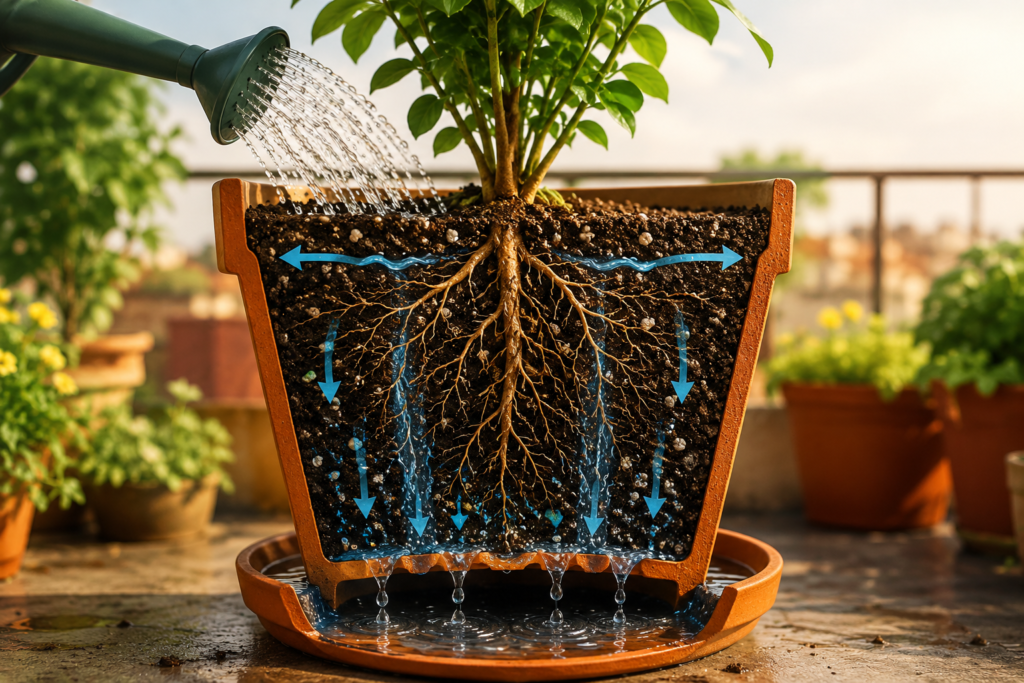
To understand watering better, it helps to understand how water actually behaves inside a pot and how container plants respond to it. The more you understand this, the easier it becomes to notice early warning signs before they turn into bigger problems.
This month, I will be sharing a complete cluster of blogs focused on watering in container gardening. This is the first blog in that series. I will cover the important basics here and then explore specific watering topics in more detail throughout the month. My goal is to help you understand why watering feels so confusing, what signs to watch for, and how to avoid some of the most common beginner watering mistakes before they end up killing your plants.
So before we talk about watering schedules, watering frequency, or how much water a plant needs, let’s first understand why watering is often the most misunderstood part of container gardening.
💧 Most beginners think they’re watering correctly — until these hard truths show up. Read the watering truths beginners miss
What Problems Do Beginners Notice When Their Watering Routine Is Not Working?
These are some common signs that watering is causing more trouble than benefit. Many beginners either ignore these signs or interpret them incorrectly. I did the same when I started container gardening. So let’s look at what these symptoms actually mean and how they relate to watering problems in potted plants.
Why Leaves Turn Yellow Even When You Water Regularly
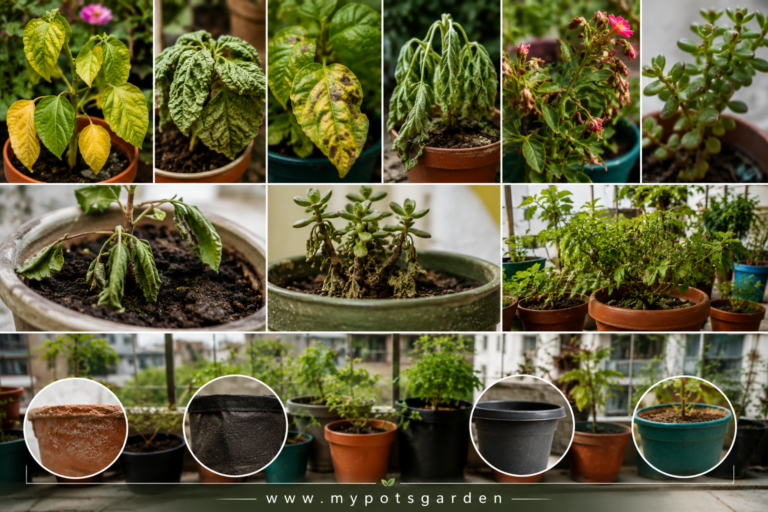
Yellow leaves can happen from both overwatering and underwatering. But yellowing can also be caused by sunlight issues, nutrient deficiencies, and pest problems, which is why many beginners get confused.
To find the real cause, look closely at how the leaves are changing.
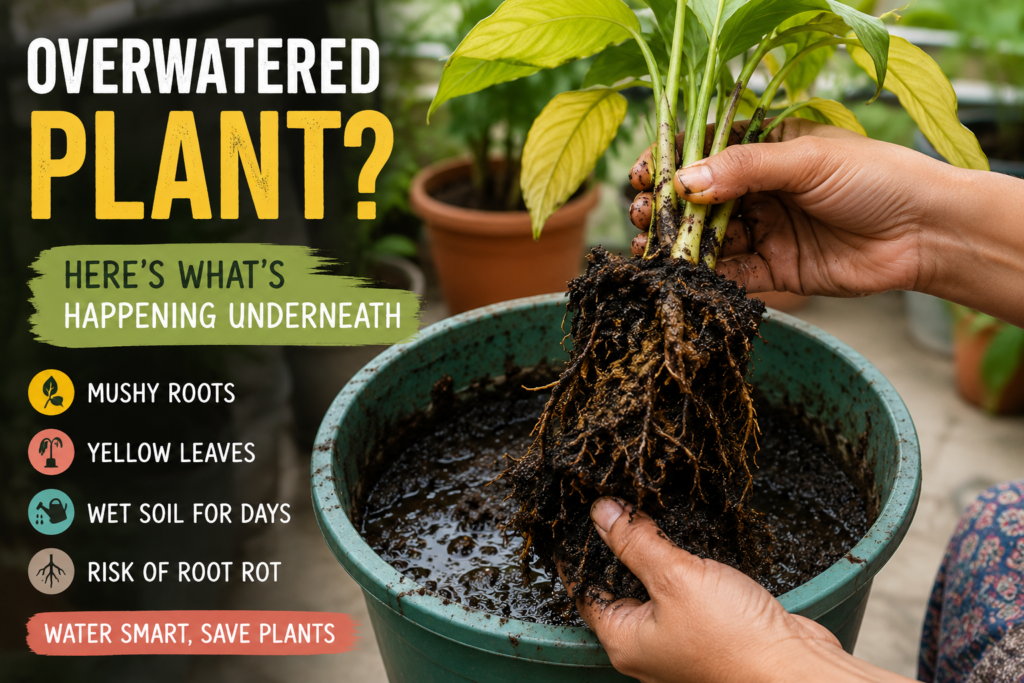
If the leaves become pale, soft, or slightly mushy, especially when both old and young leaves are affected, overwatering is often the problem. This usually happens when plants are watered on a fixed schedule without checking soil moisture first, or when the potting mix lacks proper drainage amendments.
If the leaves look thin, dry, wrinkled, or like a flattened balloon, underwatering is more likely. This often happens when watering is missed for too long or when the soil mix dries out too quickly and cannot hold enough moisture for the roots.
Leaf spots can also appear when the root zone stays wet for longer than it should. This does not always mean severe root rot, but it can be an early warning sign. Poor drainage, overcrowded pots, and lack of airflow in balcony or terrace gardens often create conditions where fungal issues start developing.
Why Some Plants Wilt Despite Having Moist Soil
Not all wilting means the same thing.
Sometimes plants wilt during hot afternoons but recover by evening or the next morning. This is usually heat stress and is common in terrace gardening during Indian summers. The plant is losing water faster than it can replace it, but the roots are still functioning normally.
More concerning is when a plant stays wilted even after watering. In this situation, the roots may not be absorbing water properly. The plant loses turgor pressure, which is what keeps stems and leaves firm. Even when moisture is present, the plant struggles to move water where it is needed.
Overwatering can also cause wilting, which surprises many beginners. In this case, leaves droop, stems may become soft, and the plant starts looking weak despite the soil being wet. This happens because damaged roots cannot absorb oxygen or water properly, eventually leading to root rot and plant collapse.
Why Flower Buds Drop Before Blooming
Many gardeners barely notice this sign because they focus on the leaves. But flower bud drop is often one of the earliest signals that a plant is under stress.
When watering becomes inconsistent, the plant starts conserving energy. Instead of spending resources on flowers, it drops the buds to protect itself.
Watering imbalance is one common cause. Hard water, excess fertilizer, and salt buildup in the soil can also interfere with water movement around the roots. As stress increases, the plant sacrifices flower buds first before larger damage becomes visible.
Why Growth Slows Down Even When Plants Receive Sunlight and Fertilizer
This is one of the most frustrating container gardening problems.
You provide good sunlight, use quality fertilizer, and maintain healthy soil, yet the plant barely grows.
The reason is that water does much more than keep a plant hydrated. Water acts as the transport system that moves nutrients from the soil into the plant. It supports photosynthesis, helps nutrients dissolve and become available to roots, maintains turgor pressure, and helps regulate soil temperature.
When watering becomes imbalanced, all these processes slow down. The plant may stay alive, but growth becomes weaker, slower, and less productive than it should be.
Why Different Pots in the Same Balcony Dry Out at Different Speeds
This is one of the biggest reasons why fixed watering schedules fail.
Even when all the pots are placed in the same balcony or terrace, they rarely dry at the same speed.
The soil mix has a huge influence because the ingredients determine how much water is retained and how quickly excess moisture drains away.
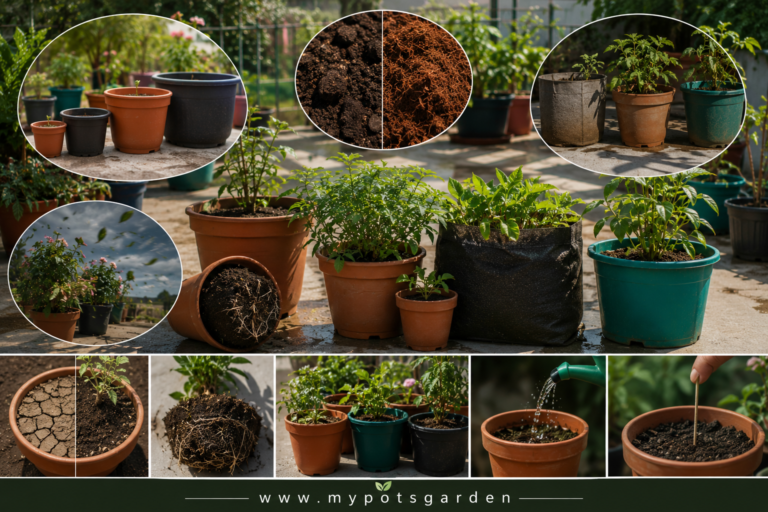
Pot material also matters. Porous containers such as terracotta pots, fabric grow bags, and coco coir pots lose moisture faster. Non-porous containers like plastic, resin, and metal pots usually hold moisture longer.
Pot size makes a difference too. Small pots dry much faster because they contain less soil volume. Larger pots hold more moisture and generally take longer to dry.
Then there is the microclimate around each plant. Sunlight exposure, airflow, reflected heat from walls or floors, and temperature differences all affect the drying speed of the potting mix. This is why two plants sitting only a few feet apart can have completely different watering needs.
🌿 Moist soil + still air = the perfect fungal environment.
Click to understand how it develops
Why Is Watering More Difficult in Containers Than in Ground Gardening?
Many beginner gardeners try to apply ground gardening logic to container gardening, and that’s where the confusion starts.
Potted plants behave differently from plants growing directly in the ground. In a garden bed, roots have more space to spread, moisture can move through a larger soil area, and the surrounding ground acts as a buffer against sudden changes. In containers, everything happens inside a limited space.
The water you give stays inside the pot and potting mix until it is used by the plant or lost through evaporation. How quickly this happens depends on several factors. That is why the same plant can behave very differently in a container compared to a ground bed. The root system adapts to the space available, and that changes how the plant uses water.
How Pot Size Affects How Quickly Soil Dries Out
In general, larger pots take longer to dry, while smaller pots dry much faster.
However, pot size is only one part of the equation. The drying speed is also affected by the potting mix, pot material, plant size, weather conditions, and airflow around the plant.
The main reason smaller pots dry quickly is that they contain less soil volume. There is simply less moisture available for the roots. Larger pots hold more soil, which means they can store moisture for a longer period.
This is also why moving a small plant into an oversized pot can sometimes create overwatering problems. The excess soil holds moisture longer than the young root system can use it. In most cases, choosing a pot about 1–2 inches larger than the root ball allows the roots to grow while still maintaining a healthy moisture balance.
Why Potting Mix Changes the Way Water Moves Through Containers
The potting mix plays one of the biggest roles in watering success.
Using only garden soil or only coco peat often creates problems. Garden soil tends to compact inside containers, reducing the air spaces that roots need. Coco peat alone can hold moisture for too long and may stay wetter than some plants prefer.
Both situations affect root health because roots need oxygen as much as they need water.
A balanced potting mix with drainage amendments creates a better soil structure. The small air pockets between particles allow water to move through the container more evenly while still leaving enough oxygen around the roots.
When water can flow properly through the potting mix, the entire root zone gets hydrated more evenly instead of staying soggy in some areas and dry in others. This creates healthier roots and makes watering easier to manage.
How Sunlight, Heat, Wind, and Terrace Conditions Influence Moisture Loss
In Indian container gardening, direct sunlight is not always the only challenge.
Many gardeners use shade nets or place plants in indirect light to protect them from harsh afternoon sun. But even then, terrace and balcony conditions can affect watering in ways that are easy to overlook.
Heat reflected from concrete floors, walls, and parapets can warm the pots significantly. Hot winds increase moisture loss from both leaves and soil. At the same time, poor airflow around crowded plants can keep some pots wet for longer than expected.
These factors can create uneven drying patterns throughout the garden. One pot may become dry much faster, while another nearby pot remains moist for days.
This is why Indian balcony and terrace gardeners need to pay attention not only to watering but also to soil mix, pot material, plant spacing, and placement. Good watering is less about following a schedule and more about understanding how your growing environment affects moisture.
Why Plastic, Terracotta, and Grow Bags Hold Water Differently
Pot material has a surprisingly large impact on watering frequency.
Terracotta pots, fabric grow bags, and other porous containers contain tiny pores that allow moisture to move through the pot walls. Because of this, they usually dry faster than other container types.
Plastic, resin, ceramic-glazed, and metal containers are less porous. They lose moisture more slowly and generally keep the potting mix wet for a longer period.
This difference is one reason why two identical plants growing in different containers may need water at completely different times.
Instead of watering based on memory alone, checking soil moisture before watering can prevent many common mistakes. A simple toothpick test or finger test often gives more reliable information than following a fixed schedule.
Why a Fixed Watering Schedule Often Creates Problems in Container Gardens
Every factor in container gardening affects how quickly a pot dries.
The potting mix changes moisture retention. Pot material changes evaporation speed. Pot size changes how much moisture is stored. Sunlight, airflow, temperature, and humidity influence drying rates. Even the health of the root system matters. Strong, healthy roots absorb water efficiently, while stressed roots often absorb water more slowly.
When all these factors vary from pot to pot, following the same watering schedule for every plant becomes difficult.
One plant may need water today while another may still have enough moisture from the previous watering. If both receive water simply because the calendar says so, one plant may become underwatered and the other overwatered.
That is why observation-based watering usually works better than schedule-based watering. Keeping a watering log can help you understand patterns, but checking soil moisture before watering is what prevents most watering mistakes.
Over time, you start reading the soil and the plant instead of relying only on dates. That simple shift is often what separates struggling container plants from healthy, thriving ones.
Slow growth, yellow leaves, and weak roots often begin with unhealthy pot soil. Learn why: Plants Not Growing in Pots? Check Your Soil First
How Can You Make Watering Easier and More Reliable for Container Plants?
Watering in container gardening is not about following fixed schedules or buying fancy watering tools.
In fact, this is one of the reasons I eventually gave up on using drip irrigation for most of my terrace garden. I grow foliage plants, succulents, herbs, flowering plants, and recently a few leafy greens. They all grow in different pot sizes and different spots around my terrace. Each spot receives a slightly different microclimate with varying sunlight, airflow, and heat exposure.
Because of that, every pot dries at a different rate.
One thing I learned through experience is that dry topsoil does not always mean the entire pot is dry. In windy terrace conditions, the top layer can dry out very quickly while the lower part of the pot still holds enough moisture for the roots.
Over the years, I developed a few simple watering habits that helped me avoid both overwatering and underwatering. They are not complicated, but they have saved many of my container plants from unnecessary stress.
Check Soil Moisture Before Watering Instead of Following a Strict Schedule
Following a watering schedule feels tempting because it seems organized. But the reality of container gardening is that every pot dries differently based on plant type, pot size, pot material, soil mix, weather, and microclimate.
That does not mean you should have no system at all.
I still keep track of watering patterns and drying windows for different plants. Over time, this helps predict when a plant will likely need water. But observation is what prevents watering mistakes.
Before watering, check the soil instead of checking the calendar.
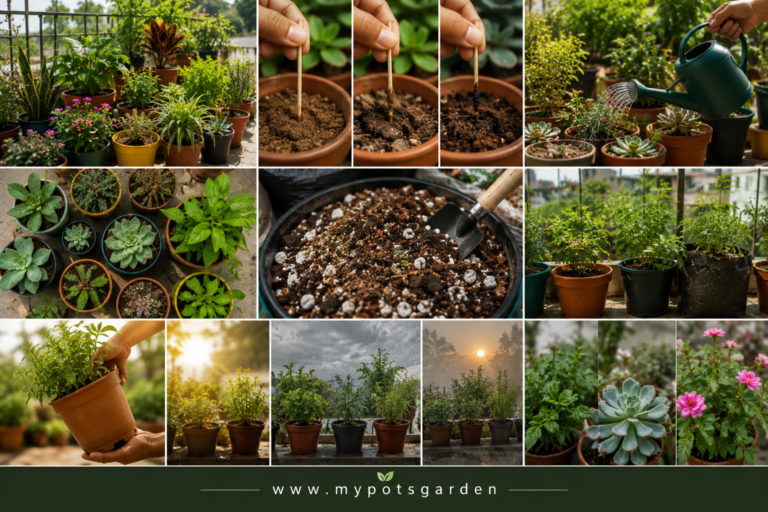
If the topsoil feels extremely dry, use a toothpick to check deeper moisture levels.
- If the toothpick comes out dry and clean, the soil is likely ready for watering.
- If it comes out with a few moist soil crumbs attached, there is still moisture inside, and the plant can usually wait another day or two.
- If it comes out wet, the root zone is still holding enough moisture and watering should be delayed.
This simple habit prevents many common overwatering problems in container gardening.
Group Plants with Similar Watering Needs Together
One of the easiest ways to simplify watering is to group plants with similar needs together.
For example, keep foliage plants in one area, herbs in another, and succulents in their own section. Plants with similar sunlight requirements and watering habits often dry at a similar pace.
When plants are in the same growth stage and growing in similar pot sizes, watering becomes much easier to manage because they often need attention around the same time.
Even then, I still prefer observation over assumptions.
If possible, do a quick garden check every day. If that is not practical, checking every two days is usually enough to catch moisture changes before they become a problem.
Choose the Right Potting Mix to Improve Moisture Balance
The potting mix has a huge impact on watering success.
In container gardening, the soil mix largely determines how long moisture stays inside the pot and how much oxygen reaches the roots.
Unlike ground gardening, pots do not have a large surrounding soil system to balance excess moisture or drought stress. Everything happens inside a limited root zone.
That is why a light, airy, and well-draining potting mix makes such a difference.
The ideal mix depends on the type of plant you grow, but in general, a chunky soil mix with proper drainage and aeration helps maintain a healthier moisture balance while reducing the risk of root rot.
If you need help choosing the right mix, you can download my free soil mix guide below.
💧 Watering Problems Often Start With the Wrong Soil Mix
If your plants suffer from yellow leaves, root rot, soggy soil, or pots that dry too quickly, the problem may not be your watering routine alone. Download my free Soil Mix Ratio PDF and learn how to build a balanced potting mix for healthier container plants.
- ✔ Soil mix ratios for different container plants
- ✔ Improve drainage, aeration & moisture balance
- ✔ Reduce common overwatering and root rot issues
- ✔ Beginner-friendly for Indian balcony & terrace gardens
Adjust Watering Based on Weather, Season, and Plant Growth Stage
Plants do not need the same amount of water throughout their entire life cycle.
Seedlings usually need consistent moisture because their root systems are still developing. The goal is to keep the soil evenly moist without making it soggy.
As plants mature, watering decisions should be based more on soil moisture levels than on fixed schedules.
Different growth stages also affect water demand.
Flowering, fruiting, and edible plants often become much thirstier when actively producing flowers, fruits, or harvestable growth. On the other hand, many foliage plants are more sensitive to excess moisture and often suffer when the soil stays wet for too long.
Seasonal changes also affect watering needs.
During summer, higher temperatures and stronger winds can dry out containers much faster. During monsoon and winter, increased humidity often slows the drying process significantly.
This slower drying period is when many balcony and terrace gardeners accidentally overwater their plants because they continue using their summer watering routine.
Learn the Simple Signs That Tell You a Plant Actually Needs Water
Over time, plants and soil start giving clear signals when moisture levels are dropping.
Some easy signs to watch for include:
- Small pots feel noticeably lighter when lifted.
- A toothpick inserted into the soil comes out dry and clean.
- Leaves begin developing slight wrinkles, especially on foliage plants and succulents.
- The topsoil dries very quickly during hot summer weather, signaling it’s time to check deeper moisture levels.
- Mild wilting during cooler parts of the day can indicate developing underwatering stress.
- Growth slows down and new leaves appear smaller than normal.
The goal is not to memorize rules. It is to learn how your plants, soil, and growing space behave. Once you start observing these patterns, watering becomes much less confusing and far more reliable.
Can Watering Become Easier Once You Understand Your Containers?
Honestly, most of what I know about watering came from making mistakes.
I lost plants because of overwatering. I lost a few because I waited too long to water. Sometimes I thought I was doing everything right, but later realized the problem was not fertilizer, pests, or sunlight—it was simply the way water was behaving inside the pot.
Over the years, I learned that container gardening loses more plants to watering mistakes and poor aeration than many beginners realize. When soil stays wet for too long, it creates conditions for root rot, fungal problems, and weak root systems. Even when a plant recovers, it often becomes more vulnerable to pests and environmental stress for a while.
Underwatering creates a different problem. The plant repeatedly goes through stress and recovery cycles. It survives, but it spends more energy recovering than growing. Over time, that affects growth, flowering, and overall plant health.
The good news is that watering becomes much easier once you start understanding how your containers behave.
You do not need to become an expert overnight. Every gardener learns this skill through observation, trial and error, and time spent with their plants. The more you observe your soil, pots, and growing conditions, the easier it becomes to spot watering problems before they become serious.
That is one of the main reasons I share my hands-on container gardening experiences through these blogs. I want beginner gardeners and fellow plant lovers to avoid some of the mistakes that cost me plants, time, and frustration.
This watering guide is only the beginning. Throughout this month, I will be covering more watering-related topics in detail, including soil moisture checks, watering schedules, overwatering signs, underwatering symptoms, and practical ways to build a more reliable watering routine for balcony and terrace gardens.
If you have struggled with watering, you are definitely not alone.
Feel free to share your experiences in the comments. Sometimes the best gardening lessons come from comparing mistakes, observations, and successes with other gardeners. You can also follow my social media channels for visual gardening tips, container gardening updates, and daily progress from my own garden.
Let’s grow healthier plants—and become better gardeners—one observation at a time.