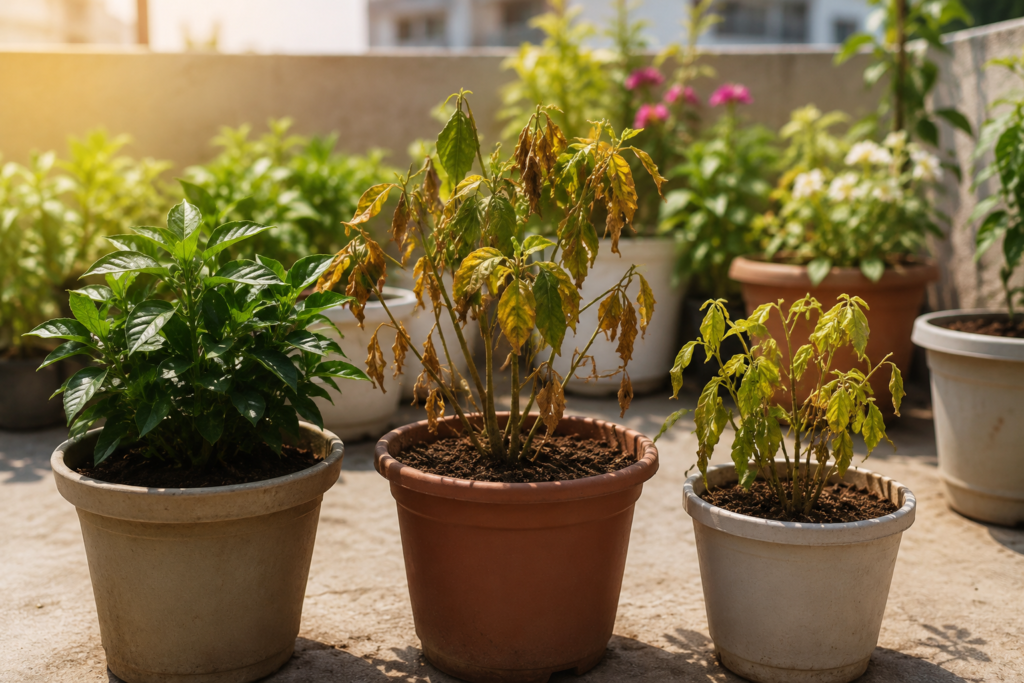
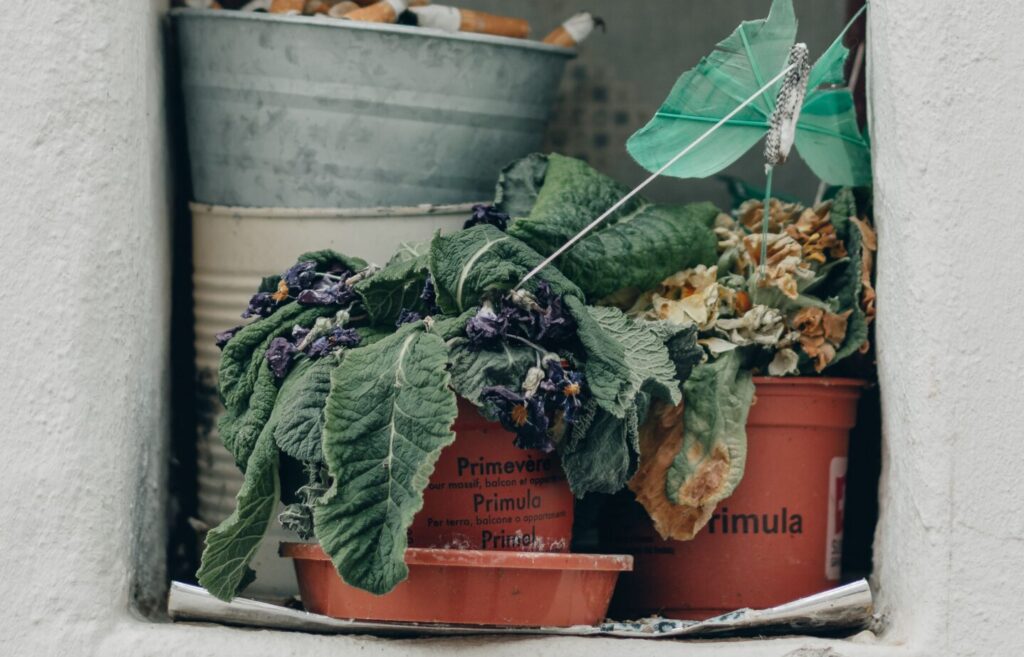
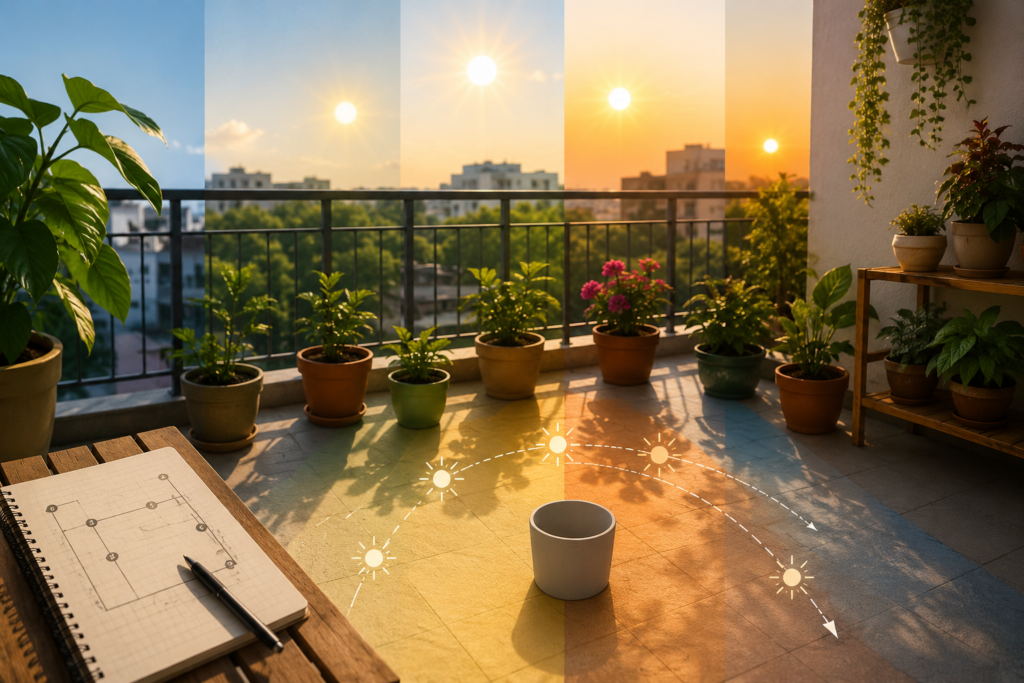
When I first started container gardening, I believed one simple rule—full sun is always good for every plant. I never stopped to understand what each plant actually needed or whether my balcony or terrace even received the right kind of sunlight. Like many beginners, I assumed more sunlight meant healthier growth. Instead, I watched a few of my potted plants slowly wilt, develop dry soil, and struggle despite my best efforts.
So I did the exact opposite.
Without really understanding the plant’s sunlight needs, I moved those containers to a spot with very little light. Again, the plants started wilting—but this time the soil stayed soggy, the stems became soft, and the plants looked even weaker. That’s when I realized that simply moving a plant wasn’t the solution. I had to understand both the plant’s sunlight requirements and how sunlight actually behaves in my own garden space.
The missing piece was learning to read my balcony or terrace throughout the day.
Sunlight affects container plants in many ways because our growing spaces are rarely simple. In balcony and terrace gardens, sunlight may be blocked or filtered by nearby buildings, compound walls, or trees. Even if a spot looks bright, it may not receive enough direct sunlight for certain plants.
And even when your containers receive direct sun, that can backfire too if you don’t understand that sunlight changes with the seasons. The same spot can receive gentle morning light during one season and harsh afternoon heat during another. The intensity also changes depending on the time of day, which can lead to stressed plants, yellowing leaves, dry soil, weak roots, or even overwatered-looking plants growing in the wrong light.
In this blog, I’ll share the simple lessons that helped me stop guessing. You’ll learn how to recognize the signs of too much or too little sunlight, why container plants are more affected by light problems than garden plants, and how to give your balcony or terrace plants the right amount of sunlight without making the same beginner mistakes I did.
What Signs Show My Container Plants Are Getting Too Much or Too Little Sunlight?
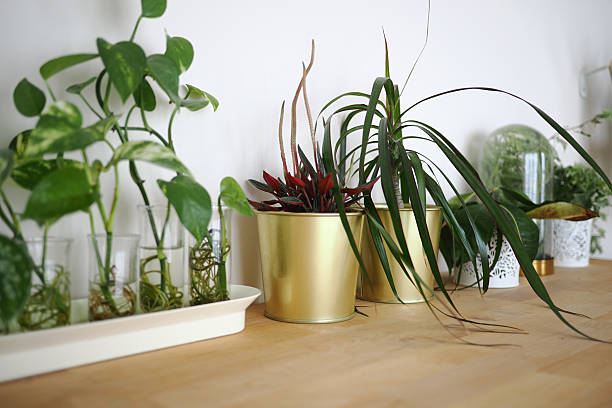
Before moving your container plants, spend a little time reading the signs first. Many beginners see yellow leaves, slow growth, or wilting and immediately shift the pot to another corner of the balcony or terrace. I used to do exactly the same. But constantly moving a potted plant creates another problem—it keeps changing the plant’s microclimate, making it harder for the plant to settle and adapt.
A container plant needs time to adjust to one location. Every spot has its own sunlight, temperature, airflow, and humidity. If you keep moving the pot every few days, the plant is always trying to adapt instead of growing.
One thing to remember—rotating a plant and relocating a plant are not the same. Rotating helps all sides receive light evenly. Frequently shifting a pot from one place to another changes its entire growing environment.
Why Are My Plant Leaves Turning Yellow, Brown, or Crispy?
This is one of the most common signs of sun scorch. The plant is receiving stronger or more intense sunlight than it can comfortably tolerate.
Leaves have tiny pores called stomata. Through these pores, plants lose water as part of their normal process. But when the sunlight becomes too harsh, especially during hot Indian afternoons, water evaporates through the stomata much faster than the roots can replace it.
That creates dehydration inside the leaf. Slowly, the leaf edges become dry, crispy, and brown.
You may wonder why the leaf edges dry first.
That’s because they are the farthest ends of the leaf veins, so they receive water last. When water becomes limited, those edges are usually the first place to show stress.
But sun scorching doesn’t happen because of sunlight alone. In container gardening, several factors work together:
- Placing the pot in the wrong location
- Strong afternoon sunlight
- Heat reflected from terrace or balcony floors
- An unbalanced potting soil mix with poor moisture retention or drainage
- Incorrect fertilizer application
- Root stress inside a crowded container
Why Is My Plant Growing Tall but Looking Weak?
Most gardeners notice this first in pothos or other indoor foliage plants. The stems become long and thin, the spaces between leaves increase, and eventually the plant starts looking bald with only a few small leaves.
If you look closely, you’ll also notice something interesting.
The entire plant leans toward the direction where light is available.
That is simply the plant searching for enough sunlight to perform photosynthesis. It’s not laziness or poor growth—it’s survival.
Small leaves are another clue. Instead of producing larger, healthy foliage, the plant uses its limited energy just to stay alive.
One more thing I’ve noticed is when one side of the plant looks full while the opposite side looks almost empty. In many cases, this isn’t only a sunlight issue—it’s also because the pot hasn’t been rotated for a long time, so only one side keeps receiving light.
Why Does My Plant Stop Flowering or Growing Even Though I Water It Properly?
This is another mistake I made in my early container gardening days.
I believed watering properly should be enough for healthy growth and flowering.
But whether it’s a potted plant or one growing in the ground, flowering and vigorous growth always depend on a combination of care—not just one thing.
The foundation is always good potting soil, proper watering, and the right amount of sunlight. Fertilizing and pruning become effective only after these basics are working together.
Healthy potting soil stores moisture and nutrients for the roots. Water doesn’t just hydrate the plant—it also helps break down organic matter into forms the roots can absorb and carries those nutrients throughout the plant.
Sunlight completes this partnership.
Using sunlight, water, and carbon dioxide, plants produce glucose through photosynthesis. That glucose is the plant’s food, and it quietly powers almost everything happening inside the plant.
It provides energy for new leaves, root development, branching, flowering, and fruit production.
When a plant doesn’t receive enough sunlight, it cannot produce enough glucose. That’s one reason leaves may become pale, growth slows down, and the entire plant begins to lose its healthy shape and strength.
One fascinating thing I learned is that sunlight doesn’t only provide energy—it also acts like the plant’s daily clock. It helps regulate:
- Opening and closing of stomata
- Water use throughout the day
- Hormone production
- Daily growth cycles
- Seasonal growth responses
Once I understood that sunlight was doing much more than simply “making plants green,” many of the problems in my balcony garden finally started making sense. In the next section, we’ll look at why container plants are especially sensitive to sunlight problems and what makes them behave differently from plants growing in the ground.
Full sun doesn’t always mean healthy plants. Discover why your container plants may still be struggling: Why Are Your Container Plants Struggling Even in Full Sun?
Why Does Sunlight Affect Container Plants More Than Plants Growing in the Ground?
Plants growing in the ground can also suffer from excess heat and sun scorch. The biggest difference is that you can’t simply move them like you can with container plants. You can install a shade net to reduce harsh sunlight, but controlling ground heat is much more difficult.
Container plants give us more flexibility. Once you understand what’s causing the stress, you can move the pot to a better location or take simple precautions before the damage becomes serious.
Why Do Pots Heat Up Faster in the Direct Sun?
One thing I slowly noticed while growing plants on my terrace was that the problem wasn’t just sunlight from above.
The floor itself was becoming extremely hot.
In container gardening, floor heat and nearby surfaces like concrete walls, parapet walls, metal grills, and tiles create a much hotter microclimate around the pot. That heat slowly builds up inside the container and raises the soil temperature around the roots.
The pot material and pot size also make a difference. Small plastic pots usually heat up much faster than larger containers. During hot Indian summers, the pot almost feels like it’s being heated from both directions—the sun from above and the hot floor from below.
That affects plant hydration much faster than many beginners realize.
Plants growing in the ground have one big advantage. Their roots can spread deeper and wider to search for cooler, moist soil. The surrounding soil also stores more moisture and naturally buffers temperature changes.
But inside a container, root space is limited. The roots cannot stretch further to find water, and the potting soil warms up much more quickly. Once the soil dries, the entire root system experiences stress much sooner.
I’ve also noticed this happening when pots are placed directly on terrace floors, pressed against concrete parapet walls, or kept too close to metal grills that radiate heat throughout the day.
Why Does My Balcony or Terrace Receive Different Sunlight Throughout the Day?
Understanding your garden’s sunlight starts with understanding your space.
Most of us casually say a balcony faces east or west, but it’s worth checking the exact direction using the compass on your phone. Then spend a few days simply observing where the sunlight falls from morning to evening.
One interesting thing I learned is that the sun doesn’t rise from the exact same point every day. As the seasons change, sunrise and sunset gradually shift slightly toward the north for part of the year and toward the south for the other part.
That means the sunlight pattern in your balcony or terrace also changes throughout the year.
The intensity changes too.
Morning sunlight is usually much gentler than afternoon sunlight, and during different seasons the strength and duration of sunlight at the same spot can be very different.
Because of this, the perfect location for a plant in winter may become too harsh during peak summer.
That’s why I no longer keep every pot in one fixed position throughout the year. If possible, I slightly rearrange my containers based on seasonal sunlight changes so each plant continues receiving the type of light it actually needs.
Giving plants the wrong type of sunlight can lead to stress, even if they get enough hours. Learn why: Best Sunlight for Container Plants: Morning or Afternoon?
Why Doesn’t Every Plant Need Full-Day Sun?
One lesson that completely changed the way I care for container plants is that every plant has its own sunlight requirement.
Some plants naturally thrive in full sun, while others prefer partial sunlight or bright indirect light. Trying to grow every plant under the same conditions usually creates unnecessary stress.
Another thing I learned is that even full-sun plants can wilt in small containers if watering is missed. The problem isn’t always that they dislike sunlight. Sometimes the pot dries so quickly that the roots simply can’t keep up with water loss.
That’s why understanding your plant alone isn’t enough.
You also need to understand your own balcony or terrace—what kind of light reaches each spot, how many hours it lasts, and how that changes across the seasons. Matching the plant’s sunlight needs with your garden’s actual light availability makes container gardening much easier.
And one simple habit that makes a noticeable difference is rotating your pots about once a week. Unlike relocating the entire plant, gentle rotation helps every side receive light more evenly, encouraging balanced growth instead of one-sided, leaning plants.
Once I started looking at both the plant’s needs and my garden’s sunlight patterns together, choosing the right place for each pot became much easier instead of feeling like guesswork.
😬 If your plants stretch, fade, or refuse to bloom, sunlight might be the hidden reason. Read the full balcony sunlight guide
How Can I Give My Balcony and Terrace Plants the Right Amount of Sunlight?
Giving container plants the right amount of sunlight doesn’t start with buying the right plant—it starts with understanding the garden space you already have. Before deciding where to place a pot, spend a few days observing how your balcony or terrace receives sunlight.
Notice how many hours of sunlight each spot gets, what time of the day the light arrives, and what type of light it is. Some places receive direct sunlight, while others get filtered or dappled light through nearby trees or buildings. A few corners may stay in bright shade or low light for most of the day.
I’ll explain these sunlight types in more detail in upcoming blogs. For now, you only need to understand the basics—what different plant groups generally need and how to use your balcony or terrace space more effectively.
How Many Hours of Sunlight Do Common Container Plants Usually Need?
The amount of sunlight a plant needs depends on what that plant is trying to do.
Sunlight powers photosynthesis, where plants produce glucose—their food. That glucose supports almost everything inside the plant, including new leaf growth, root development, flowering, and fruit production.
Foliage plants like many houseplants and succulents usually need less sunlight because they mainly focus on producing healthy leaves and roots.
Herbs and leafy vegetables generally need a little more sunlight. Even though we grow them for their leaves, they also produce flavors, aromas, and continuous new growth that require more energy.
Flowering plants usually need longer hours of sunlight during their blooming season. However, young seedlings and newly transplanted plants often perform better with gentle morning sunlight, good airflow, and protection from harsh afternoon heat until they become established.
Fruiting vegetables need the highest amount of sunlight during their active growing and fruiting stages. Even then, don’t follow a rigid rule. During extremely hot Indian summers, keep watching the leaves. If you notice scorching or severe heat stress, moving the pot slightly away from intense afternoon sunlight is often enough.
How Can I Use My Balcony Space More Effectively?
The best way to use your balcony or terrace is by understanding how sunlight moves through your space.
Once you know which areas receive morning sun, afternoon sun, filtered light, or shade, arranging plants becomes much easier. Instead of trying to make every corner suitable for every plant, match each plant to the spot that naturally fits its sunlight needs.
This arrangement shouldn’t stay fixed forever.
As the seasons change, sunlight duration, intensity, and direction also change. A small rearrangement every few months is usually enough to keep most container plants comfortable.
Another simple habit that helps is rotating each pot once a week. This allows all sides of the plant to receive sunlight more evenly, encouraging balanced growth instead of one-sided stems or leaning foliage.
What Should I Do During Extremely Hot Indian Summers?
One thing I’ve learned from growing plants on a terrace is that many container plants suffer more from floor heat than direct sunlight alone.
During summer, don’t just look at the amount of sunlight—watch how your plants respond to it.
Dry potting soil, scorched leaves, crispy edges, or plants wilting during the hottest part of the day usually mean they’re experiencing heat stress. In many cases, using a shade net during harsh afternoon hours or moving the pot slightly away from direct sunlight is enough to reduce the stress.
Try not to let the potting soil become completely bone dry, because dry soil heats up much faster and puts additional pressure on the roots. At the same time, avoid overwatering without checking the soil first. Wet soil isn’t always a sign that the plant has enough water, and constantly watering without checking moisture can create root problems.
One simple practice that has helped me is keeping pots slightly above the terrace floor using pot stands or risers. Raising containers improves airflow underneath and reduces the heat transferred from hot concrete into the potting soil, helping keep the root zone a little cooler during extreme summer conditions.
Small observations like these make a much bigger difference than constantly moving pots around. Once you understand your space and learn to read your plants, giving them the right amount of sunlight becomes much easier and far less confusing.
How Can I Stop Worrying About Whether My Plants Are Getting Enough Sunlight?
If there’s one lesson container gardening has taught me, it’s that sunlight doesn’t have to be perfect every single day. Many beginners spend too much time searching for the “perfect spot” and end up moving their pots whenever they notice one yellow leaf or a little wilting. I made the same mistake.
Instead of chasing perfect sunlight, start observing your plants. Healthy new leaves, steady growth, flowering at the right season, and firm stems tell you much more than the number of sunlight hours alone. Likewise, scorched leaves, leggy growth, pale foliage, or constantly dry potting soil are your plant’s way of telling you that something needs a small adjustment.
The key word is small. Rather than making several changes at once, adjust one thing—move the pot slightly, provide afternoon shade, or improve airflow—and then watch the plant for one to two weeks. Plants need time to respond, and frequent changes only create more stress, especially in container gardening where the growing environment changes quickly.
The more time you spend observing your balcony or terrace and understanding your plants, the easier sunlight management becomes. In the next blog, we’ll explore the different types of sunlight—direct sun, bright indirect light, partial shade, and dappled light—so you can confidently choose the right place for every container plant.