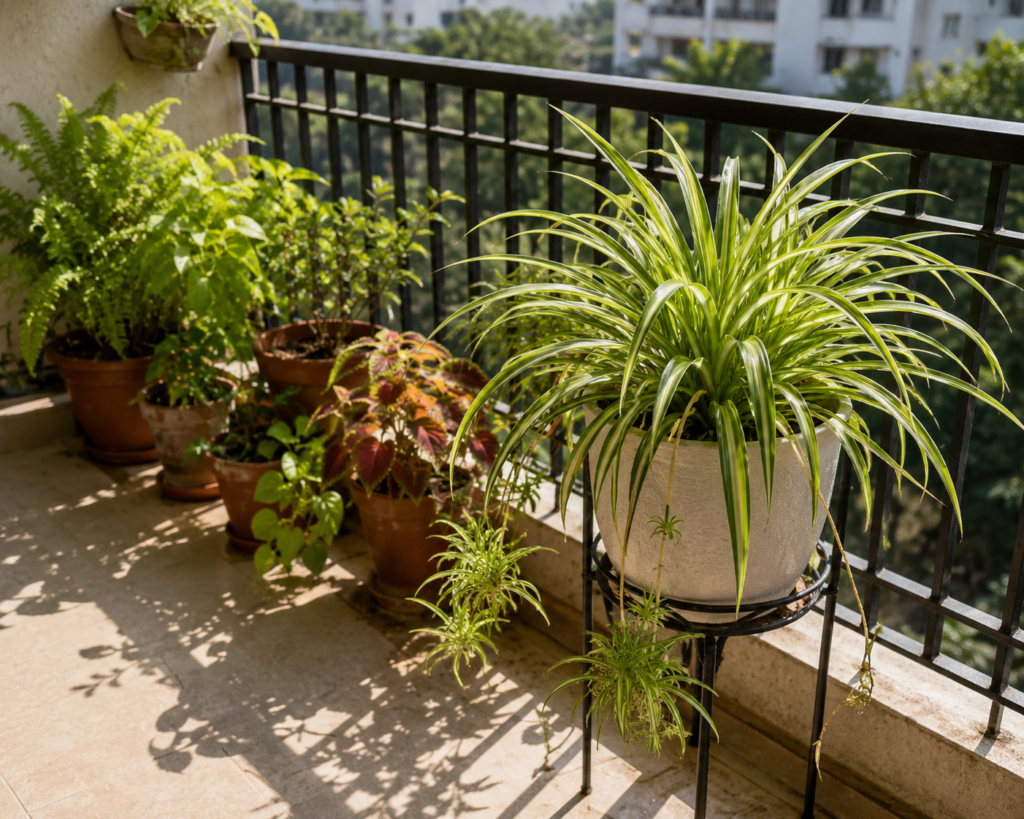
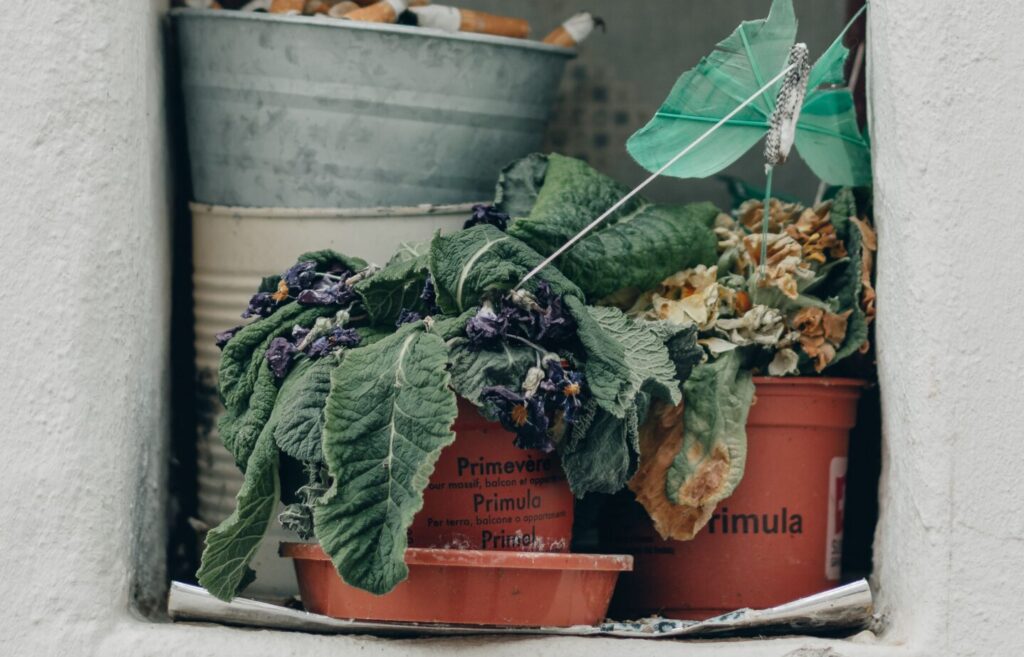
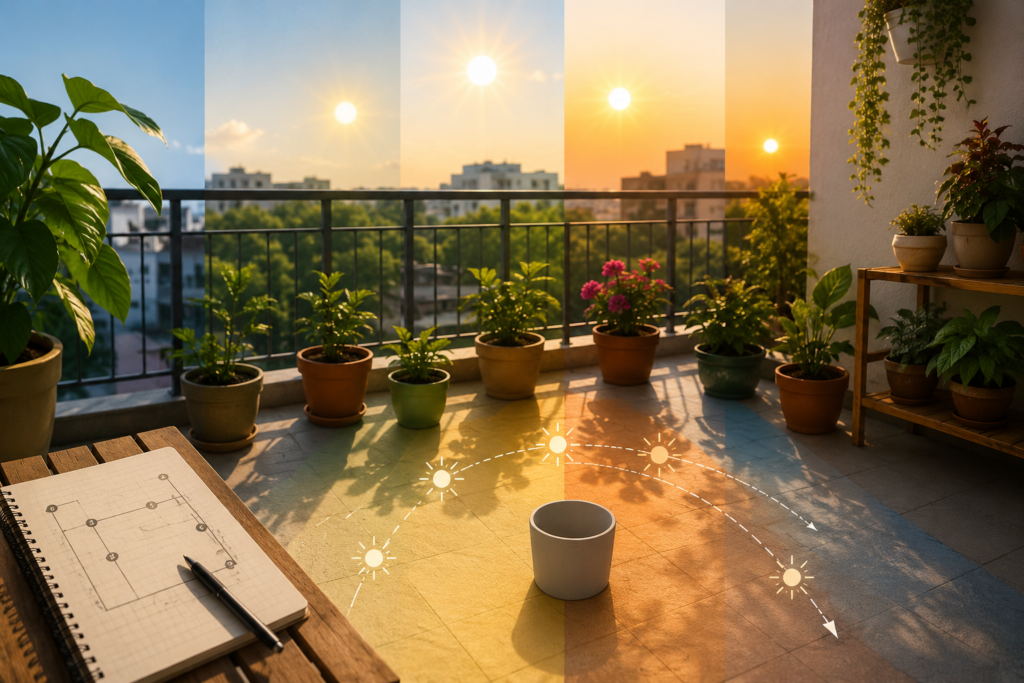
Sunlight is one of the most important parts of container gardening, and honestly, it’s something you should pay attention to even before buying a plant. You can adjust your watering routine, improve your potting mix, or even repot into a better container. But the amount of sunlight your balcony or terrace garden receives is something you have far less control over. That’s why understanding your garden’s light conditions matters from the very beginning.
Many beginners aren’t aware of how sunlight changes throughout the year or how to observe and track those changing light patterns in their own space. Because of this, it’s easy to develop misconceptions about what a plant’s sunlight requirement actually means.
You may have placed your potted plants in what looks like direct sunlight and still wondered why the leaves keep drooping, turning pale, or why the plant grows slowly. Some of you may have followed the sunlight information on the plant tag or read online that your plant needs “full sun” or “bright indirect light.”
There’s nothing wrong with following that advice. The problem is that without understanding how sunlight actually behaves in container gardening, the sunlight in your space may not match those descriptions. The intensity of sunlight changes with the seasons, the time of day, nearby buildings, walls, and even the direction your balcony or terrace faces. So what looks like direct sunlight may not provide what your plant truly needs.
When your container plants don’t receive the right amount of sunlight, even good watering, healthy potting soil, and regular fertilizing can’t fully solve the problem. You may notice dull growth, pale leaves, weak stems, drooping plants, soggy soil that stays wet too long, soil that dries too quickly, or roots that never seem to establish well. These are common potted plant problems, especially in Indian balcony and terrace gardening.
Container gardening works as a complete system where soil, watering, fertilizer, airflow, and sunlight all need to work together. If even one of these factors is out of balance, problems slowly begin to appear—stunted growth, pests, diseases, overwatering, underwatering, and many other issues that often confuse beginners.
To grow healthy container plants, understanding sunlight is the first step. That’s why this is the first blog in our Sunlight & Light Management series. Throughout this month, we’ll explore the most important sunlight topics in detail and help you understand how light affects every part of your container garden.
This blog lays the foundation. Whether you’re just starting your container gardening journey or you’ve been growing plants for years, read this guide till the end. You may discover that the missing piece isn’t your watering, soil, or fertilizer—it could simply be the way you’ve been understanding sunlight all along.
Why Do My Container Plants Still Look Unhealthy Even in Full Sun?
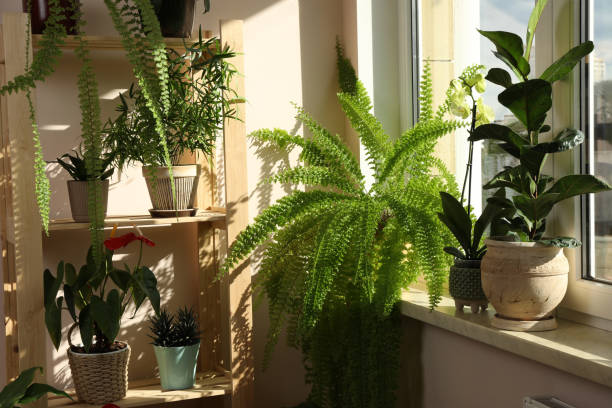
This is where many container gardeners misunderstand what “full sun” actually means. We often assume that placing a plant in the brightest spot on the balcony or terrace is enough. But not every plant needs full sun, and even plants labelled as full-sun plants have their own sunlight duration and heat tolerance. As the seasons change, the intensity of sunlight changes too.
There are many factors that affect how sunlight works in container gardening. Let’s unwrap them one by one.
Why Are My Potted Plants Growing Slowly Despite Getting Sunlight?
The first question to ask isn’t whether your plant is getting sunlight—it’s whether it’s getting the right kind of sunlight that the plant actually needs.
Before anything else, understand your plant’s sunlight requirement and try to match that with its placement in your balcony or terrace garden.
For example, a plant may be labelled as a full-sun plant, but unless you know how many hours of direct sunlight it actually needs, you may still be giving it less than required. If a plant needs 5–6 hours of direct sun, but it’s sitting in a spot that receives only 3 hours of sunlight or weaker sunlight because of nearby buildings, walls, or seasonal changes, the plant is still not getting enough light.
When a container plant receives less sunlight than it needs, it usually responds slowly rather than dramatically. Growth becomes slower, new leaves stay smaller, stems become weaker, and the leaf colour gradually starts fading. These are some of the earliest potted plant problems beginners often overlook.
Why Are the Leaves Drooping, Yellowing, or Looking Tired?
Sunlight is one of the most important requirements for photosynthesis. It’s how plants produce the glucose they need to grow, repair themselves, and stay healthy.
When that energy production drops because the plant isn’t receiving enough suitable sunlight, the plant begins conserving its resources. It simply doesn’t have enough energy to support healthy growth.
That’s when you may notice older leaves drooping, leaves losing their rich green colour, plants looking less firm, or the overall plant appearing tired even after watering.
At the same time, these symptoms don’t always point to a sunlight problem alone. Drooping leaves, yellowing foliage, wilting, soggy soil, dry soil, fertilizer imbalance, or poor potting soil can all produce similar signs in container plants. That’s why learning to observe your plant carefully instead of guessing is one of the most valuable skills in beginner plant care.
Why Do Some Plants Thrive While Others Struggle in the Same Balcony?
This is something I noticed in my own container garden.
Some plants thrive simply because they’re sitting in the sunlight conditions they actually need. They receive enough light, have good airflow around the foliage, and occasionally get rotated so the whole plant receives balanced light.
Meanwhile, another plant just a few feet away may be receiving either too much or too little sunlight for its needs. The difference looks small to us, but plants respond to it every single day.
Balcony and terrace gardening also comes with one big challenge—limited space. We don’t always have the freedom to place every plant in its perfect location. As we keep adding more pots, taller plants begin shading smaller ones, walls create uneven light, and crowded containers reduce both airflow and light distribution.
That’s why understanding your balcony’s sunlight pattern, observing how it changes through different seasons, and avoiding unnecessary crowding can make a much bigger difference than simply buying another plant. Once you understand your growing space, choosing the right placement becomes much easier—and so does keeping your container plants healthy.
🌿 If your balcony garden feels like a daily chore instead of joy, something is off. Read why container gardening starts to feel like too much work
Why Does Full Sun Not Always Mean Healthy Container Plants?
This is one of the biggest myths I want to break. Not just in container gardening, but even plants growing in the ground can struggle if they don’t receive the right amount of sunlight—or if they’re exposed to more sunlight than they can tolerate.
The difference is that plants growing in the ground have a much bigger buffer. Their roots spread freely through the soil, the ground stays cooler for longer, and they can reach deeper moisture even during hot summers.
Container plants don’t have that advantage. Their roots are restricted inside a pot, the potting mix heats up much faster, and the entire root zone is affected by the heat coming from the pot, the floor, and the surrounding space. Once a potted plant goes into sunlight or heat stress, recovery usually takes much longer than many beginners expect.
How Are Container Plants Different From Plants Growing in the Ground?
One of the biggest differences is what happens below the soil.
Plants growing in the ground can spread their roots surprisingly far in search of water and nutrients. Anyone who has grown trees or garden beds knows that even smaller plants extend their root systems much farther than we imagine.
In container gardening, those roots are confined inside a limited amount of potting mix. Because of this restriction, watering frequency, fertilizer balance, and overall plant care become much more important than they are for plants growing in the ground.
This isn’t a disadvantage—it also gives us one of the biggest benefits of container gardening. We can move plants whenever needed and grow them even in very small spaces.
But that same flexibility comes with another challenge.
Many balcony gardeners don’t actually have an open sky above their plants. Even when pots are placed near the edge of the balcony or close to a parapet wall, the roof still blocks part of the available sunlight. Only a small number of gardeners have access to a completely open terrace.
I experience this in my own terrace garden. My growing space isn’t completely open, so the sunlight reaching my plants is naturally filtered by the roof. Over time, I also noticed that this filtered sunlight isn’t constant. It changes not only between seasons but also because the sun’s path shifts throughout the year. A spot that receives good sunlight in one season may receive noticeably less a few months later.
The intensity also changes depending on nearby trees, neighbouring buildings, walls, and roof structures. These small differences are easy to ignore until you start observing your plants closely.
Why Do Pots Heat Up and Dry Out Much Faster?
This is one of the most overlooked problems in Indian container gardening.
Many beginners assume the biggest problem is direct sunlight. But in reality, I’ve found that floor heat and reflected heat from walls often affect my plants more than the sunlight itself.
The amount of sunlight your garden receives depends on your space, but heat coming from concrete floors, terrace slabs, walls, and surrounding structures is a challenge many Indian gardeners face every summer.
The type of pot also changes what happens inside the root zone. Different pot materials absorb and release heat differently, and placing containers directly on a hot concrete floor makes the potting mix even warmer.
Cracked terrace floors store heat. Concrete walls radiate heat well into the afternoon. Metal railings and grills become surprisingly hot during summer.
These aren’t sunlight problems by themselves—they’re heat problems. But together they create a hotter microclimate around your container plants and increase the temperature of the potting soil.
Since most Indian gardeners mainly use plastic pots, this becomes even more noticeable. Plastic containers heat up faster than terracotta or clay pots, especially during long summer afternoons. When many pots are crowded together with limited airflow, the heat builds up even more and puts additional stress on the plants.
Why Doesn’t Sunlight Work Alone in Container Gardening?
When most gardening videos, blogs, or plant labels talk about sunlight, they usually mention terms like full sun, partial shade, or bright indirect light. Those descriptions are helpful, but they don’t tell the complete story—especially for Indian balcony and terrace gardening, where space is often limited.
After growing container plants on my terrace for the past eight years, I’ve realised that the biggest challenge isn’t simply knowing whether a plant likes full sun. The real challenge is understanding the sunlight that your own garden actually receives.
In my garden, nearby trees create deep shade in one area while another corner receives harsh afternoon sun. The spots with comfortable morning sunlight are limited, and naturally I end up placing more plants there. But once plants become crowded, another problem appears—reduced airflow.
I’ve also noticed that when plants are packed too closely together, pests spread much faster. A small pest problem on one plant can become a problem across many pots within just a few days.
That’s why healthy container gardening isn’t just about reading “full sun” on a plant label. It’s about learning how sunlight moves through your balcony or terrace, noticing how that pattern changes across the year, and understanding how sunlight, heat, airflow, and plant spacing all work together. Once you start observing your own growing space instead of following generic sunlight advice, many plant problems begin to make much more sense.
😬 I followed “full sun” labels and still lost plants. Here’s what I learned the hard way. See the real container sunlight truths
How Can I Help My Balcony and Terrace Plants Handle Full Sun Better?
Choose the Right Spot Instead of Simply Chasing More Sun
Before you even choose a plant, spend some time understanding your growing space. Observe how sunlight moves across your balcony or terrace from around 6 AM to 6 PM. Notice not only how many hours of sunlight each spot receives, but also how strong the sunlight feels during different times of the day.
As the seasons change, these sunlight patterns also change. A spot that gets beautiful morning sun in one season may become shaded a few months later. Take simple notes or photos every few weeks. This small habit helps you understand your garden much better than simply guessing.
The available sunlight in your space should guide your plant selection. Buying a full-sun plant for a balcony that barely receives direct sunlight won’t kill the plant overnight, but it often leads to slow decline, weak growth, pale leaves, and continuous struggle.
Keep Potting Mix Moist—Not Constantly Wet
If your plants grow in strong sunlight and naturally require full sun, don’t wait until the potting mix becomes completely dry before watering.
Instead, observe both the plant and the soil every two or three days. Water when the soil begins losing moisture, not after it has turned bone dry.
Completely dry potting soil creates unnecessary stress for container plants. The roots dehydrate faster, beneficial soil organisms become less active, and the plant spends more energy recovering than growing.
At the same time, don’t swing to the opposite extreme.
Many beginners keep watering while the soil is still moist, thinking they’re preventing heat stress. In reality, soggy soil creates a different set of problems by reducing oxygen around the roots and increasing the risk of root damage.
Healthy container gardening isn’t about keeping the soil constantly wet. It’s about maintaining steady soil moisture without allowing it to become either bone dry or waterlogged.
Use Pots That Better Protect Plant Roots From Heat
Most Indian gardeners mainly use plastic pots, and there’s nothing wrong with that. But if you’re just starting your container garden, try adding more terracotta or clay pots whenever possible. They generally stay cooler than plastic containers during hot weather.
If you’ve already invested in plastic pots like I have, you don’t need to replace everything.
Instead, try using plant stands, bricks, or pot feet to lift containers slightly above the floor. This simple change reduces the amount of heat transferred directly from hot concrete into the pot.
Many beginners focus only on sunlight, but I’ve noticed that floor heat often becomes a bigger problem during Indian summers.
When plastic pots sit directly on hot concrete under strong sunlight, the potting mix heats up quickly. The roots remain trapped inside that hot soil, increasing plant stress and sometimes causing root damage long before the leaves show obvious symptoms.
Group Plants With Similar Sunlight Needs Together
Grouping plants with similar sunlight requirements makes everyday gardening much easier.
When plants need roughly the same amount of light, it’s simpler to adjust their position together as the seasons change instead of moving individual pots every few days.
But grouping plants doesn’t mean crowding them together.
Leave enough space for good airflow between pots. Proper spacing helps light reach more of the plant, reduces excess humidity around the leaves, and lowers the chances of pests and fungal problems spreading from one container to another.
Observe Your Plants Before Moving Them Every Day
This is one mistake I wish more beginners knew about.
If you keep moving pots without first understanding both your garden’s sunlight pattern and your plant’s actual light requirement, you may end up creating more stress than solving it.
Container plants don’t enjoy unnecessary disturbance. Every time you move them, you’re changing their microclimate—the amount of sunlight they receive, the surrounding airflow, temperature, reflected heat, and even humidity.
Plants need time to adjust to these conditions.
When we keep shifting pots every day because we’re unsure about the “perfect spot,” the plant spends more energy adapting than growing. Instead of settling into healthy growth, it remains in a constant cycle of stress and recovery.
Spend more time observing before making changes. A thoughtful move based on careful observation is far better than frequent adjustments based on guesswork.
🪴 Rearranging your pots might feel harmless — but your plants experience it as stress. Read why frequent moving slows growth
What's the Next Step If My Plants Still Struggle in Full Sun?
If your container plants are still struggling even after receiving what seems like enough sunlight, don’t assume you’ve failed as a gardener. Most beginners go through this stage because sunlight is one of the hardest parts of container gardening to understand. Unlike watering or fertilizing, you can’t simply follow the same routine every day. The amount, intensity, and direction of sunlight change with the seasons, your growing space, and even nearby buildings or trees.
Instead of making several changes at once, slow down and observe your plants for a few days. Notice how the sunlight moves across your balcony or terrace, how quickly the potting soil dries, and how your plants respond throughout the day. Small observations often reveal the real problem much better than constant moving, watering, or repotting.
Remember, healthy container gardening isn’t about finding one perfect sunny spot. It’s about matching the right plant with the right amount of light and adjusting your care as conditions change. Once you understand how sunlight works in your own growing space, many common problems become much easier to prevent.
In the next blog, we’ll look at how much sunlight container plants actually need, so you can confidently identify whether your plants are getting too little, too much, or just the right amount of light.
🌿 From pots to plants to placement — everything beginners need, in one place. Click to follow the container gardening roadmap