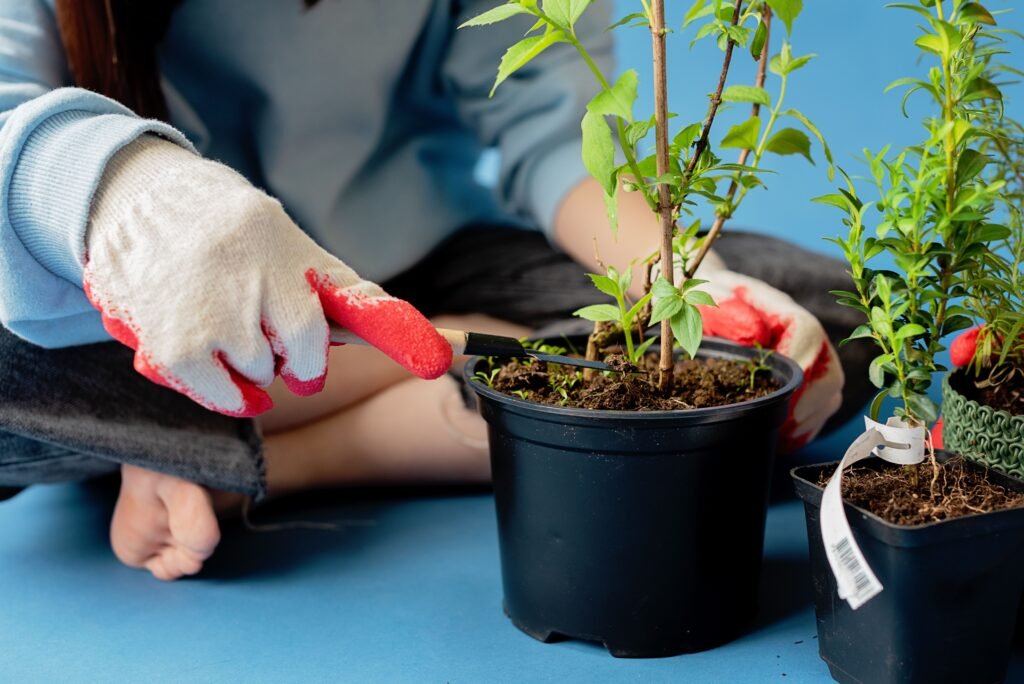
“My plant looks unhealthy, and I’m afraid that if I don’t keep doing something, it will die.”
If this is your voice, you should read this blog fully because your panic care might be turning into a killing mission for your plant without your knowledge.
When you see your potted plants looking droopy, wilting, or yellowing, it’s a normal reaction for a gardener to prune, repot, fertilize, and try to save the plant with all the skills they know. It’s just a gardener’s instinct to help the plant.
But are we really helping the plant with all this care? I’m not saying the care itself is wrong, but the timing might be. When a plant gets sick, yes, it needs attention and care. Sometimes, you also need to act quickly before it dies.
But without understanding whether the timing of an intervention will help or make things worse, our care can actually harm the plant. As I said in previous blogs, plant care isn’t something rigid; it’s about observing the plant and giving it the right care at the right time.
When a plant shows signs of decline, like wilting, drooping, or yellowing, understand one thing: the plant might not be getting the sunlight, water, or other care you provide in the way it needs.
So, it’s not always a lack of care. Sometimes, it is a lack of care, but often, potted plants struggle because some factor acts as a barrier, preventing them from benefiting from the care you provide.
Container plants have very limited root space, so problems can become more severe faster. Instead of trying more care routines, first learn to observe your plant and understand when to intervene and when to be patient. This limited root space can make plants more vulnerable to stress when care is given at the wrong time, and potted plants may take longer to recover.
This blog is all about where you might be over-caring, the signs that tell you when to stop, and how to recognize when your attempts to help your plant are actually becoming too much.
Reading this blog won’t take more than 15 minutes, but it could help you save your potted plants from unnecessary interventions and over-care that might harm them without you even realizing it.
How can you tell when you are over-caring for a container plant?
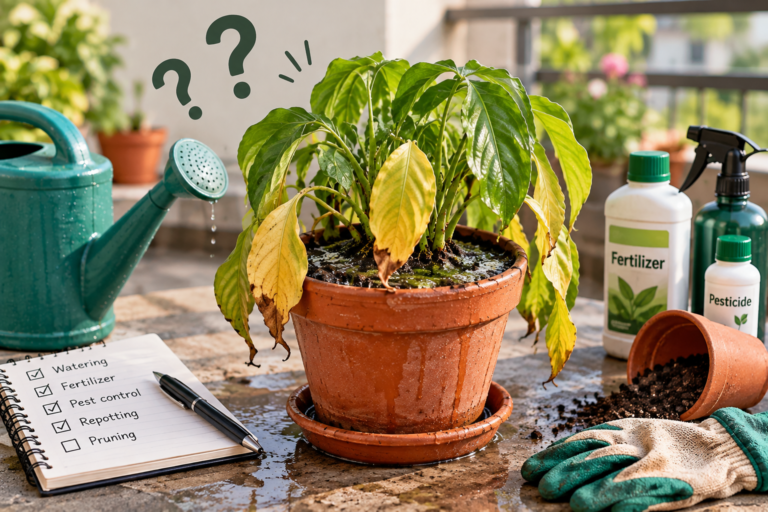
The things I’m going to point out below might make you wonder how routine care can harm your plant. But in container gardening, root space is limited. The key is to provide care at the right time and frequency without stressing your potted plant’s roots.
What signs suggest that too much watering is harming your container plant?
Every plant needs water to survive, no doubt. But potted plants have restricted root space, with a limited volume of soil around their roots. This soil acts as a reservoir, holding water and allowing the roots to access it.
Now, imagine watering without reading the plant and soil signs that tell you there’s already enough water. This is where you end up overwatering your potted plants without even realizing it.
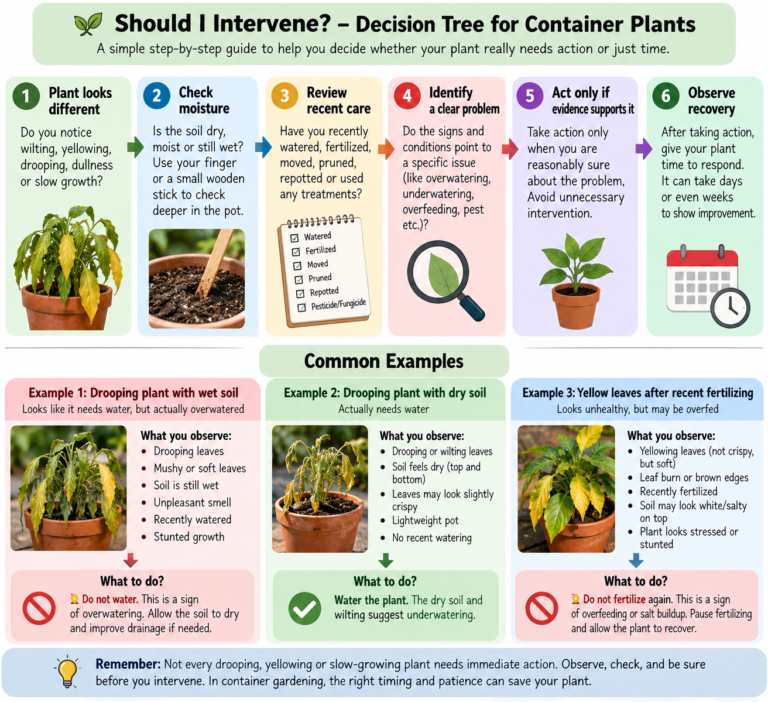
When you want to water your potted plants, don’t hesitate to check the soil moisture first. If the soil is still wet, don’t water. Also, the topsoil dries faster while the bottom can still remain wet, so use a small wooden stick to check the moisture deeper in the pot.
When a plant droops, wilts, or develops yellow leaves, don’t automatically assume it’s underwatering. Check the signs. Overwatering and root rot can also cause wilting, drooping, and yellowing. Checking the soil is an easy way to help differentiate between overwatering and underwatering.
When you find consistently wet soil, drooping plants with mushy plant parts, mushy yellowing leaves rather than crispy ones, a foul smell, and stunted growth, these are clear warning signs of overwatering.
Before you water your plant, read its signs and avoid overwatering. Potted plants are particularly vulnerable to overwatering because excess water can remain around the roots, limiting the oxygen they need.
🪴 Stop Guessing When Your Potted Plants Need Water
When can frequent fertilizing or plant treatments become too much?
Fertilizing potted plants is different from fertilizing plants in the ground, even when you’re using organic fertilizers. Organic fertilizers generally need to break down before their nutrients become available for the roots to absorb. That’s why many organic fertilizers are considered slow-release fertilizers.
With potted plants, you need to allow enough time for the fertilizer to break down and for the plant to take up the available nutrients. Avoid repeatedly applying the same fertilizer within a short time gap. Without giving the plant enough time between applications, you can end up overfeeding it and causing stress.
After fertilizing, it’s important to observe how your plant responds. Applying too much fertilizer can cause salt buildup, root damage, leaf burn, and wilting. So, watching your plant’s response after feeding matters just as much as the feeding itself.
Fertilizer application also needs to account for seasonal changes and the plant’s growth stage. Continue feeding according to the plant’s needs and how it responds to the fertilizer. Sticking rigidly to a schedule or frequently applying fertilizers without understanding what your plant needs can end up damaging it.
These principles apply to pesticides and fungicides as well. Managing pests and diseases involves observing plants for early signs of trouble, maintaining good airflow through proper plant arrangement, and pruning when necessary. Mindlessly applying pesticides or fungicides without identifying the problem can expose your plant to unnecessary treatments.
🌱 Fertilizers can either boost growth or silently damage container plants — it depends on how you use them.
Read the beginner-friendly fertilizer guide
How can moving, pruning, or disturbing a container plant too often cause stress?
A plant’s position and the place where it grows help determine its microclimate. This microclimate can influence whether a potted plant thrives or struggles. Even if the new location seems suitable, a plant may need time to adjust after being moved.
This is why frequently moving pots can cause additional stress. The more often you move a plant, the harder it can be for it to adjust to changing conditions.
This also includes unnecessary repotting just because you love a particular pot. Frequently disturbing or handling the roots can seriously stress a potted plant, and some plants may take a long time to recover from transplant shock.
On the other hand, plants also need appropriate pruning and deadheading when necessary. Ignoring dead or damaged growth can sometimes increase the risk of pest and disease problems. But frequent, unnecessary pruning can stress the plant, while careless handling during pruning or moving can disturb the root ball and loosen the roots in the soil.
Why am I mentioning these three things? When you notice that your plants look stressed, dull, or wilted, you need to be more careful about how often you intervene. These actions, along with unnecessary disturbance, can add stress to a plant that’s already struggling instead of helping it recover.
You need to understand how to observe your plant, recognize how it reacts, and give it enough time to respond to the care you provide. Repeating the same care routine out of panic can overwhelm your potted plants rather than help them. The points above should give you a better idea of what you might be overdoing and where you need to adjust your care.
Why does over-caring affect container plants more easily?
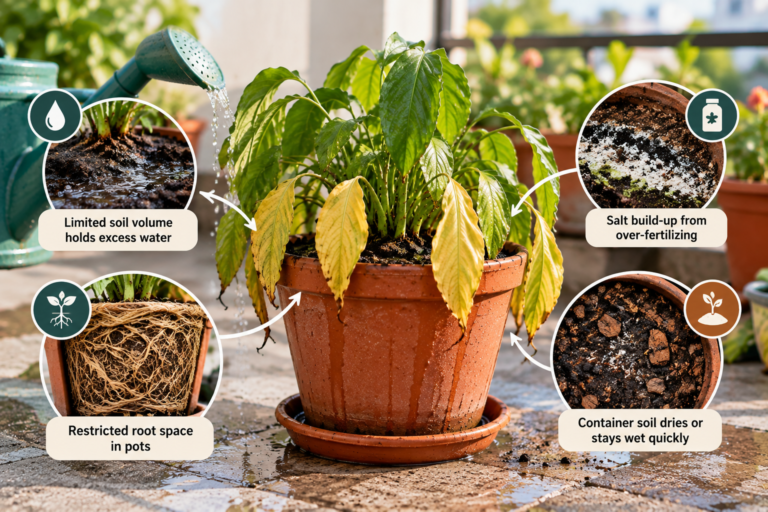
Why does the limited space in a container make excessive watering risky?
When you water plants in the ground, excess water can drain deeper into the soil and contribute to groundwater recharge. But potted plants don’t have the same space for excess water to move away. Instead, water drains through the drainage holes after moving through the potting mix, provided the pot has proper drainage.
The potting soil acts like a reservoir sponge and holds water for the roots to access. But when you keep repeating watering before the soil has had enough time to dry, water fills the pores that would otherwise hold air. It’s not just moisture anymore; excess water limits the oxygen flow through the potting soil, increasing the risk of root rot.
This can happen even when the soil is well-draining if you keep watering mindlessly. The plant roots can still suffer from a lack of oxygen. With heavy red soil, this can happen much faster because it may retain water and drain poorly, depending on its composition and structure.
How can repeated fertilizer applications build up in container soil?
Fertilizers can contribute to salt buildup in the soil. The amount depends on the fertilizer type, concentration, and how frequently you apply it. Repeated applications of chemical fertilizers can cause salt accumulation, while organic fertilizers can also contribute to it.
In potted plants, the root space is limited. That root space acts as a microenvironment and ecosystem for your potted plants, so anything excessive can create an imbalance. Excessive fertilizer feeding can increase salt concentrations in the soil, damage roots, and interfere with water uptake, causing stress to the plant.
In potted plants, slow and balanced fertilizer feeding, along with observing how the plant responds, is the key to healthy growth—not frequent feeding.
Why can constant changes make a stressed container plant struggle to recover?
Potted plants need time to settle into their microclimate and adjust to growing in a limited space. This applies whether it’s a plant sapling you’ve brought home from a nursery, a propagation cutting, or a seedling.
Especially when a plant is already struggling with problems such as wilting, dullness, or yellowing, observe how it responds before making further changes to its care.
If you keep altering the care routine or moving the plant to different locations, you’re repeatedly asking it to adjust to new conditions. This can add stress and delay recovery.
Before moving your plant or changing its care, observe its response to the care you’ve already provided. And trust me, sometimes it can take weeks for the results of your care to become visible. Even if it takes a month, give your plant time to respond instead of repeating the same care out of panic.
How can you stop over-caring for a container plant without neglecting it?
Observation is the key, nothing else. Closely observe your plant and, if needed, take notes or pictures to remember the changes. Observe the plant daily if it’s facing any problems. Don’t over-care; just watch the plant and provide care based on how it reacts.
Why does this observation matter? For example, if you’re doing pest control, don’t immediately reach for heavy chemical treatments. Plant-based pesticides and organic approaches can help when used as part of an integrated pest management (IPM) approach, with the right treatment and frequency.
The growing medium is something you must watch closely. It can show early signs of overwatering, inconsistent watering, plant stress, overfeeding, and potential soil-related problems before the plant shows obvious symptoms.
Watching soil moisture and looking for salt deposits or algae on the soil surface can help you identify possible overfeeding or overwatering issues. Foul-smelling soil can also indicate problems with the growing medium that need attention.
While watering, use a small calendar to mark the days you watered previously. The gap between watering sessions changes based on the weather, plant type, and pot size, but keeping track helps you predict when to check again.
This calendar also helps you avoid being fooled by the topsoil. For example, you might have watered two days ago, and on a day without much sunshine, the topsoil might still dry out because of wind exposure. Your calendar reminds you to do a wooden-stick test to check the soil moisture before watering again.
The same applies to fertilizers. Maintain proper gaps between applications, and I prefer keeping a diary to note down what kind of fertilizer I use. You can’t remember everything, so keep a diary and calendar near your garden space.
Also, observe weather changes and adjust your plant care to avoid accidentally over-caring for your plants. Even during the monsoon, a full day of sunshine can dry out a pot quickly. If you don’t observe your plant and its soil, it might suffer from underwatering. Check the weather and adjust your care instead of following rigid routines.
This observation-based approach helps prevent over-care that can stress your potted plants.
How can you give a stressed container plant time to recover?
To put it simply, provide minimal necessary care and observe.
The first thing I do with a stressed plant is keep it in a well-ventilated area with less exposure to strong winds and harsh sunlight. I also avoid direct floor heat by keeping the pot on a stand. I observe the plant daily, use well-draining soil, and water only after checking the soil moisture. I won’t repot or disturb the plant for at least two months unless there’s a clear reason to do so. I simply observe and provide the care it needs.
I mostly avoid fertilizers for stressed plants because damaged or stressed roots may struggle to absorb water and nutrients properly. The plant needs time to recover, so don’t let the growing medium become bone dry, but don’t keep it wet either. Water according to the soil moisture until you start seeing new growth.
The necessary pruning I do is mostly deadheading. I also remove flowers or fruits during this recovery period so the plant can focus on foliage and recovery. If needed, I gently remove yellow or dead leaves without pulling or disturbing the plant unnecessarily.
How can you prevent over-caring from becoming a cycle?
What worked for me when bringing an almost-dead plant back to life was avoiding rigid schedules. Instead, I follow an observation-based care routine that’s flexible enough to change when the weather or the plant’s reaction changes.
I also mostly avoid chemical fertilizers and prefer organic approaches to fertilizing and pest control, along with IPM methods. I use a diary to note down the care I provide, changes in the plant, fertilizer applications, and the plant’s response, along with dates. This helps me understand what works for my plants.
I also observe and note down climate and weather changes and how my plants react to them. This personal data from your garden is a gold mine for developing future care routines. Using a calendar to mark watering, pruning, repotting, and feeding days helps you avoid unnecessary repeated care and gives your plants time to rest and settle.
These notes also help you understand how long your plants take to recover. That knowledge can guide future decisions about repotting and pest prevention.
In my experience, some stressed plants can take around 6–8 weeks to recover with minimal necessary care and patience, although the recovery time depends on the plant and the problem. Over-care can make things worse, so timing is key.
You also need to understand the difference between routine care, corrective care, and over-care.
Routine care means watering when needed, cleaning, and providing basic maintenance.
Corrective care means responding to an identified plant problem with the appropriate action.
Over-care is what happens when you act out of panic or follow rigid schedules without observing how your plant responds.
Your plant needs daily observation, not daily over-care. Let your plants breathe, give them time, and they’ll have a better chance to thrive.
Unsure how often your potted plants need attention? Build a simple care routine without wasting time on unnecessary tasks: How Often Should You Care for Container Plants?
Conclusion
Over-caring for container plants usually happens when we respond to every symptom with another intervention. A drooping plant makes us water more, yellowing leaves make us add fertilizer, and slow growth makes us move or repot the plant. But sometimes, these panic-driven actions create more stress instead of helping the plant recover.
As I always say, plant care isn’t about following rigid schedules or doing something every day. It’s about observing your plant, understanding what it needs, and providing the right care at the right time. More attention doesn’t always mean better care, especially when your potted plants have limited root space and need time to recover.
So, before your next watering, fertilizer application, or plant treatment, pause and check whether your plant actually needs it. Follow a simple approach: observe → identify → intervene → wait → reassess. Give your plant time to respond before repeating the same care.
my Container Gardening Basics: Beginner’s Complete Roadmap for the essential container gardening fundamentals. You can also read How Often Should You Care for Container Plants? to develop a practical care routine and How Can You Tell If a Plant Is Actually Root-Bound? before repotting a struggling plant unnecessarily.
Remember, your plant needs daily observation, not daily over-care. Sometimes, the best thing you can do for your plant is give it the right care and a little patience.
🪴 I stopped “doing more” in my garden — and my plants finally stabilized. Read what changed with simple routines