Introduction — Why Watering Is the First Big Shift in Container Gardening
Why does carrying ground-plant watering logic into pots often end in failure?
Some of you may start your gardening journey directly with pots. But many of you come to container gardening because there’s no space for ground beds, especially if you already have ground gardening experience—just like I did back in 2018.
If you’re a complete beginner with no gardening background, that’s actually an advantage. You can learn container gardening basics from scratch without confusion.
But if you’re moving from ground gardening to pots, you’ll need to unlearn certain habits—or at least stop applying ground gardening logic to containers.
Watering in container gardening is entirely different from ground-bed gardening.
Container plants don’t need “more” or “less” water.
They need balanced watering inside a closed system.
In potted plants, finding the right watering balance is the key to survival and healthy growth. Why? Because the root space is limited, the potting mix controls drainage, and overwatering is far less forgiving than it is in the ground.
Most watering problems start when:
- A fixed watering schedule is followed without checking soil moisture
- Fancy pots are used without proper drainage holes
- Garden soil is used alone instead of a container-friendly soil mix
- Plants are watered frequently, assuming it will boost growth
These are all red flags in container plant care.
Container watering must adjust to seasonal changes, local climate conditions, pot material, and plant size. Most importantly, water only when the top 1–2 inches of soil feel dry, not just because it’s “watering day.”
The same logic applies to underwatering.
Small pots dry out faster. Porous pots like clay lose moisture quickly. Hot, windy, or dry weather speeds up evaporation—especially on terraces and balconies. That’s why container plants should be checked at least once every two days to make sure the soil isn’t bone dry.
Underwatered plants become weak and are more vulnerable to pests and diseases.
The hardest truth is this:
Watering damage in potted plants doesn’t show immediately. By the time symptoms appear, recovery may already be slow—or sometimes impossible—because early signs of overwatering or underwatering were ignored.
Once a plant is stressed by poor watering habits, it needs consistent, balanced watering over time to recover—without further stress. Excess moisture sitting in the potting mix can also invite soil-borne diseases and pests, making recovery even harder.
If you want a clearer foundation, read the Container Gardening Basics Roadmap and explore the other core fundamentals linked there.
👉 Read the full blog to understand container watering basics deeply—and avoid mistakes that silently damage your plants.
Small watering mistakes can slowly weaken even healthy container plants. Learn the most common beginner errors: Why Container Plants Struggle: Watering Mistakes Beginners Make
Containers Change How Water Moves, Stays, and Leaves
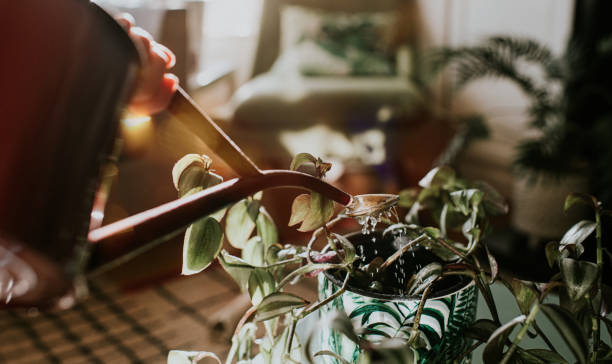
How do pots interrupt natural soil-water cycles?
In the ground, soil receives water from multiple directions—rain, groundwater movement, and surrounding soil moisture. Excess water slowly drains downward or spreads sideways, while roots can explore deeper layers to access stored moisture during dry periods. This creates a natural balance between water, air, and soil that corrects itself over time.
In containers, this balance is broken. Water can enter only from the top, and it has only one exit point—the drainage holes. Once water reaches the bottom of the pot, it either drains out quickly or stays trapped if drainage is poor. There’s no surrounding soil to absorb excess moisture and no deeper layers to buffer mistakes.
Because the soil volume is small, containers swing faster between too wet and too dry. Roots can’t escape these extremes, and oxygen levels drop quickly if water lingers. At the same time, once moisture is lost, pots dry out much faster than ground soil—especially in hot or windy conditions.
This is why container watering isn’t about quantity alone. It’s about managing a disrupted soil-water cycle where every watering decision has immediate consequences.
Drainage holes as an exit system, not a safety net
Some gardeners believe that drainage holes alone can protect plants from overwatering or frequent watering. But the truth is, drainage holes only allow excess, free-flowing water to exit the pot. They do not remove moisture already held inside the soil.
Drainage holes won’t save plants from excess moisture trapped within the potting mix. When soil stays consistently wet, air pockets collapse, oxygen levels drop, and roots begin to suffocate. This creates the perfect conditions for fungal growth and root-related diseases, even though water may still be draining out of the pot.
Think of drainage holes as an exit system, not a safety system. Their role is to prevent water from pooling on the surface or sitting at the very bottom as standing water. But the soil itself is designed to hold moisture like a sponge. With repeated or excessive watering, that sponge becomes saturated and stays wet for too long.
This isn’t a soil problem—it’s a watering balance problem. Even a good potting mix can fail when watering frequency doesn’t match the plant’s actual needs, pot size, climate, and season.
Why “well-draining soil” behaves differently once confined
“Well-draining soil” behaves very differently once it’s confined to a pot because drainage in containers is controlled by space, gravity, and structure—not just the soil mix itself.
In the ground, well-draining soil allows excess water to move downward and spread outward into the surrounding earth. Gravity pulls water deep, while nearby soil absorbs and redistributes moisture. Roots can grow away from overly wet zones, and air naturally refills soil pores. Even if the soil drains slowly, the system eventually rebalances itself.
Inside a pot, that same soil is trapped in a fixed volume with a hard boundary. Water still moves downward, but once it reaches the bottom, it has nowhere else to go. This creates a zone where moisture lingers longer than expected, even in mixes labeled as well-draining. The smaller the pot, the more pronounced this effect becomes.
Confined soil also compacts faster with repeated watering. Fine particles settle, reducing air gaps and slowing drainage over time. What initially felt light and airy can quietly turn dense and oxygen-poor.
This is why “well-draining” in containers doesn’t mean fast drying. It means balanced moisture with enough air, something that must be managed continually within a limited space.
Common misunderstanding:
“Good drainage means I can water freely.”
Consistent watering starts with the right routine—not a fixed schedule. Learn the difference:
Root Zones in Pots Experience Water Stress Faster
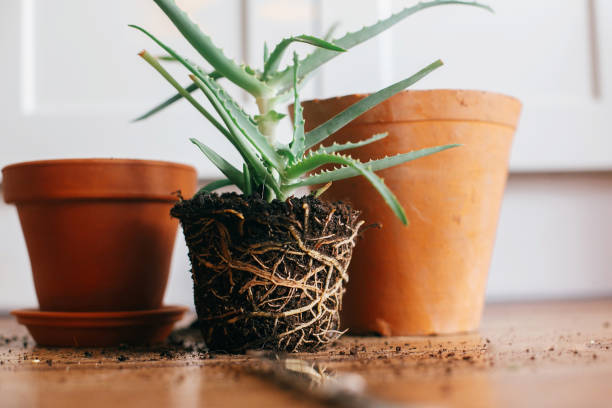
Containers create compressed root environments. This isn’t a flaw—it’s simply the reality of container gardening, which many of us choose because of limited ground space. Restricted root space is a known downside of container gardening, but with the right care, it can be managed.
Using the right-sized pot, watching for root-bound signs, and repotting when needed helps prevent long-term stress. A well-aerated potting mix also plays a critical role. Only healthy roots can absorb water and nutrients efficiently, which is why root-bound plants dry out faster at the topsoil level.
Because root zones are limited, potted plants are more sensitive to overwatering. Excess moisture fills the small air spaces quickly, stressing roots and making them vulnerable to fungal diseases and rot. In containers, roots have no space to escape waterlogged conditions.
Faster drying ≠ healthy oxygen balance
A good soil mix doesn’t dry instantly—even in porous pots. Under normal conditions, container soil usually takes 24–72 hours to dry, depending on pot size, material, season, and climate. If your pots dry much faster than this, it often signals imbalance, not good airflow.
This can happen when:
- Pots are too small
- The soil mix contains too much drainage material
- Extreme heat or wind accelerates evaporation
Soil needs time to absorb and retain moisture. When it dries too fast, plants slip into underwatering stress, even if watering feels frequent.
How repeated wet–dry extremes stress roots more than steady moisture
Thriving container plants depend on balanced watering, not extremes. The goal is simple but not easy: water plants only when they’re truly thirsty, without swinging between overwatering and underwatering.
In practice, this means:
- Checking plants every 1–2 days
- Watering when the top 1–2 inches of soil are dry
- Deep watering during hot weather until water exits the drainage holes
- Lighter watering during humid weather, since moisture lingers longer
Long-term root stress caused by poor watering habits is often irreversible. Once roots are damaged, they can’t support survival or growth effectively. Stress-free roots are the foundation of healthy container plants.
Climate impact: heat, wind, balconies, terraces, and concrete surroundings
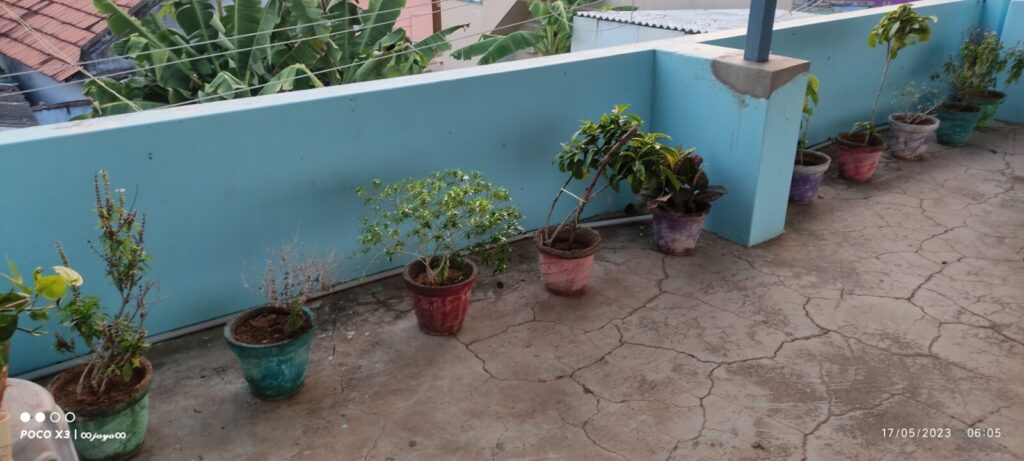
This challenge is most visible in terrace gardens and open balconies. Outdoor container plants face sharper weather swings than indoor plants—and far less tolerance than ground-bed gardens.
I experienced this severely during the humid winter of 2025, when excess moisture stressed many of my plants despite careful watering. Sometimes, even correct watering fails under extreme conditions.
One advantage of container gardening is mobility. Pots can be moved to less exposed spots during high humidity, strong winds, or extreme heat. In peak summer, roots can suffer heat stress not just from sun, but from concrete surfaces radiating heat.
Using bottom trays, shade nets, or raised stands can reduce direct heat transfer and help protect stressed root zones.
Watering a mature plant the same way as a young one can lead to root stress. Read: How to Adjust Watering as Potted Plants Grow
Watering Frequency Is About Pot Behavior, Not Plant Type
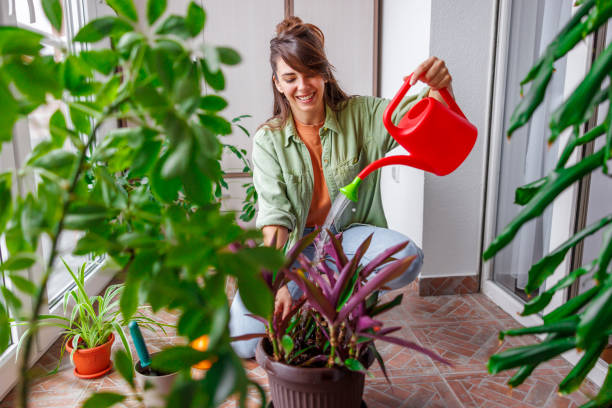
I switched completely to plastic pots around 2020 for my terrace container garden. As a solo gardener, moving heavy containers was difficult. Finding good-quality clay pots was also a challenge, and concrete pots were simply too heavy for my terrace. Clay pots caused another issue—the rims would sometimes crack or shatter when they fell, which stressed the roots badly.
But this shift created a new problem. Even during summer, my plastic pots took much longer to dry, and over time, some plants suffered from root rot and soil-borne diseases.
By late 2023, I moved my concrete pots down to ground level. Those plants have been doing fine with fewer watering issues, mainly because porous pot materials manage moisture better. If I find durable, good-quality clay pots in the future, I plan to switch back completely, since they naturally reduce overwatering risks.
With plastic pots, I had to learn ways to improve drainage and manage moisture better. I’ve shared some of those learnings on my YouTube channel.
Why “water daily / alternate days” advice fails in containers
Fixed watering schedules don’t work in container gardening. Watering frequency depends on pot behavior, not plant type. Pot material controls how quickly soil dries, while seasonal weather decides how long moisture stays trapped.
This matters most for porous containers like clay, concrete, unglazed ceramic, fabric grow bags, and coco coir pots—they dry faster, especially in hot weather.
For non-porous containers such as plastic, resin, metal, or glazed pots, soil stays moist far longer than it appears. Topsoil can feel dry while the lower layers remain wet, especially during humid or rainy seasons. Even in summer, plastic pots can trap internal moisture due to heat buildup, creating a humidity-like environment inside the pot.
That’s why checking the top 1–2 inches of soil before watering is critical—especially with non-porous pots.
How budget constraints (reused pots, mixed containers) complicate consistency
Reusing containers—mostly plastic—is common in budget container gardening, but it comes with challenges. Some reused pots can’t be drilled for proper drainage. In such cases, the double-pot method becomes necessary.
Non-porous containers often need:
- More drainage holes
- Additional drainage layers
- Slower, more mindful watering
When using mixed container materials, following a fixed watering schedule only worsens the problem. The safer approach is check-then-water, combined with smart placement based on weather changes and light exposure.
Common misunderstanding:
“My plant type decides my watering schedule.”
In containers, it’s the pot behavior, material, and climate that decide when a plant needs water—not the plant label.
Overwatering in Containers Looks Nothing Like Overwatering in the Ground
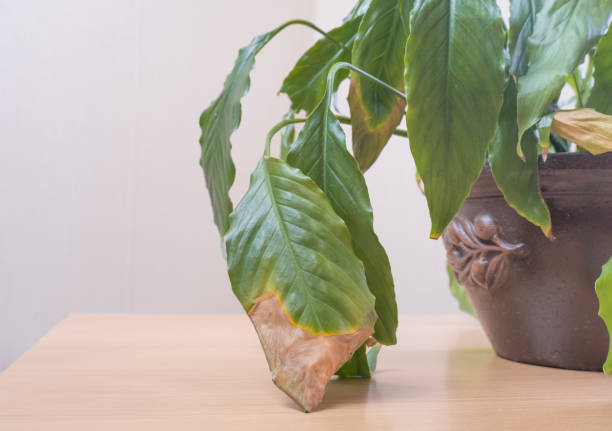
Overwatering in containers is deceptive. In ground beds, excess water usually shows up clearly—standing water, muddy soil, or slow drainage. In pots, the signs are quieter and often misunderstood.
Why is soggy soil harder to detect in pots
In containers, water drains downward and settles in the lower layers. The topsoil dries first, especially in warm or windy conditions, while the bottom remains wet. This creates a false sense of safety. You touch the surface, it feels dry, and you water again—without realizing the root zone is already stressed.
Because containers hold a limited volume of soil, even small excesses add up quickly. There’s no surrounding earth to absorb mistakes.
How waterlogged containers still look “dry” on top
This is one of the biggest beginner traps. In non-porous pots, especially, the surface can crust or dry within hours, while the inner soil stays saturated. Roots sit in low-oxygen conditions, but the plant hasn’t collapsed yet—so the problem goes unnoticed.
By the time yellowing or drooping appears, root damage has already started.
Watering too often vs watering too much at once
Watering too much at once can still be manageable if the pot drains well and dries between waterings. Watering too often, even in small amounts, is more dangerous in containers. Frequent watering keeps the soil constantly moist, never allowing air pockets to refill. Roots need oxygen as much as water, and constant moisture silently suffocates them.
Why beginners confuse nutrient deficiency with water stress
Many overwatered plants show pale leaves, slow growth, or leaf drop—symptoms often mistaken for nutrient deficiency. Beginners add fertilizers, which worsens the issue. The real problem isn’t a lack of nutrients; it’s damaged roots that can’t absorb them due to excess moisture.
Monsoon humidity and container overwatering
Monsoon season makes this problem worse. High humidity slows evaporation, rain adds unplanned watering, and soil stays wet for days. Containers, especially on terraces and balconies, don’t dry the way ground soil does during monsoons.
I’ve seen healthy plants decline during rainy months even without active watering. The combination of humid air, wet soil, and limited airflow creates ideal conditions for fungal diseases. During monsoons, containers need less water than we expect—and more observation than action.
Overwatering in containers isn’t about how much water you pour. It’s about how long moisture stays trapped inside the pot.
Ever wonder why one side of the pot stays wet while the other dries out? Learn how water actually moves in containers: How Water Moves in Pots (And Why Watering Feels Uneven)
Conclusion — Learning to Water the Container, Not Just the Plant
The biggest shift in container gardening is understanding that you’re not just watering a plant—you’re managing a closed system. Unlike ground beds, containers don’t correct mistakes on their own. Every watering decision directly affects how long moisture stays, how much air roots receive, and how much stress builds inside the pot.
That’s why successful container watering isn’t built on strict rules. It’s built on observation. Watching how your pots behave after watering, how long they take to dry, and how plants respond over days—not hours—teaches more than any fixed schedule ever will.
Many beginners panic at the first sign of yellow leaves or drooping and react by watering more, fertilizing, or changing everything at once. In containers, that corrective panic often causes more damage than the original problem. Plants need consistency, not constant correction.
Container gardening is a slow learning process. You learn how drainage actually works, not just how it’s supposed to work. You notice how different pot materials hold or release moisture. You adjust watering as seasons shift, especially during heat, monsoons, or humid winters. And over time, you develop root-zone awareness—understanding what’s happening below the soil surface, not just what’s visible above it.
If you’re building your foundation, revisit the master container gardening pillar to connect these watering concepts with soil, pots, placement, and plant choice. The focused guides that follow will go deeper into drainage logic, pot behavior, seasonal watering changes, and root health—one layer at a time.
Container plants don’t need perfect watering. They need patient, mindful watering. Learn the container first, and the plant will follow.
Consistent watering starts with the right routine—not a fixed schedule. Learn the difference:
Pingback: Why Watering Feels So Confusing in Container Gardening
Pingback: How Water Moves in Pots (And Why Watering Feels Uneven)
Pingback: Why Overwatering Happens Even When Potting Soil Looks Dry
Pingback: Overwatering or Underwatering? How to Tell the Difference
Pingback: Simple Ways to Tell if Potting Soil Needs Water
Pingback: Why Container Plants Struggle: Watering Mistakes Beginners Make
Pingback: How to Adjust Watering as Potted Plants Grow