Many beginners feel worried: “I bought a healthy sapling from the nursery, chose a good pot, placed it in the right sunlight spot, and watered regularly… but the plant is barely surviving, not growing.”
This confusion is very common in container gardening for beginners, especially in balcony or terrace setups in India where heat, airflow, and watering patterns are not stable.
The unnoticed reason is usually the potting mix—whether it’s red soil, a readymade potting mix, or a DIY soil mix made without understanding the key factors that affect plant growth in pots.
There are usually two main issues:
- The soil stays too wet for too long
- Or it dries out too fast
Both situations create root stress in potted plants. When roots are stressed, the plant shifts into survival mode instead of growing. That’s why you see plants not growing in pots despite regular watering.
The potting mix is the plant’s entire life system in container gardening. It has to:
- Hold the right amount of moisture (not too much, not too little)
- Provide nutrients in a usable form
- Allow airflow for healthy root growth
- Support the plant structurally inside a limited space
When the soil mix is not balanced, even good care routines start feeling messy and inconsistent. You may water regularly but still face overwatering problems in pots or dry roots at the same time. This mismatch between soil behavior and care routine is what causes confusion for most beginners.
Using the wrong soil mix doesn’t just slow growth—it affects how the plant absorbs water, nutrients, and oxygen. Over time, this leads to weak roots, poor growth, and visible stress in balcony plants exposed to heat and changing conditions.
In this guide, I’ll break down what is really happening inside the soil. So next time you make a soil mix for your balcony garden in India, you won’t be guessing—you’ll be able to build a proper potting mix based on how soil actually works in containers.
What Is Happening to the Plant?
You can notice clear signs when the potting mix is not suitable for your plants. The key is to observe closely—this is where most beginners in container gardening miss the early signals and end up losing plants due to mismatched soil.
Common signs of mismatched potting mix:
- Stunted growth, no new leaves or stem shoots
- Brown or dark spots near the stem base (soil line)
- Crisp leaf edges or black spots on leaves
- Leaves slowly drooping even without obvious dryness
- Yellowing leaves (especially older ones)
- Water staying too long in soil or drying too quickly
- White crust forming on top of the soil
These are common potted plant stress symptoms, especially in balcony or terrace conditions where soil behavior directly affects watering.
What these signs are telling you:
If the soil stays wet for long, smells bad, or shows fungal growth on top, it means the potting mix lacks aeration and proper drainage. This usually happens when:
- Soil is too dense or compacted
- Too much red soil or compost is used
- Not enough aeration materials like cocopeat, sand, or perlite
In this condition, roots don’t get enough oxygen. Even if you water correctly, the plant faces overwatering issues in pots because water is not draining properly.
If the soil dries too fast, looks dusty, or develops a white crust, it usually means the mix has too much aeration material and not enough soil base.
This is not “good drainage.” Fast drying leads to:
- Roots not getting enough moisture
- Inconsistent watering patterns
- Higher risk of underwatering stress in container plants
A good potting mix should maintain balanced moisture retention. It should:
- Stay lightly moist for some time
- Allow excess water to drain out
- Keep enough air pockets for roots to breathe
Not soggy soil that blocks airflow. Not bone-dry soil that cannot hold moisture.
Both extremes—too wet or too dry—stress the roots. When roots are stressed, the plant shifts into survival mode. Energy goes into maintaining itself instead of producing new growth.
Sometimes, all of this happens below the soil surface. The plant may look “okay” for weeks, especially for beginners, and then suddenly show strong symptoms like yellowing, drooping, or leaf drop.
That’s why early observation of soil behavior is more important than reacting after visible damage appears.
🪴 I wasted years on the wrong potting mix… until I found the perfect blend that changed my garden.
Why Does This Problem Happen in Containers?
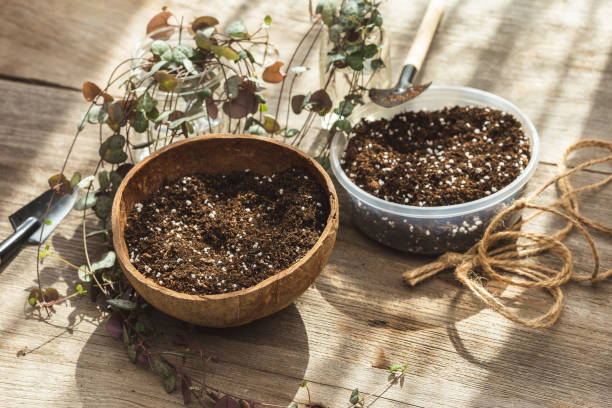
This soil problem is very common in beginner gardens. Most people either use garden soil directly or choose a readymade potting mix based only on labels and reviews, without understanding how that mix behaves in real conditions.
From experience, even after years of gardening, the same plant can behave differently in different pot sizes or pot materials—even with the same potting mix. That’s because soil behavior changes based on container conditions. If we don’t understand that, plants struggle.
1. Using garden soil directly in pots
This is a major issue. I did the same in my early gardening days—thinking soil that works well in ground beds will also work in pots. But in reality, plants wilted, and some developed root rot within weeks, while a few survived only for a short time.
Red soil or garden soil, when used alone, compacts over time with regular watering.
- It reduces airflow
- It traps excess moisture
- It blocks root movement
Even adding compost doesn’t fully fix this. The soil still tends to hold more water than needed, increasing the risk of root rot in potted plants. Over time, compaction collapses the soil structure and closes air pockets.
2. Poor drainage in small containers
This usually happens when using only garden soil or only compost, without adding aeration materials.
- Both tend to hold moisture
- Water doesn’t move freely through the soil
- Roots stay wet longer than they should
In small balcony setups, especially with plastic pots, this can quickly lead to plant decline.
On the other side, using excess cocopeat as a base without balance can also create problems. The potting mix ratio for container plants matters. Random proportions affect how water is held and released.
Drainage holes are important—but they don’t solve everything. If the soil mix itself lacks drainage materials like sand or perlite, water will still stagnate inside.
Also, using too much compost (even though it’s organic) increases moisture retention beyond what roots can handle.
3. Extreme balcony heat and airflow
This is a space-related factor, but soil needs to be adjusted based on it.
In Indian balcony and terrace gardening, heat from floors and walls often affects plants more than direct sunlight. Surfaces radiate heat, causing the potting mix temperature to fluctuate.
- Soil dries unevenly
- Top layers dry faster than inner layers
- Roots experience sudden moisture changes
Using chemical fertilizers can increase heat stress in the soil.
Simple adjustments help:
- Keep plant placement well-aerated
- Water before the soil becomes completely dry
- Use a bottom tray carefully (not for water stagnation, but stability)
- Add mulch like coconut husk chips on top to reduce surface drying
If the potting mix is already weak or unbalanced, it won’t handle these fluctuations well. This is a common reason for balcony plant stress in India.
4. Lack of structure in the potting mix
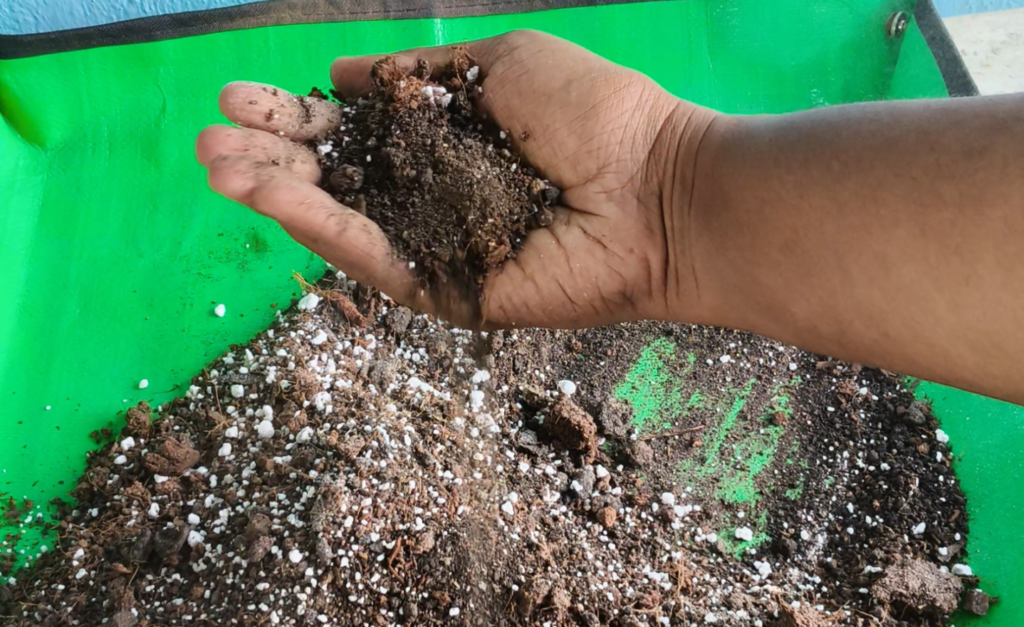
Soil should behave like a loose sponge—not compact, not powdery.
A good structure allows:
- Roots to spread easily
- Water to move evenly
- Air to stay within the root zone
Air pockets are important. They maintain oxygen around the roots, which is essential for healthy growth.
This structure is created by adding proper drainage materials. Without them, the soil either becomes dense or too loose—both affecting soil structure in pots.
5. Overwatering due to wrong soil behavior
This is where many beginners feel confused.
You might check the topsoil, see it dry, and water correctly. But inside, near the root zone, the soil may still be wet. This leads to overwatering problems in container plants, even when your routine seems right.
At the same time, some mixes dry unevenly—top and sides dry out, but inner soil remains inconsistent. This creates both overwatering and underwatering stress in the same pot.
A good potting mix should:
- Absorb water evenly
- Hold moisture in balance
- Dry gradually and uniformly
Not stay soggy, and not dry out too quickly.
Understanding these causes helps you move from guessing to observing. Once you see how soil behaves inside your containers, it becomes much easier to fix plant growth issues.
🌱 Still guessing your soil mix?
Download my Free Beginner Potting Mix PDF and learn the exact soil ratios, fixes, and simple checks to avoid root problems in your container plants.
How Can Beginners Fix or Prevent This?
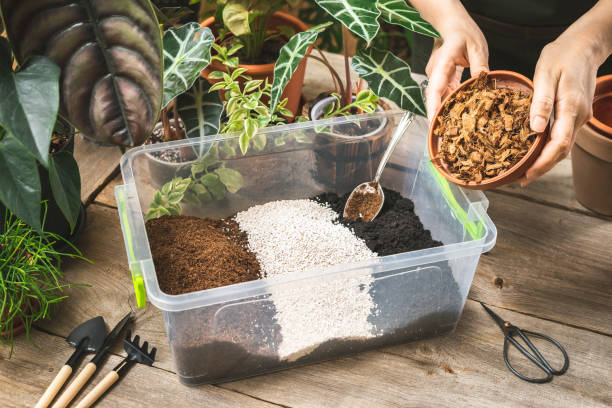
Step 1: Use a balanced potting mix (not plain soil)
Don’t use plain red soil or garden soil. Also, you don’t have to depend fully on readymade potting mixes—they can get expensive if you’re growing more plants over time.
A better long-term solution is to buy and store a few key soil amendments and mix your own based on plant needs.
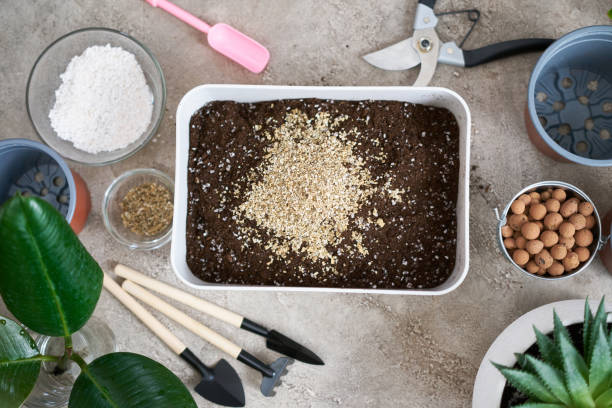
Base mix:
- Garden soil
- Cocopeat
Aeration & drainage amendments:
- Perlite
- Sand
- Pumice
Organic matter:
- Compost
- Manure
This is the basic mix I use across different plant types to adjust ratios. You don’t need separate mixes for every plant—just understand how to balance these components.
With these, you can create a well-draining potting mix for container plants. Always remember: drainage and aeration are essential for healthy roots in pots.
Step 2: Check drainage before planting
Checking drainage holes is important, but you can also improve drainage by adding a base layer at the bottom of the pot.
- Gravel stones
- Broken clay pot pieces
- Coarse materials
This helps prevent soil loss and improves water movement.
But this alone is not enough. The soil mix itself must be well-draining. Adding perlite or coarse sand is important. I personally recommend perlite because:
- It doesn’t compact
- It improves airflow
- It supports good soil structure
Step 3: Match watering to soil behavior
Avoid fixed watering schedules—this is a common beginner mistake.
Soil drying depends on:
- Microclimate
- Airflow
- Pot size
- Pot material
Before watering:
- Check the top 1–2 inches of soil
- Or use a stick to check moisture deeper inside
Don’t rely only on how the surface looks. This helps avoid both overwatering and underwatering in potted plants.
Step 4: Avoid compacting the soil
Even with a good mix, compaction can happen if handled incorrectly.
- Don’t press soil too tightly while potting
- Keep the mix loose and airy
If soil feels compacted later, gently loosen it using a hand fork without disturbing roots too much. Maintaining airflow inside the soil is key for root health.
Step 5: Refresh or improve old soil
Over time, soil loses structure and nutrients.
- Add compost on top every 30–45 days to improve nutrient balance
- During repotting, refresh the full mix if needed
If a plant is struggling, you can:
- Gently remove the top 2–3 inches of soil
- Refill with fresh potting mix
This helps improve both nutrients and soil structure without disturbing the roots deeply.
Step 6: Observe, don’t panic
Observation is more powerful than frequent changes.
- Watch how your plant responds
- Take simple notes if needed
- Avoid making too many changes at once
Frequent disturbance—like moving pots, over-adjusting care, or repotting unnecessarily—can stress plants more. Stability helps plants recover and grow better in container gardening setups.
🪴 Good-looking soil can still kill plants slowly. Want to know why? Discover the hidden soil truths here
What Beginners Should Remember
If your plants are not growing in pots, it’s usually not your care routine—it’s the foundation they are growing in.
A good potting mix:
- Keeps roots healthy
- Balances water and air
- Supports steady, consistent growth
Once you fix the soil, most common issues in container gardening—like slow growth, yellowing leaves, or watering confusion—become much easier to manage.
Start simple. Observe how your soil behaves. Improve your mix step by step instead of changing everything at once.
That’s how strong, healthy potted plants are built—especially in balcony and terrace gardens in India, where heat, airflow, and space directly affect soil performance.
✨ If you’re serious about growing healthy plants in pots, start here — not on random tips. Read the full beginner roadmap
🌿 Planning your container garden?
Start by creating your own Container Gardening Inspiration Board on Pinterest—this helps you organize ideas, track plant setups, and avoid beginner mistakes.
I’ve shared real, experience-based tips from my own terrace garden to help you get started the right way.
👉 Check out my Pinterest here: https://pin.it/59RpNDF1t