Why Does My Potted Plant Need Repotting in the First Place?- This would be your first thought when you think about repotting as a beginner. You’re not entirely wrong about this thought, and not entirely right either.
Repotting is not something you do because the plant foliage has grown massive, or because the plant has been in the same pot for months. It’s about root space. Containers have limited root space—we all know this, but we don’t always see it as a barrier because containers give us the advantage of growing plants anywhere, even without a piece of land.
But as you know, if we care for the plant properly, its rootball eventually outgrows that root space, and the plant needs to be repotted to give it better, bigger space for thriving. The right size of up-pot, along with the right repotting practices, gives the plant a better place to grow when it outgrows its existing space.
Repotting is needed when the plant shows repotting signs and the existing pot becomes restrictive to its growth. Replacing that pot with the right up-pot size gives a little more space for plant growth. The plant also gets a refreshment from the new soil.
A healthy plant without repotting signs can stay in the same pot even for years. This isn’t about plant size; it’s always about root space. And this root space is important for root health, nutrient uptake, and water uptake.
Container plants can’t be compared to groundbeds with excessive access to root space. In pots, the space is limited, so the rootball will eventually outgrow it over time.
And when the roots outgrow that space, they lose soil volume and can’t hold moisture or nutrients as well. Repotting gives that outgrown rootball a bigger space with a new pot size, more soil volume, and nutrients.
I’ll post in depth about repotting science, what it does to plant behaviour, how to repot, and after-repot care. Before we jump into the depth of the topic, let’s clarify some basics so you understand repotting better. This blog alone can help you understand the basics of repotting, and you can read the upcoming blogs throughout these months to learn more about it.
How Can You Tell When Your Plant Has Reached the Point Where Repotting Is Necessary?
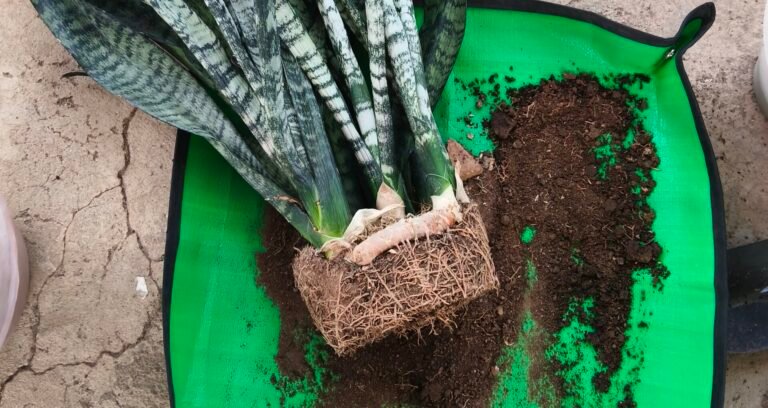
Repotting is not something you do because the pot looks boring or the plant is bigger. Repotting is all about knowing your root behaviour and whether the root space needs to be improved.
To do that, you need to know the repotting signs and how to identify those signs when repotting is actually needed.
What signs suggest that a container plant has outgrown its pot?
Whether it’s a smaller pot or a bigger pot, there are a few signs. Roots may become visibly crowded in the top soil, where you can see tiny feeder roots or hair-like roots.
Roots may also peek through the drainage holes. If the pot is transparent, you can see the roots circling around the container. Even when you take out the rootball, it may look tightly circled.
The soil may dry faster. Despite regular watering, the plant may look dehydrated, growth may slow, and you may see no new leaves, flowers, or fruiting. The plant foliage may also become bigger and reach outside the pot radius.
Does slow growth always mean a plant needs repotting?
In container gardening, you can’t judge anything by one single sign because there can be various signs indicating one problem. You narrow down the answer by looking at various signs pointing toward the same issue.
Slow growth can happen because of a lack of sunlight, nutrient deficiency, or initial soil diseases. When you notice slow growth, you also need to check the roots, hydration, and other signs as well.
If you think the plant is small because the pot is small and repot it without verifying the proper signs, you’ll unnecessarily up-pot that plant. You may then give the root ball excess soil, nutrients, and water by putting it into a bigger soil volume that its roots can’t handle yet.
What happens when roots have very little room left in a container?
If the container has restricted space for the root ball, the plant loses soil volume. That means the roots have less soil to hold moisture and nutrients, so the plant has less access to moisture and nutrients. This is why slow growth and dry soil issues can happen.
Even in the right sunlight spot, the plant roots need water to support photosynthesis. Without proper hydration, a plant can’t carry out photosynthesis properly, which can affect its ability to produce plant food and maintain healthy leaf colour.
The root ball needs space to grow and enough soil volume to store nutrients and water for later access. Without enough space for this, the plant’s growth can stop because the roots are under stress.
Can a plant need repotting even when the pot does not look too small?
Yes, because you can’t judge the root size by plant size. Roots grow based on their root types, and there are several root types. Sometimes smaller plants have taproots.
The pot size needs to be chosen based on the root ball. Once you see repotting signs again, you need to up-pot by choosing a pot size based on the root ball.
If your plant keeps drying out, staying soggy, or growing slowly, the pot size may be wrong. Read: How Do I Choose the Right Pot Size for My Plant?
Why Do Plants Outgrow Their Containers More Easily Than Plants Growing in the Ground?
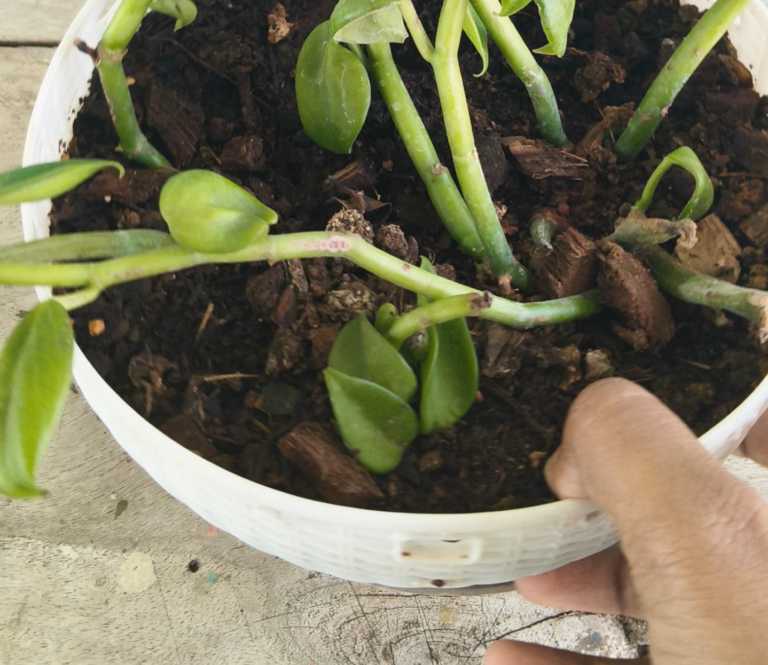
Why Is Root Space Limited in a Container?
You can’t compare it to the ground. Containers have space limitations, but remember, that’s not a barrier to growing plants. Plants can grow healthy in pots with the right care.
Once the root space reaches its boundary, you can simply up-pot the plant through repotting. That’s the right way to handle it. Pots give you the advantage of growing plants without a piece of land, so they come with some limitations as well.
The soil volume is limited in pots, but that actually gives you better control over the plant’s micro-environment. That is an advantage when handling seasonal changes and climate issues, especially in container gardening.
How Does Continuous Root Growth Make Repotting Necessary?
In the ground, when you care for a plant, it can grow bigger without you having to worry much about root space because it has access to much more space. But you also don’t have the same control over how unexpected rain or extreme heat can affect the root environment.
In pots, the root space is rigid because it is limited by the pot size. With the right care, the roots continue to grow and expand inside that available space as much as they can. It’s an invisible process that you can’t see.
Over time, the rootball can take up the entire available root space in the pot, leaving less soil volume around the roots. The plant may then struggle to maintain enough moisture and nutrients because the roots have filled much of the available space. This creates a mismatch between the plant’s growing needs and the available soil volume, moisture, and nutrients.
This is where repotting takes place. Repotting gives the rootball a bigger space and allows the roots to continue growing and supporting further plant growth.
Why Can the Same Pot Become Unsuitable Even If It Worked Well Before?
The pot size is not expandable; it is rigid. But the rootball will continue to grow and eventually outgrow that available space. And honestly, that’s a good sign—it means your plant is growing and your care is working. The same pot that provided enough space for root growth earlier may simply not provide enough space anymore.
The roots have now grown bigger and taken up most of the available space in the pot. So, you need to give the roots a bigger pot where they can continue to grow. It’s not a problem; it’s simply part of the process of container gardening.
It’s not necessarily a container-size mistake or a rootball mistake. It’s a natural part of plant growth. Repotting can actually be a healthy sign that your potted plant is growing. Even the perfect pot can eventually become too small for a well-established rootball.
If your plant stops growing after repotting, it’s not “normal.” It’s root shock. Prevent it using these steps 👉 Click to learn the techniques
What Should You Do When Your Plant Actually Needs Repotting?
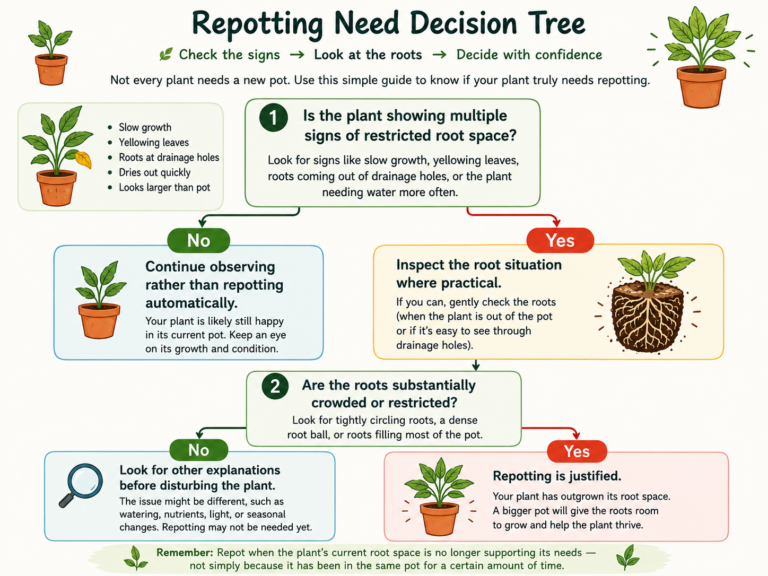
What Should You Do If the Plant Has Outgrown Its Current Container?
Just confirm that restricted root space is actually the issue based on the signs I mentioned earlier. The container up-pot size for repotting should be the right size—not bigger or smaller.
You need just enough space for new root growth without stressing the roots. Repotting into the same size pot is usually not useful unless you are root pruning, and not all plants can take root pruning easily. The bigger pot should be the right size I mentioned in my pot size blog—not too big with excess soil volume that can stress the rootball.
Because after repotting, the roots absorb water more slowly at first. Giving the plant a much bigger soil volume can stress the roots by allowing excess moisture to sit around them and reducing the available oxygen.
The goal of repotting is to give the plant better root space than the existing pot without stressing the roots.
How Can You Avoid Repotting a Plant Before It Actually Needs It?
- Don’t repot the plant just because it has been in the same pot for months or because you want to change it to an aesthetically pleasing pot.
- Repotting needs repotting signs from the roots and the plant, not just plant growth or an older pot.
- As the plant grows, watch for these signs and only repot the plant when you notice a clear need.
- Don’t repot just because of one repotting sign. Assess multiple signs before repotting because the roots will be disturbed during repotting and need time to settle afterward.
- Repotting is not a routine or care-sheet task. It’s a response to root growth and restricted root space when repotting signs appear.
What If the Plant Is Struggling but There Are No Signs of Root Restriction?
Then it may not be a root-space issue. Container plants can show similar signs for a lot of different problems, so only close observation and evaluating multiple signs can help you understand what is actually happening.
If a plant is struggling without signs of restricted roots, it may simply be a basic plant-care issue. Just make sure you are getting the basic potted plant care right before disturbing the roots and repotting.
Most beginners fail because they skip the basics. Don’t make that mistake. See the step-by-step container gardening guide
What Should You Do Next If You Think Your Plant Needs Repotting?
If you think your plant needs repotting, don’t rush to change the pot just because it has been growing in the same container for a long time. First, observe the plant and look for several signs of restricted root space. Check whether the rootball has actually outgrown the available container space and whether that is affecting the plant’s growth.
Remember, repotting is not about making the plant look bigger or giving it the biggest pot possible. It is about giving the roots enough new space to continue growing without creating another problem with excess soil volume.
So, observe, assess, and then decide. If the signs clearly point to restricted root space, repotting is the right next step. If they don’t, look at the basic care first instead of disturbing healthy roots.
In the upcoming repotting articles, I’ll go deeper into when to repot, choosing the right pot size, how to repot, and caring for the plant after repotting.
Can Repotting Stress Your Container Plant?
Knowing why repotting is necessary is only one part of understanding the process. Even when you repot for the right reason and handle your plant carefully, your container plant may still wilt or look stressed afterward. If you want to understand why this happens and what is actually going on with your plant after repotting, explore the deeper guide below.
Read: Why Repotting Container Plants Causes Wilting Even With Care