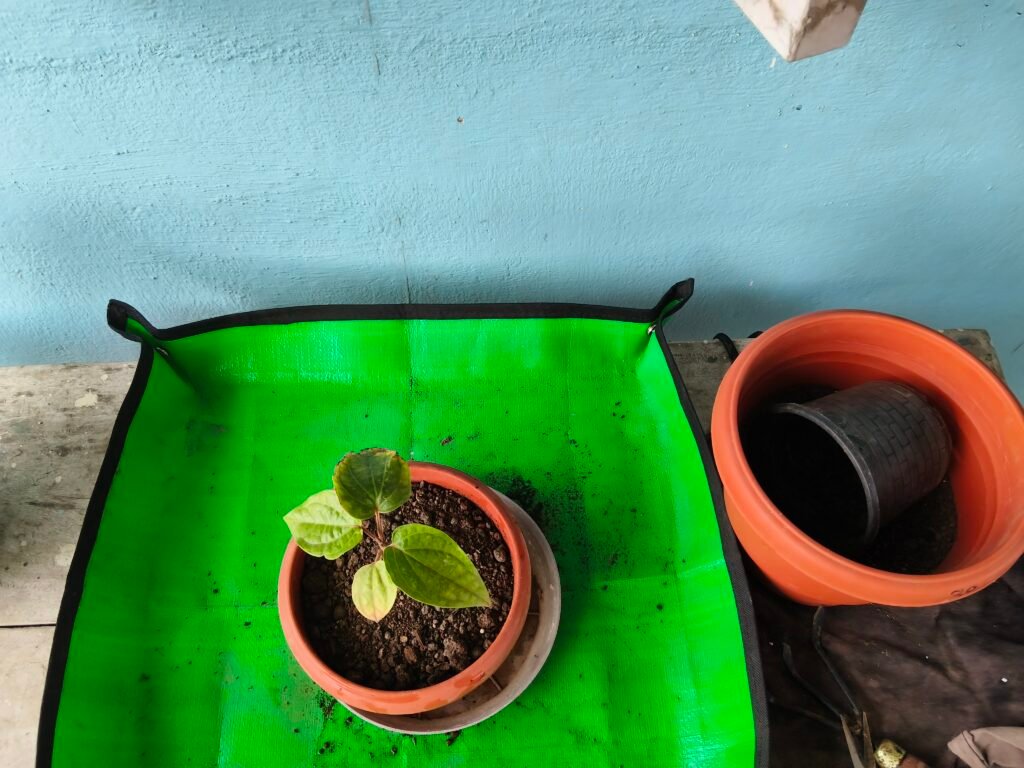
When your potted plant is unhappy, you can quickly go into panic gardener mode and start looking for ways to treat it. That’s a usual gardener thing, but this panic can make you read your plant’s signs wrongly.
When your plant shows yellow leaves, dry potting soil, or slow growth, you may quickly grab the repotting mat and start thinking about repotting. But wait—is that plant actually in need of repotting right now?
Yellow leaves, dry soil, and slow growth are very common signs of many gardening issues, including sunlight problems, imbalanced watering, nutrient deficiencies, and soil quality issues.
Yes, yellow leaves, dry soil, and slow growth combined can be signs that a plant needs repotting, but you still need more confirmation.
If you repot a plant that is actually doing perfectly fine in its pot, you are disturbing its root system unnecessarily. Any plant whose root ball is disturbed can show root stress, and some plants decline because they are sensitive to root disturbance. I’ve lost plenty of perfectly healthy plants after repotting because their roots were disturbed.
To confirm that a plant needs repotting, you don’t just need yellow leaves, dry soil, and slow growth. You need a few more signs together.
And you need to confirm that those signs are not falsely pointing to another plant issue that you have simply misread as a repotting problem.
This is especially important in Indian balcony and terrace gardening because the heat can be intense and can cause dry soil and even yellow leaves, making it easier to misread plant stress.
If you read this blog fully, you’ll know whether your plant actually needs repotting or not, and the clear signs that confirm it. Read on and save this guide to refer back to when you need to repot your container plants.
What Are the Signs That a Plant Actually Needs Repotting?
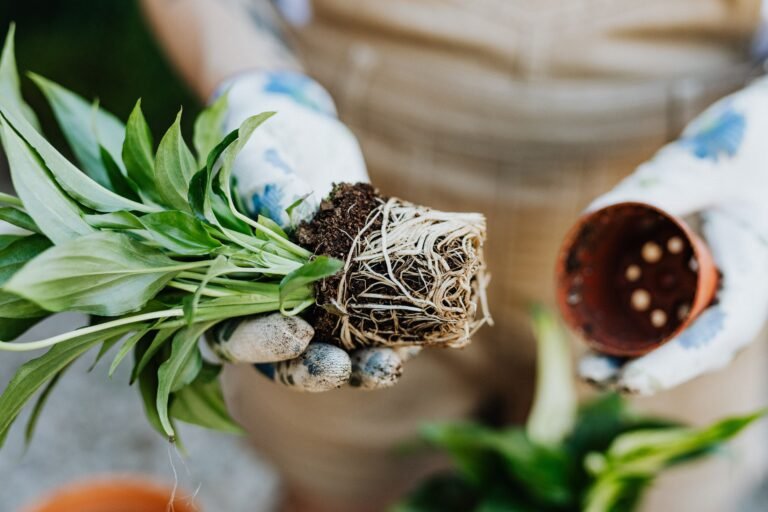
When it comes to repotting a plant, you should focus on root signs over plant signs. By the time the plant starts showing obvious signs like dry soil, yellowing, or slow growth, the roots may have already been running out of space for weeks without you noticing.
The signs below focus on the root signs we often miss as beginner gardeners. Knowing them means you can notice the issue before it becomes worse.
How Can You Tell If Your Plant Has Become Root-Bound?
Drainage holes are easy to overlook, but they need to be checked for various reasons, especially when you want to know whether a plant has become root-bound. When the root ball becomes root-bound, the roots start circling inside the pot after outgrowing the available root space. The tiny, hair-like feeder roots may then peek through the drainage holes while searching for water.
If you have a clear or see-through pot, you may notice roots circling around the bottom. This is a classic root-bound sign. It means the roots have little space left, so they start circling and spreading into every available area of the pot.
You may also notice surface roots in the topsoil area. When feeder roots become visible and start occupying the available space near the soil surface and stems, it can be a sign that the root ball is becoming crowded and the roots are searching for available moisture.
A single root visible through a drainage hole or on the soil surface is not enough to confirm that a plant is root-bound. A group of crowded, circling roots is a much clearer sign.
What Plant and Watering Changes Can Suggest That the Pot Has Become Too Small?
You may notice slow or stalled growth on the plant, but did you notice these signs happening together with changes in the pot?
After watering, if water runs down through the drainage holes much faster than before, it can be a sign that the available soil volume has reduced. Sometimes, before reaching this stage, you may notice the pot becoming unusually light or the plant becoming top-heavy as the available soil volume reduces.
A container that dries much faster than it used to can also indicate the same issue. There is less soil available to hold moisture, which can affect how water is distributed through the root ball.
These changes can occur as evidence of restricted root space, especially when they happen together with visible root crowding.
Does Yellowing, Fast-Drying Soil, or Slow Growth Always Mean a Plant Needs Repotting?
These three signs can be signs of a plant needing repotting, but they are not signs of repotting alone. You need the other repotting signs mentioned above to confirm it.
Hot weather can make potting soil dry much faster, while seasonal changes can naturally slow down plant growth.
Yellow leaves can also be a sign of various plant issues, including light stress or lack of sunlight, nutrient deficiency, watering imbalance, pests, diseases, or root stress.
Even when you notice roots peeking through drainage holes or the soil surface, monitor them for at least a week to make sure you are seeing a pattern of crowded roots rather than reacting to a single root.
To understand whether a plant is truly root-bound, look for multiple signs together rather than making the decision from one sign alone.
Found Out Your Plant Actually Needs Repotting?
Now that you know your plant needs more root space, the next step is choosing the right pot size. A pot that is too small can restrict the roots, but jumping into a pot that is too large can create its own problems.
Read next → How Do I Choose the Right Pot Size for a Plant?
Why Do Container Plants Eventually Need More Root Space?
To understand this, you need to know a little better about container root space and why you shouldn’t compare potted plants with plants growing in the ground.
Why Can a Plant Outgrow Its Pot Even When It Is Growing Normally?
Unlike ground-grown plants, potted plants have a fixed physical boundary. No matter what the pot size or material is, the available root space is limited. When the roots outgrow that space, it can actually be a sign that your care is working and the plant is growing well.
When the plant grows, its roots grow too. That is a healthy part of plant growth. Unlike plants growing in the ground, container plants eventually reach the limitation of their available root space.
Root-bound growth is a natural result of roots continuing to search for water and available space. This is where repotting takes place. The right pot size you chose earlier eventually becomes too small—not because you chose the wrong pot, but because the plant has grown. It is simply a process.
Why Does Root Crowding Cause Problems for Container Plants?
Root crowding happens when the root space that was available inside the pot becomes occupied by roots. The soil volume reduces as the roots fill the available space, leaving less soil to hold water and nutrients.
Soil is the growing medium for potted plants, which is why I always talk about having a good soil mix. A balanced soil mix can hold moisture after you water, while the organic matter and nutrients in the soil support the plant as it grows.
The soil also acts as a medium that stores water so the roots can absorb it later. It’s like drinking water from a glass in small sips instead of chugging all the water at once.
So, when roots occupy most of the pot space and the available soil volume becomes very low, there is less soil to hold moisture around the roots. This can eventually affect the plant’s growth.
Can Indian Heat Make a Plant Look Like It Has Outgrown Its Pot?
Understand this: dry soil alone or yellow leaves alone doesn’t make it a repotting sign. It is one possible sign, not the only sign.
Indian heat from the floor, along with strong sunlight and wind exposure, can make potting soil dry much faster. This can happen when the weather becomes extremely hot and create the illusion that the plant has outgrown its pot.
Pot size also plays a role in how quickly soil dries. This is why you need to confirm multiple signs instead of deciding to repot based on one single sign.
🌱 Roots can outgrow their container long before your plant starts looking unhappy.
Learn why giving those roots enough space matters in container gardening: Why Is Repotting Necessary in Container Gardening?
What Should You Do When Your Plant Actually Needs Repotting?
How Can You Check Whether Your Plant’s Roots Are Too Crowded?
If you suspect or see a few signs that your plant may need repotting, don’t rush to pull the root ball out of the pot. Disturbing the roots unnecessarily can cause root stress and affect how the plant takes up water, especially in sensitive plants.
First, confirm the quick checklist and signs of repotting we discussed:
- Roots peeking through the drainage holes
- Multiple roots showing up on the topsoil
- Potting soil drying much faster than before
- Stunted or stalled growth
If you see several of these signs together, you can inspect the root ball. Water the plant beforehand so the soil holds together, then let excess water drain and handle the pot gently. Squeeze the pot carefully if it is flexible and ease the root ball out without pulling harshly on the plant or roots.
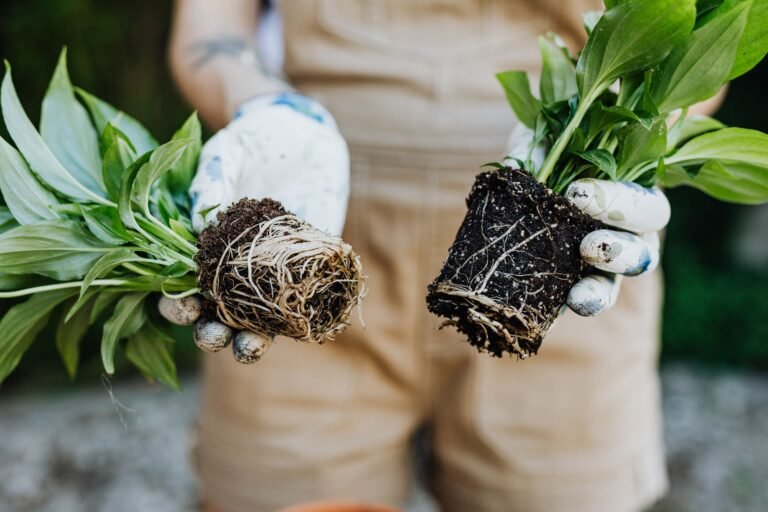
When you inspect it, look for roots circling tightly around the bottom and sides of the root ball, like the image above. That is much stronger evidence of a root-bound plant than seeing one single root.
How Do You Decide Whether to Repot Your Plant or Leave It in the Same Pot?
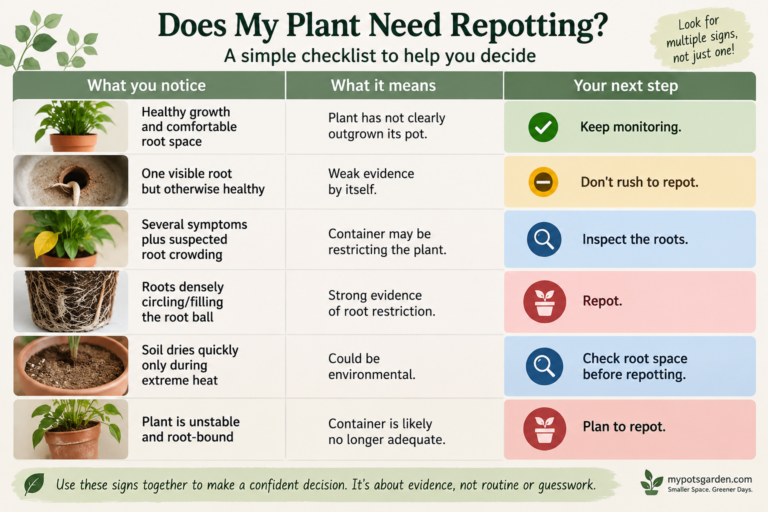
☝️ Save This Repotting Checklist for Later!
How Can You Prevent Your Plant From Becoming Severely Root-Bound Again?
Don’t repot just because you noticed one possible sign. If the plant is growing well, the roots still have enough space, and there is no clear pattern of root crowding, you can leave it in the same pot and continue observing.
But if you see multiple signs together and the root ball is clearly crowded, that is when repotting becomes necessary. The decision should come from evidence rather than a routine or guesswork.
Once you confirm that the plant has actually outgrown its container, you can move on to choosing the right pot size instead of disturbing the plant without a clear reason.
Observe the plant and get to know your plant type. If you have a hard time remembering changes, simply use a gardening diary and make small updates.
Plants react when seasons change, when their microclimate changes, or when you move them to a different place. Even a damaged container or a container that has stayed unclean for too long can give you mixed signs.
So, observe and check multiple signs of repotting, like we discussed earlier in this blog. This helps you recognize the need for repotting earlier and avoid stressing your container plants unnecessarily.
And remember, after repotting, some stress signs and a temporarily dull-looking plant can be common. I’ll cover that in detail in the next blog.
What Should You Do Next If Your Plant Needs Repotting?
Your plant doesn’t need repotting simply because it has been in the same pot for a long time. The real reason to repot is when the available root space has become restrictive, especially when you see physical root crowding along with changes in growth or watering.
As a beginner gardener, don’t panic and immediately change the pot when you notice yellow leaves, dry soil, or slow growth. Observe → inspect → decide. Check the roots and look for multiple signs together before disturbing the root ball.
If you’ve confirmed that your plant genuinely needs more room, the next step is choosing the right pot size for its current root space. Read next: How Do I Choose the Right Pot Size for a Plant?
🪴 Repotting should help plants — so why does it sometimes make them worse? Discover the hidden reasons here