Watering is one of the most confusing parts of container gardening for beginners. Even when you’re trying to be careful, missing a few important factors can easily lead to overwatering or underwatering.
The frustrating part is that many potted plant problems, like yellow leaves, drooping plants, slow growth, soggy soil, or dry soil, often start with watering mistakes. And honestly, it’s not something you completely avoid just because you’ve gained more gardening experience.
Watering is a skill that takes time to learn. Most of us learn it through mistakes, observations, and sometimes losing a few plants along the way. This blog is simply about the beginner watering mistakes I made in my container garden, how those mistakes affected my plants, and the practical changes that helped me avoid watering imbalances later.
Many beginner gardeners think watering is only about giving plants enough hydration. I used to think the same. But water does much more than that. It helps regulate soil temperature, supports nutrient movement, breaks down organic matter, keeps plant tissues firm, and helps roots function properly. In a container garden, where roots are growing in a limited amount of soil, this balance becomes even more important.
That’s why maintaining proper watering balance matters for overall plant health. To keep that balance, we first need to understand what causes common watering mistakes in balcony gardening and terrace gardening. Once you know what’s creating the problem, it becomes much easier to prevent unnecessary plant stress.
When watering becomes imbalanced, underwatering puts plants into dehydration stress. Instead of focusing on healthy growth, flowering, or producing new leaves, the plant shifts into survival mode and spends its energy trying to recover.
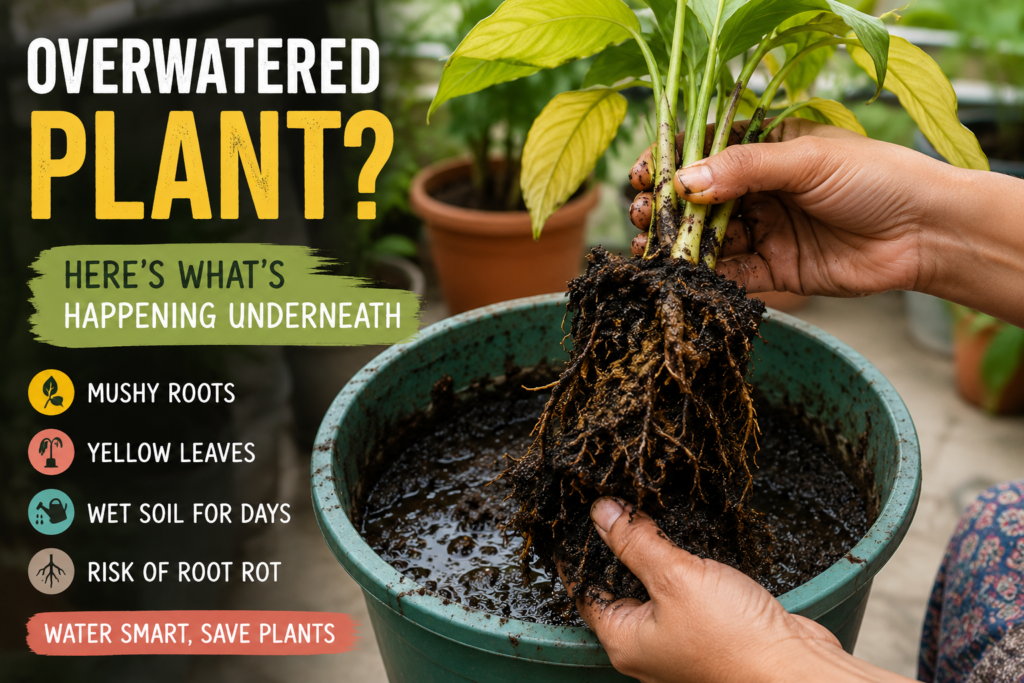
Overwatering creates a different set of problems. Excess moisture can reduce oxygen around roots, encourage fungal issues, and eventually lead to root rot.
Both situations can seriously damage container plants if they go unnoticed for too long.
The tricky part is that watering imbalance often shows up through symptoms that look unrelated at first. Yellow leaves, drooping foliage, mushy stems, constantly wet soil, overly dry soil, stunted growth, weak roots, and even increased pest and disease problems can all trace back to watering mistakes.
This blog is simply a reflection of the watering mistakes I made as a beginner container gardener, how I recognized them, what I changed, and the simple habits that helped me avoid repeating them.
If you’re struggling to understand why your balcony or terrace plants don’t seem healthy despite regular watering, these lessons may help you spot the problem sooner and protect your plants before the damage becomes serious.
😬 I learned these watering lessons only after losing a few plants. Beginners don’t have to. Discover the hard truths here
What Signs Show That My Watering Routine Is Starting to Harm My Container Plants?
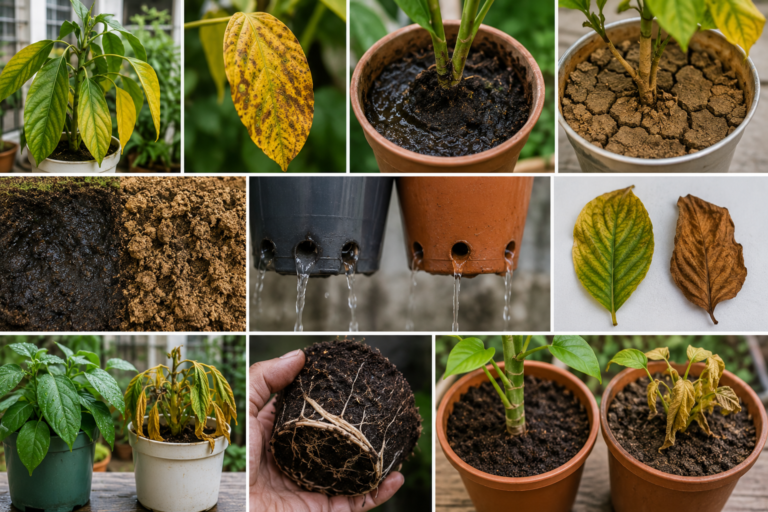
As gardeners, we usually notice the obvious signs first—yellow leaves, drooping leaves, soil staying wet for too long, or soil drying out too quickly. But in container gardening, especially in balcony and terrace gardens, those signs need to be interpreted carefully. The same symptom can point to completely different problems.
This is where many gardeners get confused. Yellow leaves, for example, can be a sign of nutrient deficiency, sunlight stress, airflow problems, watering issues, or root stress. Looking at one symptom alone rarely gives the full answer.
This section is all about learning how to read those signs correctly before watering problems become serious. This topic feels very personal to me because I’ve lost plants and put many others under unnecessary stress simply by reading the signs wrong. Looking back, most of those mistakes were avoidable if I had slowed down and observed a little more carefully.
What Are the Early Warning Signs Before Watering Problems Become Serious?
If you want to read plant signs correctly, I always suggest starting with the soil rather than the foliage.
When overwatering begins, the soil often stays wet for one or even two days longer than usual after watering. When underwatering starts, the opposite happens—the potting mix dries much faster than expected. In many cases, the soil starts showing signs before the leaves do.
Another early sign I noticed was tiny brown spots appearing on lower leaves close to the soil surface. In some cases, excess moisture combined with poor airflow creates conditions where small fungal spots begin to appear. The soil takes longer to dry, and the plant slowly starts showing stress.
Sometimes the plant simply looks dull even after watering. It doesn’t have the healthy, firm appearance you expect after giving water. That can be an early signal that roots are struggling and not absorbing moisture properly.
These signs are very subtle. Most gardeners only notice them if they observe their container plants regularly. This is one reason I like keeping a simple watering record or calendar. It helps track watering frequency and makes unusual changes easier to spot.
Yellow leaves and drooping plants can mean too much water or too little. Learn how to tell the difference: Overwatering or Underwatering? How to Tell the Difference
How Can I Tell If I’m Slowly Overwatering My Potted Plants?
Like I mentioned earlier, I always start by checking the soil.
If the soil stays wet for several days after watering, even when the plant has good airflow, well-draining potting mix, and proper drainage holes, something is usually off. Overwatering isn’t always caused by giving too much water at one time. Often it’s caused by watering too frequently.
Some common causes of overwatering include:
- Watering without checking soil moisture first
- Poor soil drainage
- Pots with inadequate drainage
- Crowded plant placement reducing airflow
- High humidity and rainy weather conditions
These problems often develop slowly, so the signs can be easy to miss.
One sign I learned not to ignore is a sour smell coming from the soil. Algae growth on the soil surface can also indicate that the potting mix is staying wet for too long. Brown spots on leaves and stems, mushy leaves, pale foliage, and persistent drooping can all follow.
As root stress increases, plants may stop producing new growth, flowering slows down, and overall growth becomes sluggish. Sometimes the plant even starts wilting despite the soil being wet, which can be confusing if you don’t realize the roots are struggling.
What Signs Suggest My Container Plants Are Not Getting Enough Water?
Again, I prefer to start with the soil.
If the pot feels unusually light and the soil dries very quickly after watering, sometimes within a single day, there may be an underlying watering problem. In container gardening, underwatering is not always about forgetting to water. Sometimes the potting mix itself has lost its ability to hold moisture properly.
Poor watering practices, unsuitable soil mixes, extreme summer heat, and occasionally root-bound plants can all contribute to underwatering.
The signs are usually easier to recognize than overwatering.
Leaves may wrinkle, droop, become dry around the edges, or develop a crisp texture. New growth slows down, and the plant may look tired even when pests or diseases aren’t present.
One sign that helped me identify watering issues in some pots was water rushing straight out through the drainage holes immediately after watering. Even though I was still watering the plant, the soil wasn’t holding enough moisture. In my case, excess drainage materials in the potting mix were contributing to the problem.
As your plants grow, their watering needs change too. Learn how to adjust before problems begin:
Why Do Overwatered and Underwatered Plants Sometimes Look the Same?
This is probably one of the biggest reasons gardeners struggle with watering problems.
Yellowing leaves, wilting, leaf drop, and stunted growth can happen with both overwatering and underwatering. If you only look at the leaves, it’s very easy to misread what’s happening.
That’s why I never rely on foliage alone anymore.
When you see these common signs, first confirm whether a watering issue is involved. Then observe other clues such as soil moisture, soil texture, leaf texture, drainage behavior, and overall plant condition. Those extra observations usually help point toward either overwatering or underwatering.
The reason I’m always emphasizing observation before treatment is simple. A wrong diagnosis often leads to unnecessary fixes, and every unnecessary disturbance puts additional stress on the roots. Container plants already have limited soil and root space, so they usually take longer to recover once stressed.
Learning to recognize these signs correctly won’t make watering mistakes disappear completely, but it can help you catch problems earlier and avoid turning a small watering imbalance into a much bigger plant health issue.
Not sure whether your plant actually needs water? These simple checks can help you avoid guesswork: Simple Ways to Tell if Potting Soil Needs Water
Why Are Watering Mistakes More Common in Balcony and Terrace Container Gardens?
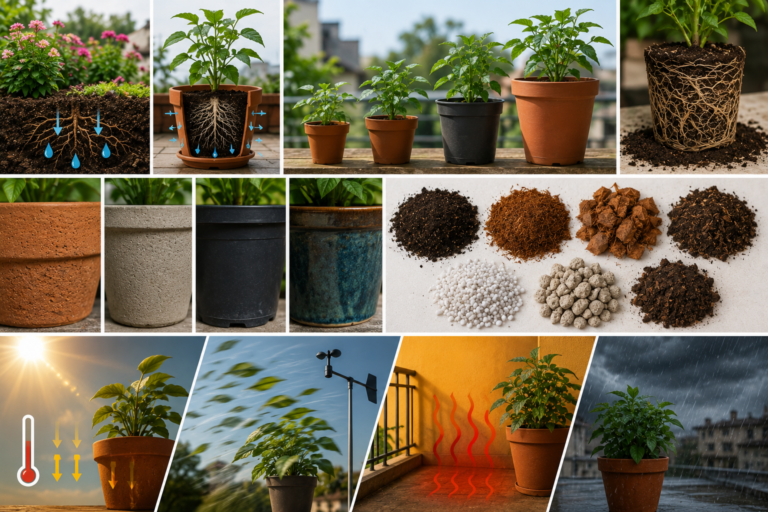
I started as a ground-bed gardener and moved into container gardening about 8 years ago because of space limitations. I still grow plants in the ground, so I’ve experienced both sides. Watering mistakes can happen in any type of gardening, but I noticed they become much more common in container gardening.
In ground beds, there is usually some buffer space. Even if you slightly overwater, the excess moisture has more room to spread through the surrounding soil. Most overwatering problems in ground beds happen when weather conditions contribute, such as several rainy days in a row with little sunlight.
Potted plants don’t have that buffer.
The roots are confined to a limited amount of soil, and any watering imbalance affects them much faster. A container plant can go from healthy to stressed surprisingly quickly. If those signs go unnoticed, growth slows, leaves start yellowing, roots become weak, and in the worst cases, the plant may not recover at all.
Over the years, I realized that factors like restricted root space, pot size, pot material, potting mix, and the unique micro-climate of a balcony or terrace all influence how quickly soil dries and how often plants actually need water.
These are challenges that are much more noticeable in pots than in ground beds.
Why Pot Size Affects How Quickly Soil Dries Out
You might wonder whether pot size really affects watering. From my experience, it absolutely does.
Pot size, pot material, pot shape, and pot depth all influence how long moisture stays in the soil and how quickly the potting mix dries after watering.
The most obvious factor is soil volume. Smaller pots hold less soil, so they dry out much faster. Larger pots contain more soil and usually stay moist longer. This is one reason why moving a plant into a pot that is much larger than its root ball can sometimes create unexpected watering problems.
Pot material also matters.
Some materials are more porous and allow better air movement through the container walls, while non-porous materials tend to hold moisture longer. Over time, I learned that two identical plants growing in different pot materials can have completely different watering needs.
The shape and depth of a pot also affect how much soil it holds and how air moves through the root zone. All of these small factors influence soil drying time, even when everything else stays the same.
How Different Potting Mixes Hold Water Differently
One thing that completely changed how I viewed watering was understanding that potting soil is basically a temporary water reservoir.
The way soil holds water depends on its texture, structure, and porosity.
Garden soil, for example, often holds more moisture because it is denser. Every soil amendment has its own water-holding capacity and airflow characteristics.
This is why custom potting mixes are often designed around the needs of the plant. A good container gardening soil mix should hold enough moisture for roots while still avoiding constantly soggy conditions.
Soils with more drainage amendments generally hold less water than dense garden soil.
Cocopeat behaves almost like a sponge and can hold a significant amount of moisture while remaining lightweight. Coconut husk chips store moisture within the chunks while also creating air pockets around roots. Organic matter tends to increase moisture retention. Materials like perlite and pumice mainly improve drainage and aeration rather than storing large amounts of water themselves.
Once I understood how each ingredient behaved, watering became much easier to predict.
The Problem With Following the Same Watering Schedule for Every Plant
One of my biggest beginner mistakes was believing that every plant could follow the same watering schedule.
In reality, water drying time is influenced by many different factors. Pot size, pot material, potting mix, drainage holes, plant placement, airflow, sunlight exposure, and local micro-climate all play a role.
When you stick to a fixed watering schedule without checking the soil, you stop paying attention to what the plant is actually telling you.
Sometimes the plant needs water sooner than expected. Sometimes it doesn’t need water at all.
Without soil checks and regular observation, watering imbalances become much more likely. Overwatering and underwatering often happen not because gardeners don’t care, but because they follow a schedule that no longer matches the conditions around the plant.
How Sun, Wind, and Heat Change Water Needs Every Day
This is what container gardeners often call the micro-climate around the plant.
A micro-climate is simply the combination of temperature, airflow, humidity, and light conditions surrounding a pot. In balcony gardening and terrace gardening, these conditions can change much more than many gardeners realize.
Sunlight increases soil temperature throughout the day. Water naturally helps cool the root zone, but as temperatures rise, moisture evaporates faster from the potting mix. If this change goes unnoticed, plants can begin experiencing dehydration stress much sooner than expected.
Wind creates another challenge.
Terrace gardens are often exposed to stronger winds than balconies. But even balconies can experience significant airflow when there are no nearby buildings blocking the wind. Constant airflow speeds up moisture loss, especially in smaller pots and in the upper layer of the soil.
This sometimes creates a confusing situation where the top layer looks dry while deeper soil still contains moisture. Without checking properly, it’s easy to assume the plant needs more water.
Heat is another factor I underestimated when I first started container gardening.
In Indian gardening conditions, nearby walls, terrace floors, metal railings, and concrete surfaces often release additional heat around the pots. Sometimes this heat affects soil moisture even more than direct sunlight. As temperatures increase, soil drying time changes, and the watering routine that worked last week may suddenly stop working.
Understanding these container gardening factors helped me realize that watering isn’t just about giving water. It’s about understanding what affects moisture inside the pot. Once you understand those influences, it becomes much easier to avoid common watering mistakes and keep container plants healthier for the long term.
Watering every 2 days last week but every day this week? Learn why watering frequency keeps changing in container plants: Why Does Watering Frequency Keep Changing in Potted Plants?
How Can I Avoid Common Watering Mistakes in Container Plants?
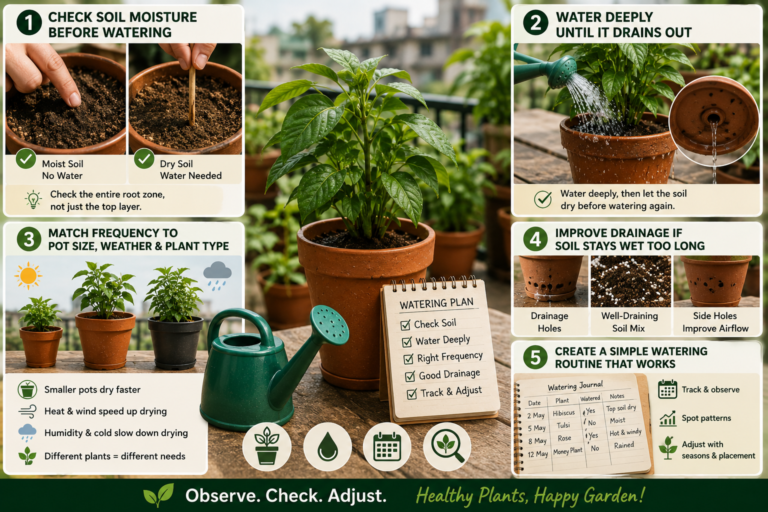
Most watering mistakes happen because we miss the signs plants are already showing us. Sometimes it’s a lack of observation, sometimes it’s assuming every plant follows the same watering routine. In the previous sections, we looked at the signs and causes behind overwatering and underwatering. Now let’s talk about the practical habits that helped me avoid most watering mistakes in my container garden.
Check Soil Moisture Before Watering Instead of Following a Fixed Schedule
This is probably the most underrated habit in container gardening.
If there’s one thing that helped me reduce watering mistakes, it was checking the soil before watering. Honestly, this simple habit can prevent a large percentage of overwatering and underwatering problems.
You can predict a watering frequency, but you cannot force plants to follow a rigid watering schedule throughout the year.
A simple finger test or using a small wooden stick to check soil moisture can tell you far more than a calendar ever will. Most of us quickly look at the top layer of soil and decide whether watering is needed. That’s not necessarily wrong, but in potted plants, the topsoil often dries faster than the lower layers.
Before watering, make sure the entire root zone actually needs moisture, not just the surface. That small change alone can prevent many common container gardening watering mistakes.
Water Deeply Until Excess Water Drains Out
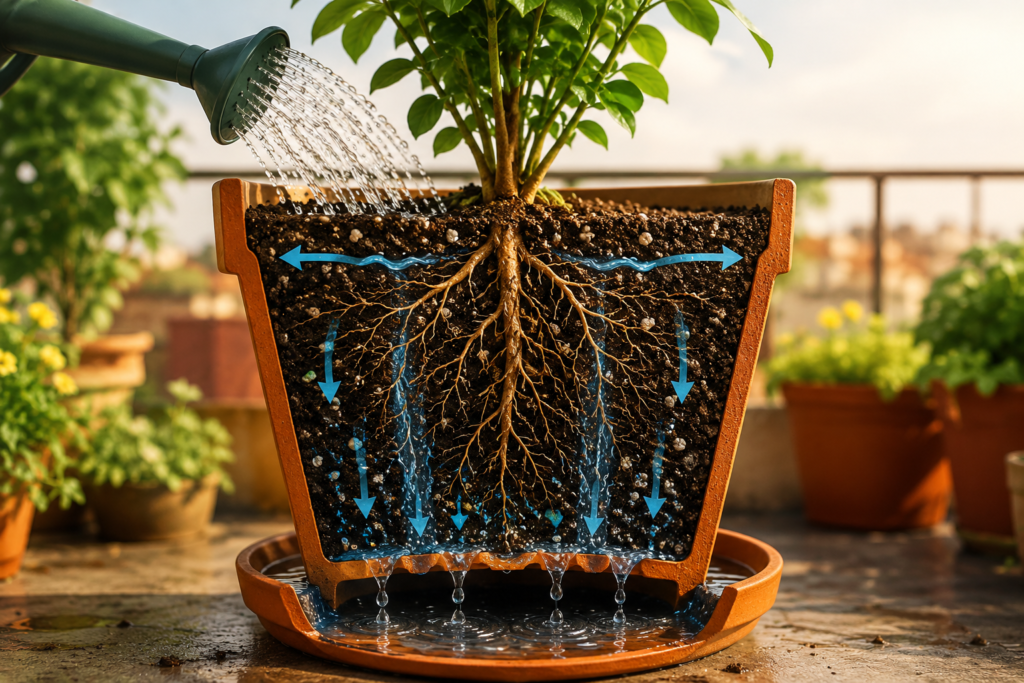
When watering, I prefer using a watering can with a gentle shower head or a hose with low pressure. This allows water to soak into the potting mix slowly rather than rushing through the container.
Water deeply until excess water starts coming out of the drainage holes.
This is what many gardeners call deep watering. It encourages moisture to reach the entire root zone and is especially helpful during active growing seasons and peak summer conditions.
However, deep watering is often misunderstood.
Deep watering doesn’t mean watering again the next day just because it is part of a routine. After watering thoroughly, the plant should be allowed to use that moisture before the next watering session.
This brings us back to soil checking. No matter how deeply you water, always check whether the soil is actually thirsty before watering again. That’s one of the easiest ways to avoid both overwatering and underwatering.
Match Watering Frequency to Pot Size, Weather, and Plant Type
One thing container gardening taught me is that watering frequency is never the same for every plant.
Pot size alone can make a big difference. Smaller pots usually dry faster because they contain less soil volume. Larger pots often hold moisture longer because they have more soil surrounding the roots.
Weather changes affect watering even more.
In balcony gardens and terrace gardens, summer heat can warm up pots quickly. Windy days may dry the top layer of soil faster than usual. During monsoon and winter, higher humidity often slows down soil drying.
All of these factors influence how often a plant needs water.
There is nothing wrong with estimating watering frequency. In fact, experienced gardeners often become good at predicting it. The problem starts when we water automatically without checking the soil or observing the plant first.
Improve Drainage if Soil Stays Wet Too Long
Drainage problems are one of the most common causes of overwatering in container plants.
When gardeners hear the word drainage, they often think only about drainage holes. But good drainage is a combination of both the pot and the potting mix.
The soil needs to drain excess water properly, and the pot must have functional drainage holes that allow that water to escape.
If either one isn’t working correctly, moisture remains trapped around the roots for too long. Over time, the soil stays constantly wet, roots struggle to breathe, and watering problems begin to appear.
Whenever I notice soil staying wet much longer than normal, I first check drainage before assuming the plant needs any other treatment.
Create a Simple Balcony Garden Watering Routine That Actually Works
Instead of following one fixed watering schedule all year, I prefer tracking how long each plant takes to use the moisture in its pot.
Over time, you start noticing patterns.
Plants growing in similar pot sizes, similar pot materials, and similar growing conditions often have comparable watering needs. Grouping those plants together can make watering much easier to manage.
I also like keeping a simple calendar or gardening journal to track seasonal changes. Summer, monsoon, winter, plant growth, repotting, and even changes in plant placement can affect how quickly soil dries.
The goal isn’t to create a strict watering schedule. The goal is to build predictability while still checking the soil before watering.
That balance between observation and routine is what helped me avoid most watering mistakes. Once I stopped watering by habit and started watering based on what the soil and plants were actually telling me, keeping container plants healthy became much easier.
Watering every 2 days last week but every day this week? Learn why watering frequency keeps changing in container plants: Why Does Watering Frequency Keep Changing in Potted Plants?
Can My Overwatered or Underwatered Container Plants Still Recover?
Yes, in many cases they can recover if you notice the signs early enough.
Whether it’s wilting leaves, yellowing foliage, soggy soil, dry soil, slow growth, or other watering-related problems, recovery becomes much easier when the issue is identified before severe root damage occurs. In my experience, most container plant problems are manageable when you catch them early and correctly understand what the plant is trying to tell you.
I slowly realized that plant signs are simply a way of communicating their health. Healthy plants show it through steady growth, firm leaves, and consistent development. Stressed plants show it through changes in their leaves, soil, growth patterns, and overall appearance.
The challenge is not noticing the signs. The challenge is noticing them early enough.
That’s why regular observation matters so much in container gardening. If you find it difficult to remember changes, keeping a simple gardening diary or notebook can help. Whenever you notice something unusual, write down the date and the changes you observed. Looking back at those notes often makes it easier to identify patterns and understand what may have caused the problem.
When overwatering becomes severe, repotting is sometimes the best solution. Replacing the old wet soil with a well-draining potting mix suited to the plant’s needs can help roots recover. The pot itself also matters.
Many Indian gardeners, including myself, use plastic pots because they are affordable, lightweight, and easily available. Since plastic is a non-porous material, improving airflow becomes more important. Adding side ventilation holes to suitable plastic pots can help increase air movement around the root zone and improve drainage in certain situations.
The biggest lesson I learned is that understanding watering is far more important than memorizing a watering schedule. Once you understand how soil, roots, weather, pot size, and plant behavior work together, avoiding watering mistakes becomes much easier.
If you’d like to learn more about watering container plants, explore the watering category below. You’ll find practical watering tips, common watering problems, and detailed solutions based on real container gardening experience.
Stop guessing when to water your plants. Create a routine that works with your containers and climate: How to Build a Watering Routine for Container Plants
Tired of spilling water, overwatering, or missing the soil completely? These watering cans can make the job much easier: Struggling with Water Pots? These Watering Cans Help
Still Struggling With Plant Watering?
Learn how to prevent overwatering, underwatering, root rot, yellow leaves, and watering stress in container plants.
- ✓ Spot watering mistakes early
- ✓ Fix drainage problems
- ✓ Understand soil moisture
- ✓ Keep container plants healthy
Pingback: Why watering container plants daily still kills them early