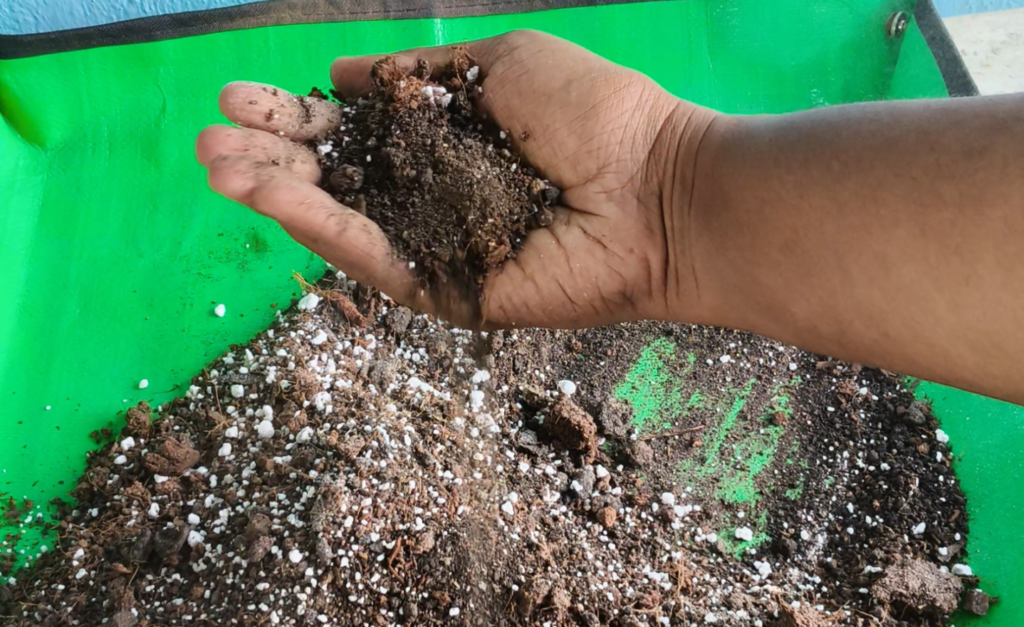
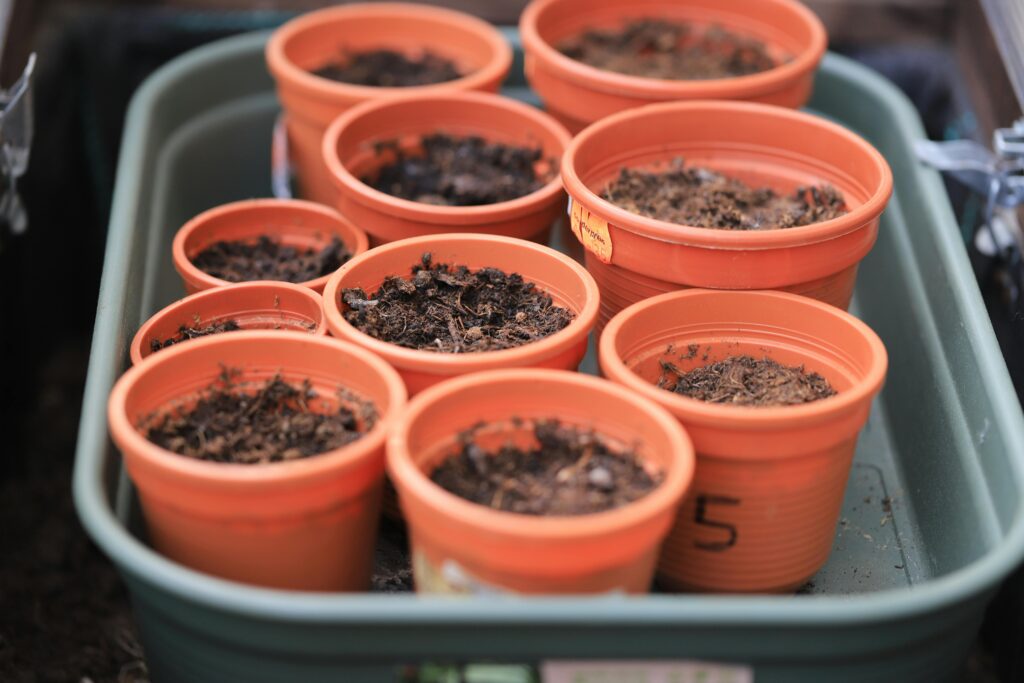
When I first started container gardening, I used normal garden soil in pots. Very quickly, I failed because of compact soil issues. The soil became hard, roots struggled to breathe, water stayed too long, and my balcony plants slowly turned weak and yellow. Some plants looked droopy all the time, while others dried out even after watering.
Then I shifted to ready-made potting mix bags thinking that would solve everything. But I still lost plants because I followed the “one soil recipe for all plants” approach. Some plants stayed soggy, some dried too fast, and some simply stopped growing without giving clear signs.
That’s when I started making my own customized potting mix based on plant type and soil ratio. Honestly, that worked much better than my previous attempts in balcony and terrace gardening. The roots became healthier, drainage improved, and plants looked more stable.
But even after that, I still faced fungus issues, over-moisture problems, random yellow leaves, weak root growth, and here and there, plants still kept dying.
That was the point where I slowly realized the real issue was not just the soil mix itself. I was overcomplicating my potting mix with too many soil amendments instead of understanding the amendment ratio and observing how each plant actually reacted inside pots.
If you are adding too many fancy soil amendments just because of Instagram reels or YouTube gardening videos, you’re honestly not alone. I did the exact same thing a few years back. And in real Indian container gardening conditions, it didn’t work as magically as they showed.
The biggest gap I noticed was this: most potting mix advice was not adjusted for my microclimate, my terrace heat, sudden rain, humidity changes, or the way pots behave in Indian weather fluctuations. Balcony and terrace containers react very differently compared to ground soil or large outdoor garden beds.
This blog is all about understanding which soil amendments actually help in Indian container gardening, which ones you probably don’t need, and how different amendments behave inside pots over time.
Nothing fancy. Just practical clarity to help avoid common potted plant problems like root rot, soggy soil, dehydration, fungal growth, poor drainage, weak roots, and stressed container plants. Mostly, the goal is simple — keep the plant alive first, then help it slowly thrive.
The reason I wanted to simplify this topic is because the more amendments we keep adding, the more hidden maintenance work we silently create for ourselves. More ingredients do not always mean healthier plants. And honestly, not every trending potting soil amendment is made for Indian balcony gardening or terrace gardening conditions.
We cannot fully compare Indian container gardening behavior with western garden setups, raised beds, peat moss-heavy recipes, or large backyard gardens. Our heat, monsoon moisture, airflow, and pot conditions behave differently.
So this is not about fancy western-style garden hacks. This is about understanding Indian soil mix ingredients, simple potting mix adjustments, and learning how to build a container gardening soil mix without making the entire process stressful or complicated.
Read this blog slowly if you’ve been struggling with unhealthy potting soil, dying potted plants, overwatering confusion, or container gardening soil problems that never seem fully solved. Sometimes the solution is not adding more things to the pot — it’s finally understanding what the soil is already trying to tell you.
What Are the Signs That the Soil Amendments in Pots Are Causing Problems?
Most beginners focus only on the benefits of soil amendments when buying them. Usually, we get influenced by a reel, YouTube short, or gardening video explaining how a certain amendment “saved” struggling plants from yellow leaves, root rot, slow growth, or overwatering issues.
Honestly, that’s not even a bad thing. That’s exactly what most of us do when our balcony plants start looking weak, droopy, soggy, or stressed. Those videos feel very relatable when you’re desperately trying to fix unhealthy potting soil or dying container plants.
But the reality is, the influencer is not entirely wrong about the soil amendment. They are sharing what worked in their garden based on their own microclimate and container gardening conditions.
And this microclimate part is where things become tricky. Every balcony garden and terrace garden behaves differently. Even you and your neighbor may not have the exact same airflow, sunlight exposure, humidity, or soil drying speed.
Your house-facing direction, surrounding buildings, terrace heat reflection, rain exposure, plant placement, and airflow all quietly affect how your potting mix behaves inside containers.
This microclimate decides:
- how fast the soil dries,
- how warm the potting mix becomes,
- how long moisture stays trapped,
- and how roots react inside pots.
That’s why the exact soil amendment ratio or potting mix recipe from an influencer may not work 100% in your balcony gardening setup.
The ratios and amendment suggestions online are still useful knowledge assets for container gardeners. But over time, I realized something important: around 80% can be learned from others, but the remaining 20% needs to be adjusted for your own Indian gardening conditions and microclimate.
And honestly, my intention in this blog is not just to give you another soil mix ratio. I will share one. But more importantly, I want you to slowly understand how to tweak a potting mix based on how your plants react inside containers.
Because the signs below usually appear quietly before bigger potted plant problems happen. And if we notice them early, small soil adjustments can prevent root rot, fungal growth, weak roots, soggy soil, dry soil stress, and unhealthy container plants later.
Why does the potting mix become sticky, compact, or dry too quickly?
Most of the time, this happens because of an imbalanced soil mix.
The soil mix ratio matters differently for different plant types. If you use an overly airy, fast-draining mix for flowering plants or edible container plants, they may stay alive, but they usually won’t thrive properly. The soil dries too fast, nutrients wash away quickly, and plants start showing slow growth, weak stems, dull leaves, or dehydration stress.
The opposite problem also happens. If you use a heavy, moisture-retaining soil mix for succulents or drought-tolerant plants, the roots often cannot tolerate that constant wetness. They slowly rot and die within weeks because their root systems are built differently.
Over time, I noticed something simple: soil usually doesn’t become sticky, compact, or dry too fast when the potting mix is adjusted properly for the plant type.
When the ratio feels balanced:
- water gets absorbed properly,
- roots breathe better,
- nutrients stay available longer,
- and moisture does not stay trapped for too long.
But these sticky, compact soil problems become very common when:
- using garden soil alone in pots,
- adding too much compost,
- using poor drainage ratios,
- or blindly mixing multiple amendments without understanding how they behave together in containers.
Are fungus gnats, root rot, or bad smells linked to unhealthy soil additions?
Yes, most of the time they are connected to unhealthy potting soil conditions.
When a soil mix stays wet for too long, it slowly creates the perfect environment for fungal growth, pests, algae buildup, and root problems.
Root rot usually starts when roots remain soaked for hours and hours without enough airflow. Over time, fungal growth develops around weakened roots, and the roots slowly become black, mushy, and unhealthy.
That bad sour smell from pots also usually appears after water stays trapped inside the soil for days. Sometimes algae growth also starts forming on the topsoil because of excess moisture and poor airflow.
In my experience, unhealthy soil conditions often happen because of:
- using garden soil without sterilization,
- adding excess compost or organic matter,
- reusing already disease-affected soil,
- poor drainage inside pots,
- or lack of airflow around containers.
Even a healthy potting mix can slowly become unhealthy if moisture keeps getting trapped repeatedly in balcony and terrace gardening conditions.
Why do some balcony plants stop growing after adding kitchen waste, sand, or garden soil?
One common beginner mistake is adding kitchen waste directly into pots without properly composting it first.
A lot of people misunderstand composting. There’s a huge difference between raw kitchen waste and fully processed compost. Different kitchen materials break down at completely different speeds. Vegetable peels decompose faster, while eggshells, coffee grounds, cooked food, or meat scraps take much longer and behave differently inside compost systems.
If poorly processed compost is added directly to pots, it often attracts pests, fungal growth, insects, reptiles, and unhealthy microbial buildup.
Fully finished compost feels different. It smells earthy, lightweight, and stable. That kind of compost supports healthy plant growth instead of stressing the roots.
The same thing applies to sand. Sand can help with drainage when added in the right ratio. It does not behave exactly like perlite or pumice, but small amounts can improve soil structure slightly.
But using too much sand or relying only on garden soil inside pots creates another problem entirely. The soil becomes compact faster, stays wet longer, and sometimes carries weed seeds, fungal spores, pests, or insect eggs if it is not sterilized properly.
That’s why many balcony plants struggle, stop growing, or suddenly decline after adding random kitchen waste, sand, or heavy garden soil into containers.
How can beginners tell if compost or cocopeat is helping or hurting container plants?
Honestly, no complicated tests are needed in the beginning.
The easiest way is simply observing how the soil behaves after watering.
If the topsoil dries lightly within 24 hours and the deeper soil slowly dries within around 48–72 hours, that usually means the moisture balance is behaving normally.
You can check this using:
- the pot weight test,
- a toothpick test,
- or simply touching the soil carefully.
If the soil feels moist but not soggy, that’s usually a healthy sign.
When cocopeat and compost are helping properly, you usually notice:
- lightweight soil structure,
- steady water absorption,
- active plant growth,
- no fungal spots,
- no sour smell,
- no algae buildup,
- and firm plants with healthy turgor pressure.
But if the soil starts showing:
- black or brown leaf spots,
- mushy stems,
- sour smell,
- algae on topsoil,
- constantly heavy pots,
- or soil staying wet for many days,
then the potting mix is usually struggling and needs adjustment.
And honestly, most container gardening soil problems become easier to fix once you stop blindly adding amendments and start observing how the soil actually behaves inside your own balcony or terrace conditions. That observation changes everything slowly.
Yellow leaves, soggy soil, and weak growth often begin with simple soil mistakes inside pots. Learn more: Beginner Soil Mistakes That Slowly Damage Potted Plants
Why Do Soil Amendments Behave Differently in Balcony and Terrace Container Gardening?
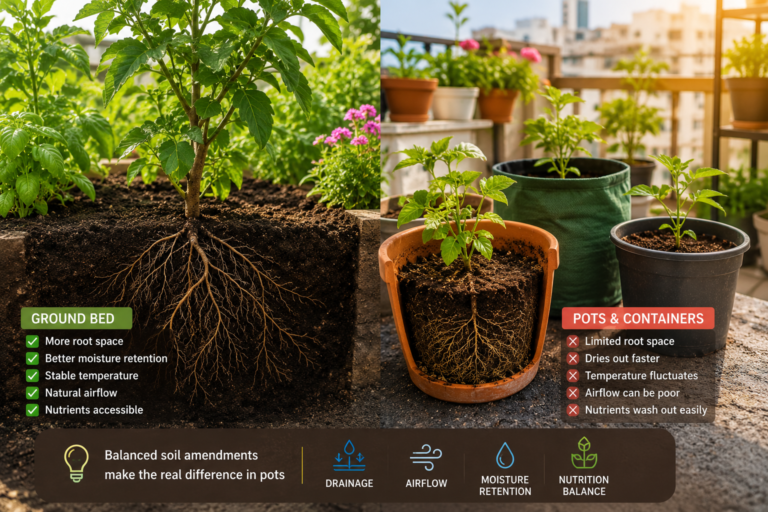
One thing I slowly understood in container gardening is this — you cannot compare ground bed soil behavior with pots. That’s exactly why healthy garden soil that works beautifully in the ground often fails badly inside containers.
In ground beds, roots have unlimited buffer space. Moisture spreads deeper, temperature changes slowly, airflow behaves differently, and roots can travel far looking for water and nutrients. But in pots, everything is restricted. The root space is limited, the soil volume is limited, and even small soil mistakes become visible much faster.
That’s why soil amendment ratios matter so much more in balcony and terrace container gardening. The balance between drainage, airflow, moisture retention, and nutrition decides whether the plant slowly thrives or silently struggles with yellow leaves, weak roots, soggy soil, or dehydration stress.
When the ratio feels balanced, the soil structure stays stable longer. The potting mix remains airy without drying too fast, and moisture stays available without turning the soil into a wet heavy block.
Why do pots heat up and dry out faster than ground soil in Indian terrace gardens?
This fast soil drying happens for many small reasons that beginners usually don’t notice at first.
Smaller pots dry faster than larger pots. Porous materials like terracotta pots, fabric grow bags, and coco coir liners lose moisture faster. Pots placed directly on hot terrace floors absorb extra heat from below. Hot winds and reflected sunlight from Indian concrete terraces also increase soil temperature quickly.
In ground beds, moisture stays deeper in the soil and roots can reach those lower cooler layers. There’s no strict space limitation for roots. But inside pots, the soil volume is small, and moisture disappears much faster.
At the same time, pots also cannot stay overly wet for long because trapped moisture inside limited root space increases the risk of fungal growth, root rot, and weak roots.
This is where many container gardening soil problems begin.
Some beginners try fixing wet soil by adding too many drainage amendments. But excessive drainage materials can also create another problem — the soil dries too fast before roots properly absorb moisture and nutrients.
Over time, I realized healthy potted plants need balanced drainage and balanced airflow. Not excess drainage. Not heavy compact soil. Just enough airflow and moisture retention working together quietly inside the potting mix.
How does poor airflow and heavy rain affect amended potting soil in containers?
This is something many balcony gardeners overlook in urban gardening setups.
When we try to utilize every vertical space in balcony gardening or terrace gardening, airflow naturally reduces between pots. Surrounding buildings, grills, walls, and shaded corners also block wind movement.
And stagnant air slowly creates another layer of problems:
- fungal growth,
- algae buildup,
- slow soil drying,
- and moisture staying trapped inside containers for too long.
Most beginners pay close attention to drainage holes and watering, but not enough attention to airflow around the pots themselves.
But airflow matters because it directly affects how long the soil stays wet after watering or rain. Pots placed in low-airflow corners usually stay damp much longer compared to pots placed in open breezy areas.
Heavy rain creates another issue. Rainwater is honestly amazing for plants. No doubt about that. But continuous rain exposure without proper drying windows slowly creates overwatering conditions inside containers.
The air pockets inside the potting mix become clogged with water, oxygen reduces around roots, and the soil becomes the perfect environment for fungal growth and root rot.
This is why some balcony plants suddenly collapse during monsoon seasons even when the potting mix looked healthy before.
Why can the same soil amendment work for one plant but fail in another pot?
This is exactly why one ready-made potting mix bag never works perfectly for every plant type.
Plants decide the soil requirements. Their root behavior changes everything — how much water they absorb, how long roots tolerate moisture, and how heavily they feed on nutrients.
Plants with shallow roots usually cannot tolerate long-term moisture retention. Their roots weaken quickly in soggy soil conditions.
But plants with thick aggressive roots or heavy feeding habits need more nutrients, more consistent moisture, and slightly richer soil structure. That’s why edible plants and flowering plants often need different soil ratios compared to houseplants, cacti, or succulents.
Over time, I realized healthy container gardening soil is rarely about one dominant amendment. It’s more about creating a balanced structure using multiple soil amendments in moderation instead of letting one ingredient control the entire potting mix.
And honestly, not every plant performs well in plain garden soil inside containers, no matter how healthy that soil looks in ground beds.
Does pot size, sunlight, or watering style change how amendments behave?
Yes, very strongly.
Pot size and pot material directly decide how long the soil holds moisture. Smaller pots usually dry faster than bigger containers because they contain less soil volume.
Pot materials also change soil behavior:
- terracotta,
- fabric grow bags,
- and coco coir planters dry faster because they are porous,
while:
- plastic pots,
- resin pots,
- and metal containers hold moisture longer because they are less breathable.
These materials also affect soil temperature inside the potting mix.
Sunlight intensity changes things even more. In Indian terrace gardening, heat reflected from concrete floors often becomes stronger than direct sunlight itself. That’s why pots placed directly on terrace floors usually heat up faster and lose moisture quickly.
This is also why lifting pots slightly above the floor can quietly improve soil health over time.
Watering style matters too.
When watering stays balanced, the soil structure remains stable and microbial activity stays healthier. But frequent watering can slowly wash away nutrients from the potting mix, while delayed watering creates repeated dry-wet stress cycles that disturb root health and microbial balance inside the soil.
And honestly, many soil amendment problems in container gardening are not caused by one ingredient alone. They usually happen when pot size, airflow, sunlight, watering habits, and soil ratios stop working together in balance.
That’s why understanding your own balcony or terrace conditions matters more than blindly copying any single soil mix recipe online.
The same soil mix can help one plant thrive while slowly damaging another. Learn why: Why the Same Soil Helps One Plant but Kills Another
What Soil Amendments Actually Help Container Plants Grow Better in Pots?
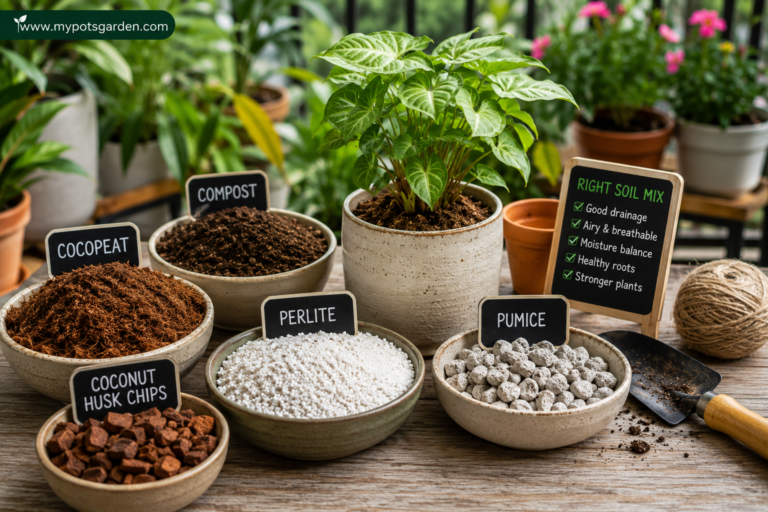
One thing I wish I understood earlier in container gardening is this — don’t complicate your potting mix with too many soil amendments or fancy western-style gardening hacks.
Even if the plant originally belongs to another continent, the version you buy from local nurseries or online plant shops is already growing in our Indian weather conditions. So the real goal of a potting mix is not copying an aesthetic soil recipe from social media. The goal is helping the plant tolerate your balcony or terrace microclimate while supporting healthy root growth inside pots.
And honestly, focusing too much on rare or expensive soil amendments creates another silent problem — maintenance.
Because once you start depending on difficult-to-find amendments, you need to constantly restock them, spend money on them, and store them properly. And many beginners don’t realize this part: improper storage slowly reduces the quality and benefits of soil amendments too.
That’s why over time, I slowly moved toward simpler, low-maintenance soil amendments that actually work well for Indian container gardening conditions instead of chasing every trending gardening ingredient online.
Which beginner-friendly soil amendments improve drainage without making pots too dry?
Improving drainage does not mean making the soil extremely dry or lifeless.
Good drainage simply means creating a balanced soil structure with enough airflow around roots instead of using heavy compact garden soil or random potting mix ratios.
The ratio should always depend on the plant type.
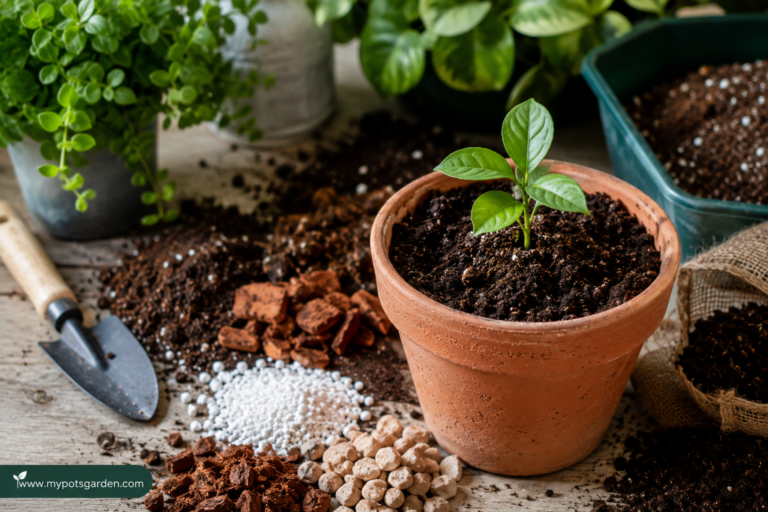
Using cocopeat as a soil base in the right ratio helps retain moisture without destroying the soil structure. It keeps the potting mix lightweight and airy while still supporting healthy root moisture.
Perlite or pumice honestly feels like a lifesaver for drainage in container gardening.
If you grow succulents, cacti, or plants that hate soggy soil, pumice works especially well because it improves drainage without making the soil completely dry overnight.
Coconut husk chips are another underrated option easily available in Indian markets. They help create chunky soil structure, improve airflow, and support drainage naturally.
All these amendments help the soil stay airy without turning the potting mix into a heavy wet block — but only when used in balanced ratios. That balance part matters more than the amendment itself.
What soil amendments should beginners avoid adding directly to balcony pots?
Some things look very normal or “organic,” so beginners assume they are automatically safe for container plants. I used to think the same. But over time, I realized some of these actually damage roots slowly inside pots.
Garden soil alone, or in excessive quantities, is one of them.
For many Indian gardeners, avoiding natural garden soil almost feels wrong. But the truth is, garden soil is mainly a medium. It is not automatically rich nutrition for potted plants like compost or manure.
Garden soil contains microbes, yes. But it can also contain:
- pest eggs,
- weed seeds,
- fungal spores,
- and hidden soil infections.
Most of us also don’t sterilize garden soil properly before using it in containers. That’s where many unhealthy soil problems begin silently.
And because garden soil is naturally heavy, frequent watering slowly compacts it further until it behaves almost like clay inside pots.
Using raw kitchen waste directly from the kitchen is another big no.
Unprocessed kitchen waste inside pots attracts:
- flies,
- pests,
- reptiles,
- fungal growth,
- and bad smells.
A lot of beginners misunderstand composting. Not everything from the kitchen breaks down evenly. Vegetable and fruit peels decompose faster, while eggshells, meat scraps, oily food waste, and dairy products behave very differently. Some even encourage bad microbial growth inside compost.
Proper compost should feel earthy and stable, not rotten or sour-smelling. That earthy-smelling compost helps improve soil structure and microbial activity in a healthy way.
Wet fresh manure straight from cattle is another mistake beginners often make.
Fresh manure usually creates:
- excess moisture retention,
- flies,
- foul smell,
- maggots,
- and unhealthy soil conditions.
The safer method is using well-aged manure in small amounts as top dressing instead of mixing large quantities directly into pots.
And honestly, those “magic fast growth” chemical fertilizers rarely work long term the way the label promises.
Even when they trigger fast flowering or rapid growth initially, plants often decline later because the sudden growth demand weakens root systems and foliage balance. The plant becomes stressed trying to maintain that unnatural growth speed.
What is a simple low-maintenance soil amendments mix for Indian balcony gardening?
Honestly, I only keep around five basic soil amendments with me. No huge collection.
Because the more complicated the potting mix becomes, the more gardening chores quietly increase. Plant care slowly becomes stressful instead of peaceful.
Cocopeat
Cocopeat honestly became one of my biggest lifesavers for lightweight container gardening soil.
It keeps the soil airy, helps maintain structure, and holds moisture without making the potting mix feel too heavy. Since it’s organic, it slowly breaks down naturally over time after use.
I usually buy cocopeat blocks, expand them with water, dry them properly, and store them in buckets. That single step is usually enough for an entire growing season or even a full year.
Compared to garden soil, cocopeat feels much safer for balcony and terrace gardening because it usually doesn’t carry:
- weeds,
- pest eggs,
- or fungal contamination.
It also works beautifully for lightweight terrace gardening setups where heavy soil becomes difficult to manage.
But one important thing I learned — excess cocopeat creates excess moisture retention. So the ratio knowledge still matters.
I use cocopeat as:
- a soil base,
- seed germination mix,
- and sometimes even as top dressing during extreme dry summer days to slow moisture loss.
Garden soil
Yes, I still use garden soil too. But in very small quantities compared to other amendments.
Before using it, I remove debris and sterilize it properly by drying it under strong sunlight for days or sometimes pouring hot water over it.
That sterilization process matters a lot.
I mainly use garden soil in smaller amounts for heavy feeder plants or plants that tolerate slightly higher moisture retention.
But I never use garden soil alone in pots.
I also usually mix neem cake powder along with it because it helps reduce pest and fungal problems naturally inside the potting mix.
Perlite
Perlite honestly feels like a lifesaver for Indian container gardeners growing houseplants or succulents.
In Indian balcony and terrace gardening, root rot problems are much more common than many beginners realize because heat, humidity, airflow, and watering patterns constantly fluctuate.
Perlite helps create:
- better aeration,
- better drainage,
- and healthier root airflow.
Since it does not hold heavy moisture, it helps prevent soggy soil conditions that usually trigger root rot.
I personally prefer adding perlite for almost every plant type in container gardening. The ratio changes depending on the plant — but drainage and airflow are important for almost all pots.
Compost
For me, compost is honestly one of the best low-maintenance fertilizers for Indian plant parents.
You really don’t need complicated or expensive fertilizers when the soil structure itself stays healthy. Good compost quietly supports both nutrition and soil health together.
One thing to remember though — compost also holds moisture. So again, the soil ratio matters.
I use compost:
- inside potting mixes,
- and also as top dressing later.
Personally, this method worked much better for me than repeatedly using chemical fertilizers that slowly create salt buildup inside container soil.
Just make sure the compost is properly processed and stored correctly. That changes everything.
Coconut husk chips
Coconut husk chips feel like a very practical Indian alternative for bark chips or orchid mixes used in western gardening setups.
They help create chunky soil structure, improve aeration, and support drainage while still holding a little moisture balance.
I sometimes even use them:
- at the bottom layer for drainage,
- or as top dressing during extreme heat waves to slow down moisture evaporation.
Since they break down slowly over time, they improve soil structure naturally without causing salt buildup like repeated chemical products often do.
And honestly, most healthy potting mixes are not created by adding more and more ingredients. They usually become healthier when the gardener slowly understands what each amendment is actually doing inside the pot. That observation matters more than complicated recipes.
Free Soil Mix PDF for Balcony & Terrace Gardening
Confused about soggy soil, root rot, dry pots, or unhealthy potting mix? Download my beginner-friendly free soil mix PDF guide to learn simple potting mix ratios, drainage tips, and practical soil fixes for Indian container gardening.
- Simple soil mix ratios for different plant types
- How to avoid root rot & overwatering issues
- Best low-maintenance soil amendments
- Balcony & terrace gardening friendly tips
Perfect for beginner container gardeners struggling with unhealthy potting soil and weak plant growth.
Can Small Soil Changes Really Help Container Plants Recover Over Time?
Honestly, yes. Small soil changes can completely change how container plants behave over time. Not overnight miracles, not “3 days recovery hacks,” but slow stable recovery that actually lasts through heat, rain, seasonal shifts, and watering mistakes.
One thing I slowly understood in container gardening is this — healthy roots matter more than constantly adding fertilizers.
Most beginners focus on what to feed the plant, but the real struggle usually starts underneath the soil. If the roots are stressed from soggy soil, compact soil, poor airflow, fungal buildup, or unhealthy moisture retention, even expensive fertilizers cannot properly help the plant.
The plant may show temporary growth, but eventually the same problems return:
- yellow leaves,
- weak stems,
- slow growth,
- overwatering confusion,
- dry soil stress,
- or sudden plant decline.
But when the potting mix slowly becomes healthier, the roots behave differently.
You’ll notice:
- water absorption becomes more balanced,
- soil dries more naturally,
- leaves hold better turgor pressure,
- new growth appears slowly but steadily,
- and plants stop looking constantly stressed after every weather fluctuation.
And honestly, this improvement usually comes from very small adjustments:
- reducing excess compost,
- improving airflow,
- adjusting drainage ratios,
- stopping overwatering,
- changing pot placement,
- or simplifying the soil amendments instead of adding more.
That’s why I personally stopped chasing complicated potting mix recipes online.
Because balcony gardening and terrace gardening in Indian conditions already come with enough challenges:
- intense terrace heat,
- sudden monsoon rain,
- trapped humidity,
- limited airflow,
- compact spaces,
- and fast soil drying in pots.
Adding too many amendments without understanding their behavior often creates more maintenance than actual plant health.
Over time, I realized healthy container gardening is less about building a “perfect” soil mix and more about observing how your own pots react in your own microclimate.
Some seasons the soil may stay wet longer. Some summers may dry pots within hours. Some plants tolerate moisture beautifully, while others collapse from the same mix. That observation slowly teaches more than blindly copying any one recipe.
And honestly, patient soil improvement creates stronger balcony plants season after season.
Not because the plants become magically immune to problems, but because the root systems slowly adapt inside a healthier soil structure. The potting mix becomes more stable, watering becomes less stressful, and the gardener also becomes calmer while handling plant care.
That calmness matters too.
Because many beginners think they are “bad at gardening” when the real issue is simply unhealthy soil structure inside containers.
If you’re currently struggling with root rot, dry soil, yellow leaves, weak growth, fungal issues, or potted plants dying even after watering properly, don’t immediately assume the plant itself is the problem. Sometimes the soil is silently asking for small corrections, not drastic changes.
And that’s exactly why understanding simple potting soil behavior becomes more important than collecting dozens of fancy soil amendments.
If you want to continue learning slowly without overcomplicating container gardening, you can next explore:
- simple soil mix guides for container gardening,
- why potted plants die even after watering,
- signs unhealthy potting soil is damaging roots,
- beginner balcony gardening soil mistakes,
- and potting mix adjustments for hot Indian terrace gardens.
Because once you understand how soil behaves inside pots, plant care becomes much less confusing — and honestly, much more peaceful too.