Watering is one of the most confusing parts of container gardening, especially when your potted plants start growing bigger. Many beginners try to follow watering planners, fixed schedules, or advice from Western gardening, only to end up with slow-growing plants, yellow leaves, soggy soil, or pots that dry out much faster than expected. In Indian balcony and terrace gardening, watering simply doesn’t work that way.
Our growing conditions are different. Hard water is common in many places. Most of us use plastic pots, which hold and release moisture differently. The hot floor on balconies and terraces heats the pots from below and dries the potting soil much faster, even after watering. Limited space also reduces airflow, making it easier to accidentally overwater and create fungal problems, even when you’re using a well-draining soil mix.
One thing I’ve slowly realized through container gardening is that almost nothing follows a fixed schedule. The same applies to watering, fertilizing, repotting, pruning, and almost every other part of plant care. Instead of following a calendar, we have to observe what our plants are actually telling us.
Watering needs change with the seasons, plant placement, pot material, repotting, and even the size of the plant itself. As potted plants grow, their water needs naturally increase. If we don’t notice those changes, we may start seeing slow growth, underwater stress, yellowing leaves, weak flowering, poor fruit formation, or sometimes even overwatering because we’re still following the old watering routine.
This can happen even when you’re giving the right amount of sunlight and fertilizer. If watering becomes unbalanced, healthy plant growth eventually slows down.
As plants become larger, they need more water to support flowering and fruiting, move nutrients through the plant, break down organic matter in the potting mix, cool the larger volume of soil, maintain turgor pressure, and support photosynthesis across more leaves.
But this doesn’t mean you should simply pour more water into the pot. It means adjusting your watering based on your plant’s growth stage and learning to notice the right signs before watering.
In this blog, you’ll learn how to tell when growing potted plants need more water, why watering needs change as plants grow, how to adjust watering for different growth stages, and how to keep watering simple without following a fixed schedule. By the end, you’ll feel much more confident about watering your balcony and terrace plants the way they actually need.
💧 Most beginners think they’re watering correctly — until these hard truths show up. Read the watering truths beginners miss
What Signs Show My Bigger Container Plants Are Not Getting the Right Amount of Water?
One thing I’ve noticed in container gardening is that watering problems often start after repotting or when a plant simply becomes much bigger in the same pot. The watering routine that worked a few months ago suddenly doesn’t seem enough—or sometimes it becomes too much. This creates a watering imbalance, and your plant slowly starts showing small signs before the problem becomes serious.
These early signs don’t always mean underwatering alone. Some can also happen because of overwatering. The trick is not to panic over one symptom, but to observe the soil and the plant together before changing your watering routine.
Why are older leaves drooping even after regular watering?
Drooping older leaves can be a sign of both underwatering and overwatering.
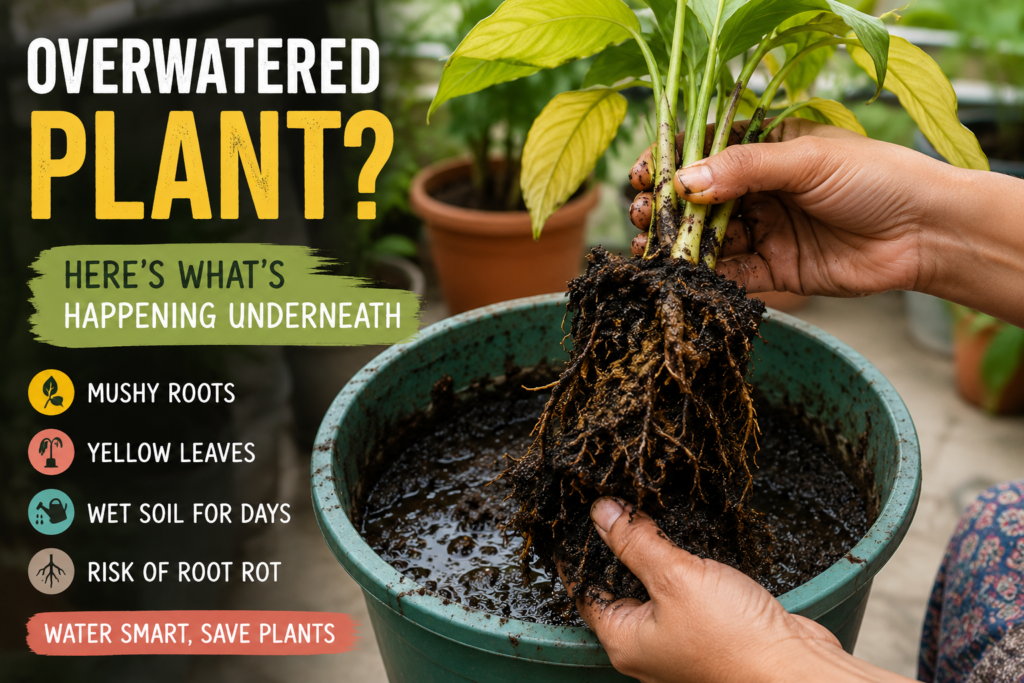
If you’ve recently repotted into a much bigger pot, the larger soil volume can hold moisture for longer. Continuing to water too frequently may keep the soil wet around the roots, leading to overwatering stress.
On the other hand, if your plant has grown much bigger in the same pot, it may simply be using water faster than before. Older leaves may start drooping first as the plant tries to conserve moisture and protect its newer growth.
The easiest way to understand which problem you’re facing is by checking the potting soil. If the soil stays wet for many days, feels soggy, or has a sour smell, overwatering is more likely. If the soil becomes dry much sooner after watering, especially during active growth, it usually points toward underwatering.
Older leaf drooping is only an early warning sign. If the watering imbalance continues, new leaves may also begin drooping, showing that the roots are becoming stressed or damaged.
Why does the potting soil become dry much sooner than before?
If your potting soil starts drying much faster after the plant has grown bigger in the same container, it often means the plant now needs more water than your old routine provides. It can also be a sign that the plant is becoming root-bound, so it’s worth checking whether repotting is needed.
Sometimes the soil level itself becomes lower over time because watering and wind gradually wash away or compact the potting mix. Less soil means less moisture storage, so simply topping up the pot with fresh potting mix can sometimes improve water retention.
If the soil starts drying too quickly immediately after repotting, there are usually two possibilities. The potting mix doesn’t contain enough moisture-holding materials, or the plant isn’t receiving deep watering.
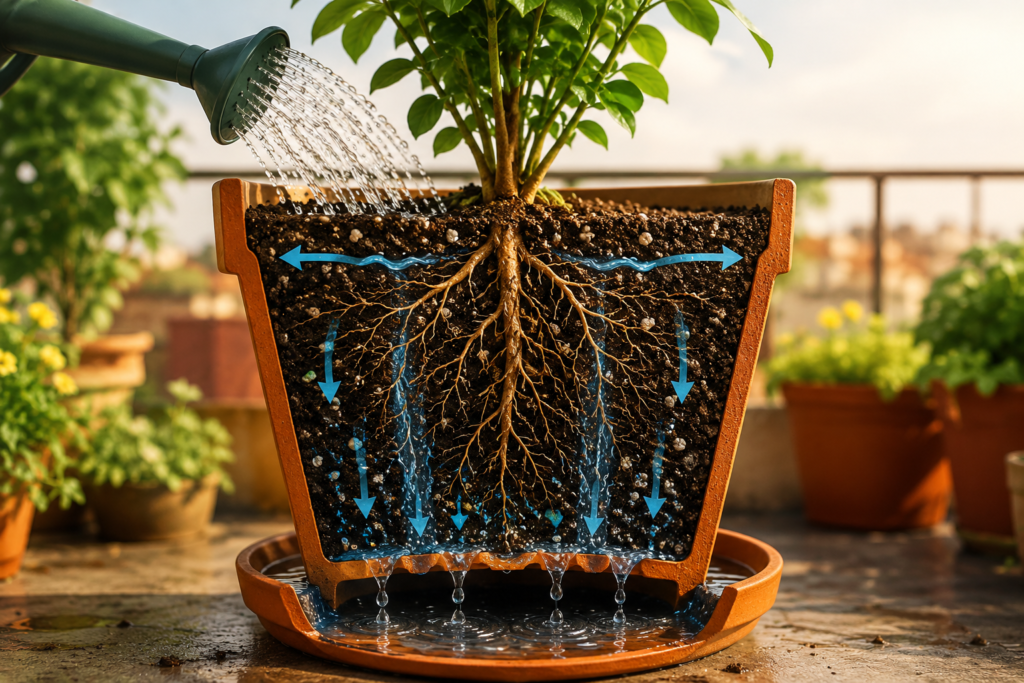
A shallow watering wets only the top layer of soil, while the lower root zone remains dry. Deep watering allows the entire root ball to absorb moisture evenly, helping larger plants stay hydrated for longer.
Why are flowers, vegetables, or new leaves becoming smaller?
Flowers, vegetables, and fresh leaves need plenty of water to grow properly.
Water is essential for photosynthesis, nutrient movement, and breaking down organic matter in the potting soil so roots can absorb nutrients.
When water becomes limited, the plant starts using its available moisture for survival first. It focuses on cooling itself, maintaining turgor pressure, and keeping important tissues alive before investing energy in flowering, fruiting, or producing larger leaves.
That’s why flowering plants, vegetables, and even foliage plants usually become much thirstier during their active growing season. Bigger plants don’t need soggy soil, but they do need deeper, balanced watering that reaches the entire root zone.
What are the signs that I’m still watering like it’s a small plant?
One of the biggest clues is that the soil dries much faster than it used to. Sometimes the pot is dry by the same evening or the very next day. This doesn’t happen only in small pots. Even larger containers can dry quickly when the plant has developed a large root system.
Sometimes the problem is also the potting mix itself. If the soil doesn’t hold enough moisture, it cannot act as a temporary water reservoir while the roots absorb what they need.
You may also notice that the plant looks dull most of the time, wilts during the afternoon, or produces weak flowers and fruits. If you look closely, the leaves may even lose their firmness and develop a slightly wrinkled texture, almost like a balloon that’s slowly losing air.
These signs don’t always mean you should immediately pour more water into the pot. They simply tell you that your old watering routine may no longer match your plant’s current size. In the next section, we’ll see why watering needs naturally increase as container plants grow and how to adjust your routine without creating new watering problems.
Not sure whether your plant actually needs water? These simple checks can help you avoid guesswork: Simple Ways to Tell if Potting Soil Needs Water
Why Does Watering Change So Much as Plants Grow in Containers?
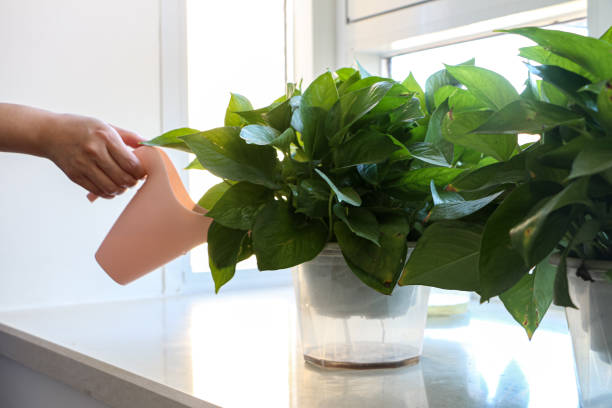
The first thing I realized about container gardening is that watering isn’t as simple as watering plants in the ground. In pots, watering is influenced by many things—your potting mix, soil amendments, drainage, pot size, pot material, seasonal changes, and even the small micro-climate on your balcony or terrace.
All these factors affect how long the potting soil stays moist, how quickly it dries, and how easily watering becomes unbalanced. That’s why potted plants show watering stress much faster than ground-grown plants. Whether it’s soggy soil, dry soil, yellowing leaves, or weak roots, container plants usually react first and often take longer to recover.
To understand why your watering routine changes so much, it helps to see what actually happens as a plant grows.
How Do Larger Root Systems Use Water Faster Inside Pots?
As your plant grows, its root system changes in both size and function. This is one of the biggest reasons watering needs increase over time, even when the plant is still growing in the same pot.
Young plants or plug seedlings have a small, delicate root system made mostly of fine feeder roots. These tiny roots occupy only a small volume of potting soil and absorb relatively little water. That’s why it’s always recommended to choose a pot that’s only about 2 inches wider than the root ball. A much larger pot holds excess wet soil that young roots cannot use efficiently, increasing the risk of overwatering.
As the plant matures, the root system becomes larger and more complex.
Fine feeder roots are thin, hair-like, and densely branched. They contain millions of root hairs and absorb most of the water and nutrients from the potting mix.
Medium-sized roots mainly transport that water and nutrients to the rest of the plant while also giving structural support.
Large, thicker roots anchor the plant and store energy in some species. They don’t absorb much water directly, but they support a much larger network of feeder roots that constantly need moisture.
As this entire root system expands, the plant naturally starts using more water than it did a few months earlier.
Why do fuller leaves increase water loss on balconies and terraces?
This part is actually quite simple.
The more leaves, flowers, fruits, or vegetables a plant produces, the more water it needs to keep all those parts functioning. More leaves also mean more water is lost through transpiration, especially in hot Indian balcony and terrace gardens where sunlight, wind, and heated floors dry the pots much faster.
But needing more water doesn’t mean keeping the soil constantly wet.
Always check the soil before watering because poor drainage or small micro-climate changes can keep the potting mix soggy. Once the roots sit in wet soil for too long, overall plant health begins to decline.
The opposite is also true. Poor or shallow watering forces the plant into water stress, especially during active growth.
This is one reason flowering plants are pruned after blooming, vegetables after harvest, and leafy greens after repeated cutting. Reducing excess plant growth helps balance the water demand while the plant recovers.
During active growing seasons, larger plants usually benefit more from deep watering than frequent shallow watering.
How does a crowded root system make watering more challenging?
This is where repotting becomes important.
As roots gradually fill the entire pot, the amount of potting soil becomes smaller. That means there’s less soil available to act as a temporary water reservoir.
When most of the container is filled with roots instead of potting mix, water drains through much more quickly. The roots no longer have enough surrounding soil to hold moisture between watering, so the pot dries out much faster than it did before.
This is why root-bound plants often become difficult to water properly. The problem isn’t always that you’re watering too little. Sometimes there’s simply not enough potting mix left to store water for the roots to absorb slowly throughout the day.
Understanding these changes makes it much easier to adjust your watering before slow growth, yellow leaves, root stress, or flowering problems begin. In the next section, we’ll look at practical ways to match your watering routine to your plant’s growth stage without creating new watering mistakes.
If watering feels inconsistent despite your best efforts, the way water travels through potting soil may be the reason. Read: How Water Moves in Pots (And Why Watering Feels Uneven)
How Can I Adjust Watering for Bigger Plants Growing in Pots?
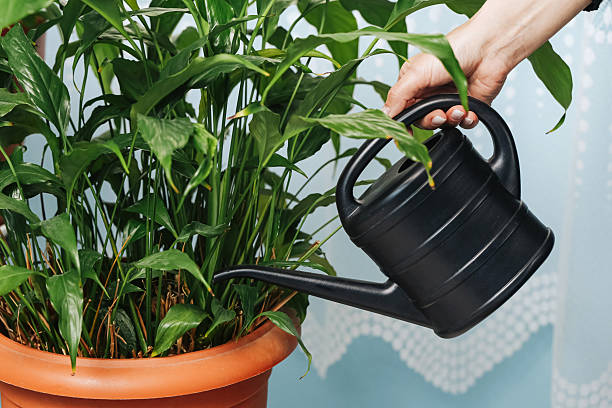
Once I understood that watering needs naturally change as plants grow, adjusting my watering routine became much easier. You don’t need complicated watering planners or fixed schedules. Just focus on a few key areas of container gardening, and your plants will usually tell you what they need.
Should I water more often or water more deeply?
Many beginners think watering more often is the solution, but frequent watering without checking the soil usually creates more problems than it solves.
As plants enter their active growing or blooming season, they benefit more from deep watering than frequent shallow watering.
Young saplings, recently repotted plants, or stressed plants are different. Their roots are still establishing, so lighter watering based on the soil condition is usually safer until they recover.
Deep watering simply means watering slowly until excess water drains out through the drainage holes. This allows the entire root ball to absorb moisture instead of leaving the lower roots dry.
How can I check whether the entire root ball is getting enough moisture?
You can’t directly see the moisture around the root ball, but you can still estimate it with a few simple methods.
Insert a thin wooden stick about 2 inches into the potting soil near the pot rim. If it comes out moist with soil sticking to it, the soil still has enough moisture. If it comes out dry, it’s usually time to water.
For smaller pots, you can also gently lift the container. A heavier pot usually means the soil is still moist, while a much lighter pot often indicates that it has dried considerably.
If you’re growing plants in terracotta pots or fabric grow bags, the outer surface often gives useful clues. These containers naturally show moisture changes more clearly than plastic pots.
When should I move a plant into a larger pot instead of watering more?
Watch for repotting signs instead of assuming every fast-drying pot needs a larger container.
Small pots naturally dry faster because they contain less potting soil, especially during the early stages of plant growth. That alone isn’t a reason to repot.
Many gardeners up-pot simply to avoid frequent watering, but this often creates new overwatering problems because the larger volume of potting soil stays wet much longer than the roots can use.
Instead of treating watering as a task to reduce, continue checking the soil and watering when needed. Repot only when the plant actually shows signs of becoming root-bound or has clearly outgrown its container.
How can mulch help larger container plants stay moist longer?
Mulch becomes most useful during extreme summer heat, especially in Indian balcony and terrace gardens where pots lose moisture quickly because of direct sunlight, hot floors, and dry winds.
With the right potting mix and proper deep watering, larger containers already hold moisture for much longer. Depending on airflow, pot material, and weather, they may stay evenly moist for two or three days without extra help.
The goal isn’t to keep the soil constantly wet. Allow the potting soil to dry gradually between watering.
If only the top layer dries quickly because of heat and wind, a light layer of coconut husk chips works well as mulch. It helps reduce surface evaporation without making the soil soggy.
What simple watering routine works during hot Indian summers?
The simplest routine is also the most reliable—observe first, then water.
Try checking your plants every day, or at least once every one or two days. This habit works much better than following fixed watering schedules because container gardening is affected by changing weather, plant growth, pot size, soil type, and your balcony or terrace micro-climate.
Fixed schedules eventually fail because these conditions keep changing.
If you prefer a routine, keep a simple gardening calendar instead. Note how many days the potting soil takes to dry during different seasons. Over time, you’ll start predicting your watering frequency more accurately while still checking the soil before watering.
A good watering routine isn’t about watering every two or three days. It’s about checking the soil, observing your plants, and adjusting the watering frequency whenever the weather or plant growth changes.
Mistakes to avoid when watering mature potted plants
Don’t trust only the top layer of potting soil. It often dries first because of heat and wind while the soil deeper inside remains moist.
Avoid using heavy garden soil or the same potting mix for every plant. Different plants have different moisture needs.
Don’t follow fixed watering schedules. Observe the soil first, then water.
Keep enough airflow around your containers so the potting soil dries at a healthy rate instead of remaining wet for too long.
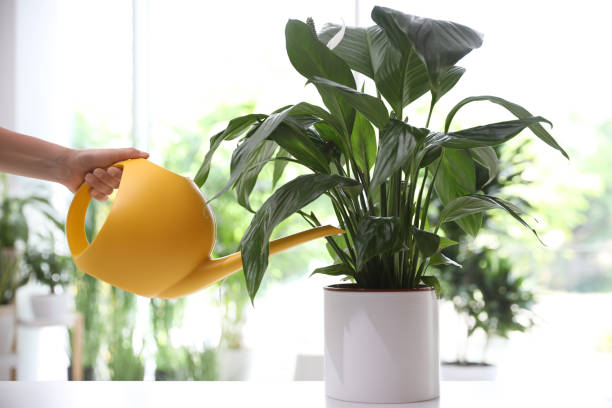
When watering mature plants, use a watering can with a gentle shower head and water slowly. Slow, deep watering reaches the entire root zone much better than pouring water quickly into the pot.
The right watering can gives better control and helps reduce common watering mistakes. See the best options here: Struggling with Water Pots? These Watering Cans Help
How Can I Keep Watering Simple as My Container Plants Continue Growing?
One thing I’ve learned through container gardening is that watering never stays the same forever. As your plant grows, its roots become larger, the leaves become fuller, and its water needs naturally change. That doesn’t mean you’re doing something wrong. It simply means your watering routine needs to grow along with your plant.
Instead of trying to follow a fixed watering schedule, build a simple habit of checking the soil and observing your plants regularly. Over time, you’ll start noticing how quickly different pots dry during each season, how your balcony or terrace micro-climate affects moisture, and when your plants are asking for a little more or a little less water.
Container gardening becomes much less confusing when you stop chasing perfect watering schedules and start understanding your plants. Every pot, every season, and every plant behaves a little differently, and that’s completely normal.
If you’re still finding it difficult to predict how often to water throughout the year, read Why Does Watering Frequency Keep Changing in Potted Plants? It explains the different factors that affect watering frequency in container gardening.
If you’re unsure whether your potting soil actually needs water before watering again, the guide How to Tell if Potting Soil Needs Water Before You Water Again will help you check soil moisture using simple methods without any special tools.
A simple watering routine can prevent many common container plant problems. Learn how to build one: