Many beginner balcony and terrace gardeners struggle with one simple question: does my potted plant actually need water right now?
You see the top soil looking dry and immediately think, “I need to water this plant.” Then a few days or a week later, the plant starts showing problems. Growth slows down. Leaves begin yellowing. Some leaves droop. The plant simply doesn’t look as healthy as before.
Naturally, you wonder, “I watered the plant whenever it looked thirsty, so why is it still struggling?”
The answer is that yes, you watered the plant—but you didn’t check whether the soil was actually thirsty or not.
Both underwatering and overwatering in container plants often happen for the same reasons. Many beginners don’t observe plant signals closely, stick to fixed watering schedules, or forget to adjust watering habits for seasonal changes, rainfall, humidity, and temperature.
Unlike plants growing in the ground, potted plants have very limited soil space. There is no large soil buffer holding and balancing moisture. The water inside a container is affected by many factors, including sunlight, pot size, pot material, plant placement, soil texture, airflow, and the changing conditions common in Indian balcony and terrace gardens.
Without understanding these factors, and without checking actual soil moisture, many gardeners water based only on what they see on the surface. The top layer looks dry, so they water. Sometimes the soil deeper inside the pot is still moist. Other times the root zone is already becoming too dry. This is where watering imbalance begins.
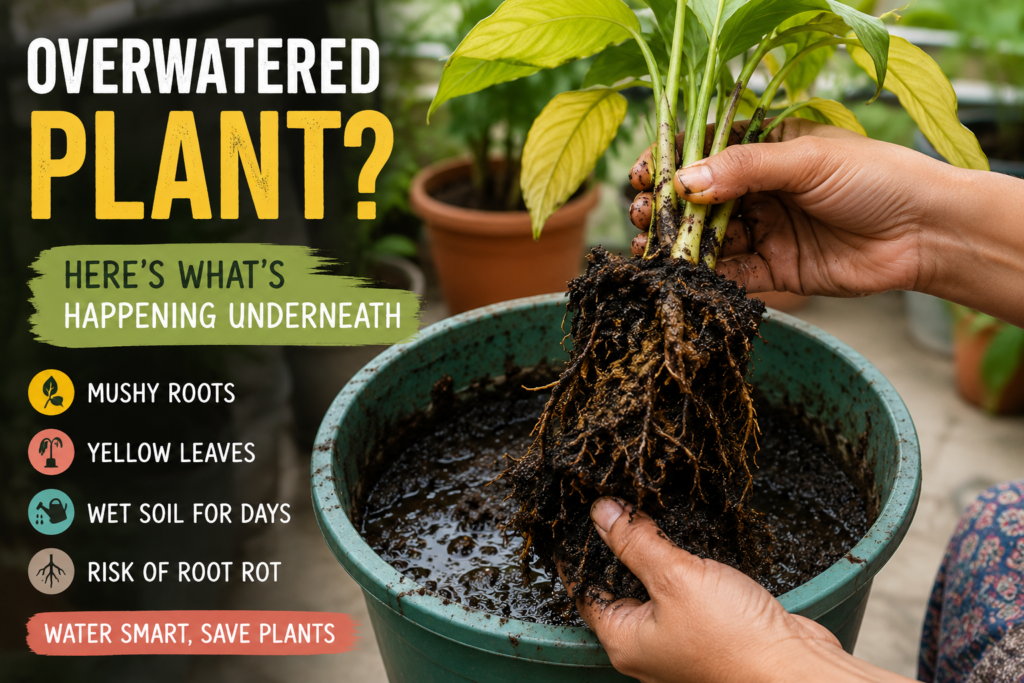
Underwatering creates root stress and causes the plant to struggle with normal growth and water movement. Overwatering can leave roots sitting in constantly wet soil, increasing the risk of root rot, fungal problems, and weak root development.
The good news is that checking soil moisture does not require an expensive moisture meter or complicated gardening tools.
Most of the time, it comes down to simple observation. Learning to notice the difference between a plant that is truly thirsty and a plant that is still sitting in moist soil.
The goal is simply to understand whether the soil inside the container has dried enough to need water or whether it is still holding moisture. That small observation can prevent many common potted plant problems before they start.
Once you learn a few simple ways to check soil moisture, watering becomes much less confusing. You can avoid both overwatering and underwatering, maintain better moisture balance in your containers, and help your balcony and terrace plants grow healthier with much more confidence.
✨ If watering feels confusing, this blog explains why — without oversimplifying it.
Explore the honest container watering guide
What Signs Make Me Think My Balcony or Terrace Plants Need Water?
To avoid overwatering, you first need to know whether your plant is actually thirsty or not. That sounds simple, but this is where many beginner watering mistakes start.
Most beginners see a stressed plant and immediately reach for the watering can. The problem is that several overwatering signs, root stress signs, and even some pest or disease symptoms can look similar to underwatering.
The signs below can help you understand whether your plant needs water or not. I learned many of these through trial and error over the years. You can learn them before losing a plant to overwatering, root rot, or watering imbalance in your container garden.
Drooping Leaves That Look Thirsty but May Not Always Mean Dry Soil
Droopy leaves can happen for many reasons. Root stress, repotting stress, disturbed roots, strong winds, heat exposure, pests, and diseases can all make a plant look tired and thirsty.
One thing I learned in container gardening is that there is rarely a single sign that points to a single problem. Many plant problems share the same symptoms, so you have to observe closely before deciding what is wrong.
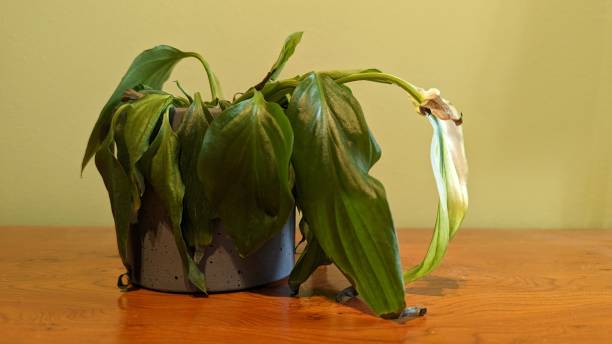
If the leaves look droopy and feel soft like a deflated balloon when you gently squeeze them, underwatering may be the reason.
But if those droopy leaves are also turning yellow, overwatering could be the real problem instead.
To confirm whether drooping leaves are caused by lack of water, check the soil with a wooden stick and see whether the soil deeper inside the pot is dry or still moist. Look closely at the leaves too. Underwatered leaves often develop slight wrinkles before they recover after watering.
Dry-Looking Topsoil While Deeper Potting Mix Still Holds Moisture
This is one of the most common causes of overwatering in balcony and terrace container gardens.
Because of wind exposure, heat reflection, and direct sunlight, the top layer of soil often dries much faster than the soil deeper inside the pot. The surface looks dry, but the root zone may still be holding moisture.
This happens frequently when heavy garden soil is used excessively in containers. The top layer dries first, while the lower layers continue holding moisture for a long time.
Even some potting mixes can show this behavior. The surface may look dry, but the soil underneath remains damp enough for roots. If watering continues without checking deeper soil moisture, it can slowly lead to root rot, fungal spots, weak roots, and other potted plant problems.
Using a chunky, airy potting mix helps reduce this issue. Porous pot materials such as terracotta, or adding side drainage holes in non-porous plastic pots, can improve airflow inside the container and help soil dry more evenly.
If you want to blame watering, remember that soil staying wet for too long is often linked to poor airflow inside the pot and plant placement, not just the amount of water you poured.
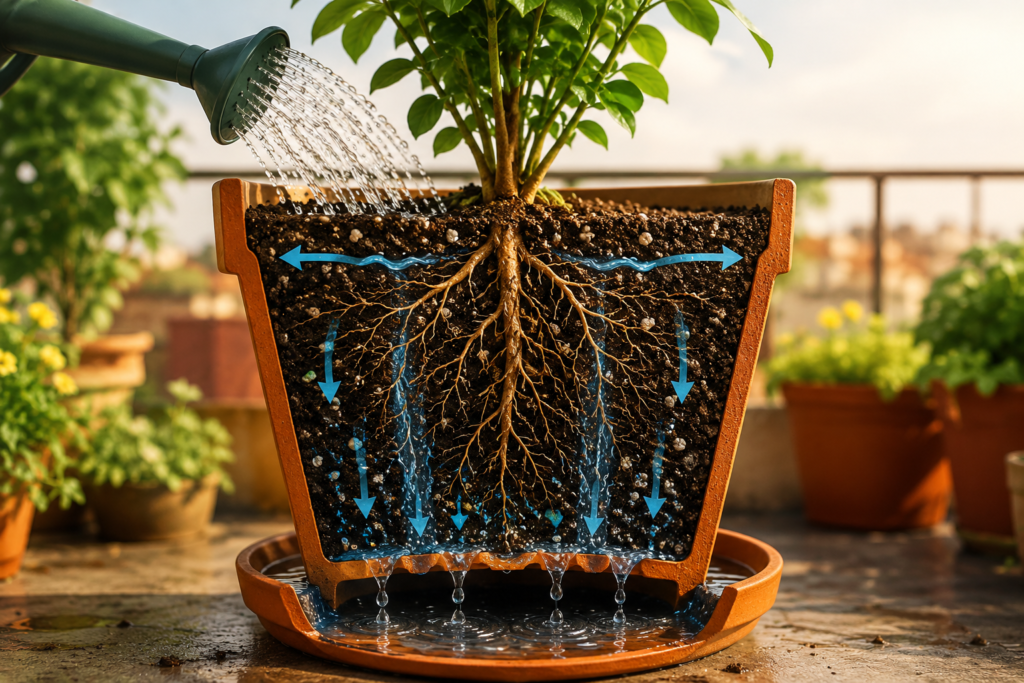
If watering feels inconsistent despite your best efforts, the way water travels through potting soil may be the reason. Read: How Water Moves in Pots (And Why Watering Feels Uneven)
Yellow Leaves, Slow Growth, or Stressed Plants That Create Watering Confusion
Many gardeners see yellow leaves, slow growth, or a stressed-looking plant and immediately conclude that the plant is thirsty.
Unfortunately, these are also common signs of overwatering and excess moisture trapped inside the potting mix.
Yellow leaves and slow growth can happen because of overwatering, root stress, repotting stress, lack of airflow, insufficient sunlight, fungal diseases, and several other issues. It is not always underwater.
If you notice yellow leaves and slow growth, look for additional clues before watering.
Are the leaf edges becoming crispy? Do the leaves have wrinkles? Are older leaves yellowing or are new leaves turning pale? Does the soil dry quickly after watering, or does it stay wet for days?
These extra observations often tell a more complete story than the yellow leaves alone.
Why Relying Only on Plant Appearance Can Lead to Watering Mistakes
Plants sometimes look dull simply because of wind exposure, heat stress, or sudden changes in sunlight. In some cases, moving the plant to a slightly better location solves the problem.
In container gardening, you need to read multiple signs before deciding what action to take.
Look beyond the plant’s appearance. Observe the stems and leaves. Feel whether they are firm, soft, wrinkled, or weak. Check whether the soil is wet, moist, or dry below the surface. Look for pest activity. Notice whether the soil smells earthy or has a sour smell caused by excess moisture.
Combining these observations is often the difference between solving a problem and making it worse.
It is also important to pay attention to plant placement and microclimate changes. In many balcony and terrace gardens, poor airflow creates more plant stress than people realize. Sometimes the issue is not drainage, fertilizer, or sunlight. Sometimes the plant simply needs better airflow and a more balanced growing environment.
The good news is that you do not need to become a plant expert overnight. You simply need a few reliable ways to confirm what the soil is doing before watering. In the next section, we will look at simple ways to check soil moisture without any expensive tools or moisture meters.
Why Is It Hard to Judge Soil Moisture in Container Plants?
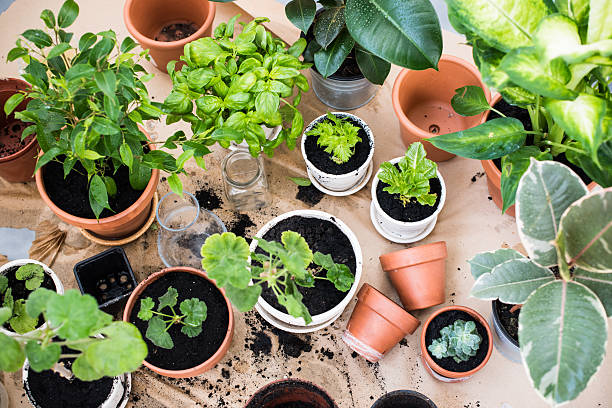
This is one of the biggest reasons beginners struggle with overwatering and underwatering in container gardening. The problem is not always watering itself. The problem is missing what is actually happening inside the potting soil.
For healthy roots, soil moisture needs to stay balanced and dry gradually after watering. If one area dries very quickly while another stays wet for days, the roots experience uneven conditions. Some roots sit in dry soil while others sit in constantly moist soil.
Over time, this imbalance can lead to slow growth, yellowing leaves, weak roots, root stress, fungal problems, and many of the common potted plant problems gardeners face in balcony and terrace gardens.
How Pot Size Affects Moisture Levels in Balcony and Terrace Gardens
If you think a 4-inch pot and an 8-inch pot dry at the same speed, that is a common misunderstanding.
Pot size, soil volume, root size, water-holding capacity, and drying time all change how moisture behaves inside a container.
Smaller pots hold less potting mix, so they have less water storage capacity. Larger pots contain more soil volume, which means they can hold moisture for a much longer period. The potting mix acts as a temporary water reservoir for roots, and the amount of soil directly affects how much water can be stored.
This is why small pots often dry much faster than larger containers.
Root size matters too. Young plants in small pots usually have smaller root systems and need less water than a fully established plant. This is one reason many gardeners recommend moving up only one pot size at a time, usually about 2 inches larger than the existing root ball.
A tiny plant sitting inside a very large pot often leaves too much unused soil staying moist for too long, increasing the risk of root stress and watering issues.
Why Terracotta Pots Dry Faster Than Plastic Containers
These are two completely different pot materials with completely different behaviors.
Terracotta pots are porous and breathable. Similar to fabric grow bags, coco coir pots, unglazed clay pots, and even some wooden containers, they contain tiny natural pores that allow air movement through the pot walls.
This airflow helps moisture escape more quickly, which is why terracotta pots usually dry faster than plastic containers.
On the other hand, non-porous pots such as plastic pots, resin pots, glazed containers, and metal pots do not allow air movement through the pot walls. These materials are essentially airtight compared to terracotta.
Plastic pots are widely used by Indian gardeners because they are affordable and lightweight, but they also tend to hold moisture longer.
That does not mean plastic pots are bad. It simply means you need to manage moisture differently.
Personally, I reduce moisture buildup in plastic pots by using a chunky, well-draining soil mix, watering only after checking the soil, placing plants in areas with better airflow, and one trick that has helped me a lot—drilling a few side holes near the lower portion of the pot to improve airflow inside the potting mix.
How Sunlight, Wind, and Terrace Heat Change Soil Moisture Throughout the Day
Container plants have very limited root space and almost no buffer zone. Because of that, the surrounding microclimate directly affects what happens inside the potting soil.
Sunlight is one example.
Many gardeners think only direct sunlight causes heat stress. But in Indian gardening conditions, reflected heat is often a bigger issue. Heat bouncing off walls, metal grills, concrete floors, nearby roofs, and even surrounding surfaces can warm the pot and soil more than expected.
This changes how quickly moisture evaporates and affects the soil drying window.
Wind is another factor that I rarely hear gardeners discuss.
In Tamil Nadu, especially during the windy period between summer and the southwest monsoon, strong winds can continue for weeks. During June, July, and August, the combination of heat and wind can be surprisingly intense.
The wind dries the top layer of soil very quickly and often creates the illusion that the entire pot is dry.
But when you check deeper inside, the soil may still be moist.
This is where many overwatering problems begin. Gardeners see dry topsoil, water again, and unknowingly keep adding moisture to soil that never had a chance to dry properly.
Why the Top Inch of Soil Often Tells Only Part of the Story
This is something I learned from experience after buying plants from both local nurseries and online sellers.
Many nursery plants come in heavy red soil. This soil is often compact and holds moisture for a long time. If you repot the plant without loosening or removing that original root ball, the surrounding potting mix may dry while the old root ball stays wet.
Sometimes the top 2 inches of soil feel completely dry, but the center of the root ball remains moist for days.
I have seen the same thing with online plug plants.
Many arrive with tightly packed cocopeat around the roots. The plant may look healthy, and the surface may appear dry, but the cocopeat root ball continues holding moisture much longer than the surrounding potting mix.
Over time, this trapped moisture can contribute to fungal spots, root stress, and slow growth if the root ball never gets a chance to dry properly.
For both nursery plants and plug plants, I usually soak and gently remove as much of the old soil as possible before planting into a well-draining potting mix. This helps roots spread into the new soil and creates more even moisture levels throughout the container.
And this is exactly why checking only the top layer of soil can be misleading. What matters is not what the surface looks like, but what is happening around the roots. Once you understand that difference, checking soil moisture becomes much easier and watering decisions become much more accurate.
Slow growth, yellow leaves, and weak roots often begin with unhealthy pot soil. Learn why: Plants Not Growing in Pots? Check Your Soil First
How Can I Check Soil Moisture Without Any Moisture Meter or Gardening Tools?
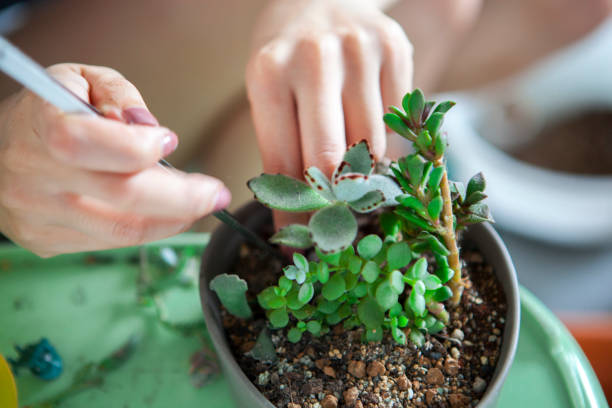
One thing I learned after years of container gardening is that you do not need a different tool for every small gardening task, especially as a beginner.
Buying gardening gadgets feels exciting when you first start. I was the same. But once gardening becomes part of your daily life, many of those tools end up sitting unused. Using them, cleaning them, and maintaining them becomes another task on its own.
The good news is that checking soil moisture in potted plants does not require an expensive moisture meter. A few simple observation methods are usually enough to avoid both overwatering and underwatering in balcony and terrace gardens.
Using the Finger Test to Check Moisture Deeper in the Root Zone
If I do not have a wooden stick nearby, I simply use the finger test.
There is nothing complicated about it. Keep your fingers dry and insert a finger about 1 to 2 inches into the soil near the pot rim. This helps you check the soil closer to the root zone instead of judging only by the surface.
A wooden stick can show whether soil is sticking or not, but your finger gives extra information. You can feel the soil temperature, moisture level, and texture.
If the soil feels cool and moist and some soil sticks to your finger, there is still moisture inside the pot. No need to water yet.
If the soil feels warm, loose, and dry, the plant is likely ready for watering.
This simple test takes only a few seconds and can prevent many beginner watering mistakes.
Learning the Pot Weight Method for Potted Plants
This method works best for small and medium-sized pots because lifting large containers every day is not practical.
Simply lift the pot slightly and notice its weight.
If the pot feels much lighter than usual, the soil has likely dried significantly. If it still feels heavy, there is probably enough moisture inside the potting mix.
I use this method regularly for succulents, small shelf plants, and even hanging pots.
However, this method works best when you use a lightweight potting mix or an airy soil mix.
If the container is filled with heavy red soil or garden soil, the pot naturally weighs more, making the test less reliable. Heavy ceramic or concrete pots can also make it harder to judge moisture levels accurately.
Over time, you naturally learn the difference between a freshly watered pot and a dry one just by lifting it.
Checking Drainage Holes for Clues About Soil Moisture
This is one of the most overlooked spots in container gardening.
Most beginners rarely look at drainage holes, but they often reveal what is happening inside the pot.
Drainage holes can show signs of hard water buildup, salt accumulation, root overgrowth, poor drainage, and trapped moisture.
If the soil inside the container is still moist, the drainage area often feels cool and slightly damp.
Sometimes excess moisture remains trapped near the bottom drainage layer even when the surface appears dry.
When the potting mix becomes very dry, you may notice small dust-like soil particles falling from the drainage holes when lifting the pot.
If the soil is still moist, this usually does not happen.
It is not a perfect test on its own, but it gives another useful clue when combined with other soil moisture checks.
Using a Wooden Stick or Skewer to Test Moisture in Containers
This is probably one of the easiest and safest ways to check soil moisture without tools.
For small pots, you can use a toothpick. For medium and large containers, use a thin wooden skewer or stick.
Insert it gently near the pot rim to reduce the chance of damaging roots.
Leave it for a few seconds, then pull it out and observe.
The stick not only shows whether the soil is dry or moist but also how deeply the moisture extends inside the pot.
You can even check inch by inch and start understanding how your potting mix behaves several days after watering.
If the stick comes out dry and clean, the soil is dry and likely ready for watering.
If it comes out cool with a small amount of soil attached, moisture is still present. In many cases, waiting another 24 to 48 hours is enough.
If the stick comes out wet with soil heavily sticking to it, the potting mix is still holding plenty of moisture and does not need water yet.
Creating a Simple Watering Routine Based on Observation Instead of a Schedule
Fixed watering schedules rarely work well for container plants.
However, tracking your watering is different from following a rigid schedule.
As you observe your plants, you start noticing patterns. During some seasons, a pot may dry every 2 or 3 days. During cooler or humid periods, the same pot may stay moist for much longer.
This watering frequency changes based on local weather, seasonal shifts, rainfall, humidity, temperature, airflow, and plant growth.
Over time, you can predict roughly when a pot may need water. I personally find it helpful to note watering dates on a calendar or in a simple garden journal.
The important part is that the prediction should never replace a soil moisture check.
Even if you expect the pot to be dry, always confirm before watering.
Tracking helps prevent underwatering. Observation helps prevent overwatering.
You need both.
Mistakes to Avoid When Checking Soil Moisture in Container Gardens
Microclimate matters more than most gardeners realize.
And microclimates can change quickly.
A sudden rain, several cloudy days, high humidity, strong summer winds, or an unexpected heatwave can completely change how fast a pot dries.
That is why soil moisture should always be checked before watering, no matter which method you prefer.
The method is your choice. The observation is the important part.
If a pot normally dries in 2 or 3 days, a humid weather pattern may extend that to 4 or 5 days. On the other hand, strong heat and dry winds can shorten the watering window significantly.
This is why watering calendars, schedules, and fixed routines often fail in balcony and terrace gardens.
The plants, soil, weather, and growing conditions are constantly changing.
Observation is what keeps your watering accurate.
Once you start paying attention to these small clues, checking soil moisture becomes less of a guessing game and more of a simple habit. That habit alone can prevent many common potted plant problems and help your container plants grow healthier with far fewer watering mistakes.
Ever wonder why one side of the pot stays wet while the other dries out? Learn how water actually moves in containers: How Water Moves in Pots (And Why Watering Feels Uneven)
What Should I Do If I'm Still Unsure When to Water My Plants?
If you are still unsure whether your plant needs water, that is completely normal. Almost every container gardener goes through this stage.
In fact, taking a few extra minutes to observe the plant is usually better than watering immediately. Most potted plants recover more easily from slight dryness than from constantly wet soil. When we are uncertain, the temptation is to water “just in case.” Unfortunately, this is how many overwatering problems begin.
Over time, you will notice that watering becomes less about following rules and more about recognizing patterns. You start noticing how quickly different pots dry, which plants use water faster, how seasonal changes affect moisture levels, and how your balcony or terrace microclimate influences drying time.
This confidence does not come from buying more tools. It comes from simple daily observation.
A quick look at the leaves, a finger test near the pot rim, lifting a small pot to check its weight, or using a wooden stick to check deeper soil moisture can tell you far more than a fixed watering schedule ever will.
Even experienced gardeners still check the soil before watering. The difference is that they have learned to trust their observations rather than assumptions.
The goal is not to water on the perfect day every single time. The goal is to avoid the common mistakes that keep roots constantly wet or leave plants dry for too long. A few small observations before watering can prevent yellow leaves, slow growth, root stress, fungal problems, and many other common container gardening issues.
If there is one thing to remember from this guide, it is this: water the soil based on what is happening inside the pot, not just what you see on the surface.
Once you get comfortable checking soil moisture, the next skill is learning how to tell the difference between underwatering and overwatering symptoms. Both can cause drooping leaves, yellowing, and plant stress, which is why many beginners confuse one for the other.
Understanding that difference can save you from making the wrong correction and help you solve plant problems much faster.
Your plant may not be getting moisture evenly, even when you’re watering correctly. Learn how water moves through pots: How Water Moves in Pots (And Why Watering Feels Uneven)