“I watered correctly, but this plant is still unhealthy.”
This is one of the most common questions beginners ask in container gardening. You water regularly, the soil does not look completely dry, and yet the plant starts showing problems. Leaves droop, growth slows down, yellowing appears, and sometimes the plant declines so quickly that you wonder what went wrong.
The problem is that watering is not as simple as it seems. The symptoms of overwatering and underwatering are often subtle and surprisingly similar, making them difficult for beginners to identify correctly.
Water does much more than simply keep a plant alive. It helps regulate soil temperature, keeps plant tissues firm, supports nutrient movement, helps break down organic matter in the potting mix, and plays a major role in the plant’s overall health. So watering is never just about pouring water into a pot.
In container gardening, finding the right watering balance can be surprisingly tricky. Whether you grow plants on a balcony, terrace, rooftop, or small outdoor space, avoiding both overwatering issues and underwater stress requires observation and adjustment.
What makes it more confusing is that both overwatering and underwatering can cause similar symptoms. Drooping leaves, yellowing foliage, wilting, slow growth, and overall plant stress can happen in both situations. This often leads beginners to misread the problem and apply the wrong solution.
From my experience, watering mistakes in Indian container gardening are almost inevitable. Even when you understand the basics of overwatering and underwatering, the more plants you grow, the more you realize how many factors influence watering.
One reason is that pots have limited root space and very little margin for error. Unlike garden soil, containers have no large buffer zone. Soil type, pot material, pot size, drainage, weather, sunlight exposure, airflow, and the surrounding microclimate all affect how quickly moisture is lost or retained.
Another thing I slowly learnt is that overwatering is not simply watering too frequently, and underwatering is not just forgetting to water for a few days.
Both problems are closely linked to soil moisture levels, soil texture, temperature, drainage efficiency, root health, plant placement, and airflow around the container. The biggest problem is often not the watering itself, but misreading the symptoms and treating the wrong issue.
In this blog, I’ll walk you through the signs of overwatering and underwatering, how to identify the real cause behind common potted plant problems, and how to make practical corrections before watering stress leads to weak roots, unhealthy growth, or plant loss. It sounds simple, but when a plant starts struggling in a container, knowing whether it needs more water or less water is often harder than most beginners expect.
😬 I learned these watering lessons only after losing a few plants. Beginners don’t have to. Discover the hard truths here
What Are the Signs of Underwatering vs Overwatering in Potted Plants?
If you think overwatering simply means watering too frequently and underwatering means missing a few watering days, buckle up buddy. We have a lot more things to unpack about the watering imbalance in container gardening.
This is exactly why so many balcony and terrace gardeners struggle with unhealthy plants. Leaves turn yellow, growth slows down, soil behaves strangely, and plants look stressed even when you feel you’re watering correctly. The challenge is that overwatering and underwatering often create similar symptoms, making potted plant problems much harder to diagnose than most beginners expect.
How to Identify Underwatered Container Plants
Leaves drooping, wilting, slow growth, and yellowing leaves are very common signs for both watering issues. To identify underwatering, you need to look a little deeper.
One of the first clues is how the potting mix behaves after watering. If the topsoil dries very quickly right after watering, the soil mix may be imbalanced with too many drainage materials, or the plant may have become rootbound. Cracks forming on the soil surface are another sign that the potting mix is struggling to hold moisture properly.
You may also notice that water runs straight through the pot immediately after watering. This often indicates that the soil is not absorbing water efficiently and moisture is bypassing parts of the root zone.
Another simple clue is pot weight. If you water thoroughly and the pot feels surprisingly light the very next day, especially in larger containers, the soil may not be holding enough moisture for the plant.
Plants that look dull, tired, or slightly wilted during midday heat but recover by evening or early morning are often showing early signs of underwatering stress.
Crispy leaf edges are another common indicator. They usually suggest that the soil is drying out too quickly or that roots are repeatedly experiencing moisture stress. Even with a good potting mix, containers placed directly on hot terrace floors or exposed to intense sunlight can dry much faster than expected.
Smaller pots also dry out much faster than larger pots, which is why watering issues tend to appear more frequently in compact containers.
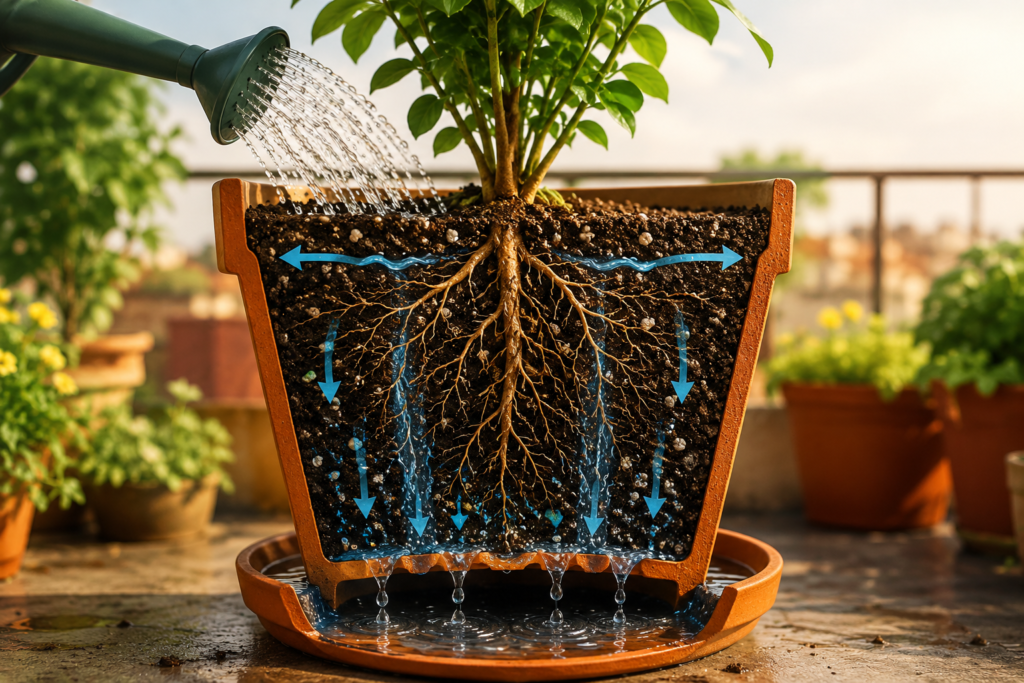
Ever wonder why one side of the pot stays wet while the other dries out? Learn how water actually moves in containers: How Water Moves in Pots (And Why Watering Feels Uneven)
Common Overwatering Symptoms Beginners Often Mistake for Thirst
Following fixed watering schedules is one of the biggest reasons overwatering happens in container gardening.
A common sign is when the topsoil remains wet for several days after watering. You may also notice a sour smell from the potting mix or slight algae growth on the soil surface. These are often signs that moisture is staying in the container for too long.
Heavy pots are another clue. If a pot still feels heavy several days after watering, there is a good chance the soil inside remains excessively moist.
Mushy stems, soft plant tissue, or collapsing growth points are warning signs that overwatering may have already progressed beyond a minor issue.
Drooping flowers, drooping young leaves, and fungal spots on foliage are often early indicators that the potting mix is staying wet longer than the roots can comfortably tolerate.
Colour changes in stems, particularly darkening near the base of the plant, can signal root or stem rot caused by prolonged excess moisture.
Leaf Yellowing, Wilting, Leaf Drop, and Slow Growth — What Each Symptom May Actually Mean
Leaf yellowing, wilting, leaf drop, and slow growth are some of the most confusing symptoms in container gardening because they can appear in both overwatered and underwatered plants.
Yellow leaves in an overwatered plant often start appearing while the soil remains consistently wet or soggy. In underwatered plants, yellowing usually follows prolonged dryness and is often accompanied by crispy leaf edges.
Wilting is another misleading sign. Many beginners assume a wilted plant needs more water, but roots sitting in waterlogged soil can also lose their ability to absorb moisture, causing similar drooping.
Leaf drop can occur when a plant experiences sudden watering stress. Both excessively wet soil and extremely dry soil can trigger leaves to fall as the plant struggles to cope.
Slow growth is often an early warning sign. Overwatering can reduce oxygen around the roots, while underwatering limits the moisture needed for healthy growth. Looking at soil moisture along with these symptoms gives a much clearer picture of the real problem.
If your plants keep struggling despite regular watering, your technique—not the amount of water—may be the problem. Learn more: Why Container Plants Struggle: Watering Mistakes Beginners Make
A Simple Balcony Garden Watering Check Before Reaching for the Watering Can
Don’t complicate the process.
If you are growing plants in smaller pots, simply lifting the pot can tell you a lot. Over time, you’ll start recognizing the difference between a moist pot and a dry one. A heavy pot usually means moisture is still present inside, while a lighter pot often indicates that watering may be needed.
Another easy method is using a toothpick or small wooden stick. Insert it deep into the potting mix and pull it out after a few seconds.
If the stick comes out completely dry, the soil likely needs watering.
If it comes out slightly moist with a few soil particles attached, the plant can usually wait another day.
If it comes out very wet with damp soil sticking heavily to the surface, avoid watering until the soil dries further.
You can also learn to read leaf texture and slight wrinkling over time, but that comes with experience. For most beginners, the wooden stick test is one of the easiest and most reliable ways to avoid both overwatering and underwatering.
The goal isn’t to become perfect at watering. The goal is to stop guessing. Once you learn how your potting mix, containers, and growing conditions behave, identifying watering problems becomes much easier. And that understanding alone can save a lot of balcony and terrace plants from unnecessary stress.
Watering seems simple until plants start wilting, yellowing, or struggling despite your efforts. Learn why: Why Watering Feels So Confusing in Container Gardening
Why Is It So Hard to Tell the Difference Between Overwatering and Underwatering in Containers?
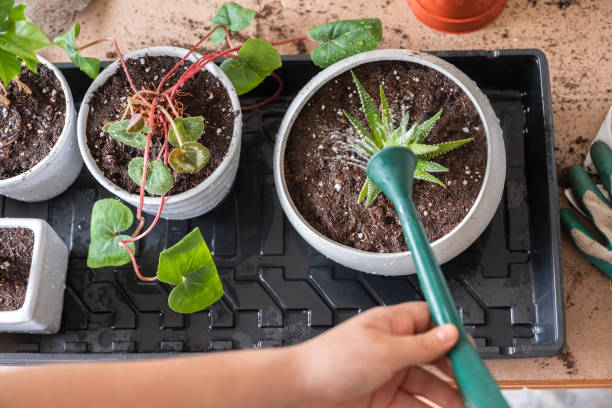
One of the biggest frustrations in container gardening is seeing yellow leaves, slow growth, drooping foliage, or unhealthy roots and not knowing whether the problem is too much water or too little water.
The confusing part is that both overwatering and underwatering can create very similar symptoms. Many balcony and terrace gardeners end up treating the wrong problem because the visible signs rarely tell the full story. To understand watering imbalance, we need to understand what is happening inside the pot, not just what we see above the soil.
How Container Size, Pot Material, and Drainage Affect Soil Moisture
In container gardening, the topsoil often fools us. The surface may look completely dry while the soil deeper inside the pot remains wet. These mixed signals are one of the biggest reasons beginners struggle to identify overwatering and underwatering correctly.
Container size changes the drying window of the soil. Smaller pots dry much faster because they contain less soil volume. Larger pots hold more soil and more moisture, so they naturally take longer to dry.
Pot material also plays a major role. Porous materials like terracotta allow air movement through the pot walls, helping moisture evaporate faster. Non-porous materials such as plastic, ceramic, or grow bags with limited airflow often retain moisture longer.
Drainage is another major factor. Poor soil drainage or blocked drainage holes can create overwatering problems even when you are not watering excessively. Sometimes the issue is not how often you water, but how efficiently excess moisture can leave the container.
Why Terrace and Balcony Pots Dry Out Differently Throughout the Day
Terrace gardens and balcony gardens may follow completely different watering patterns, even on the same day.
Terraces usually receive more wind exposure, direct sunlight, and reflected heat from concrete floors. The floor itself can increase soil temperature and dry containers much faster than expected. Because of this, many gardeners assume all terrace pots dry quickly, but that is not always true.
Crowded plant arrangements, pots placed in corners, heavy potting mixes, and watering without checking soil moisture can still create overwatering problems on terraces.
Interestingly, winter and monsoon seasons often create more watering challenges than summer. Higher humidity levels and reduced evaporation keep the potting mix moist for longer periods, increasing the risk of root rot, fungal spots, and soggy soil conditions.
Balcony gardens have their own challenges. Crowded plant placement can reduce airflow, causing soil moisture to remain trapped for longer. At the same time, tightly packed plants create blind spots where some pots are accidentally missed during watering, leading to underwatering stress.
During summer, balcony railings, walls, and surrounding surfaces can reflect heat far beyond actual sunlight exposure. This additional heat warms the soil and can create unexpected watering imbalances in potted plants.
The Hidden Root Problems Caused by Constantly Wet Potting Mix
A healthy potting mix should be light and airy. Good soil texture helps maintain airflow inside the container while also supporting proper drainage. These two factors work together to create balanced moisture levels around the roots.
Problems begin when the potting mix becomes too heavy or lacks enough drainage materials. The soil stays wet for longer periods, airflow inside the container decreases, and roots start struggling.
What many beginners do not realize is that roots need oxygen too.
When excess water fills the air pockets inside the soil, oxygen levels around the roots decrease. Without proper airflow, the soil takes even longer to dry, creating conditions where root rot, fungal diseases, and weak root systems can develop.
This is why an overwatered plant can sometimes look thirsty. The roots are sitting in moisture but cannot function properly.
Another issue with constantly wet soil is that it attracts pests and flies. Once these problems appear, nearby container plants can also become affected, creating larger issues throughout a balcony or terrace garden.
Why Watering Schedules Often Fail in Container Gardening
One thing I slowly learnt is that every pot behaves differently.
Pot size, pot material, plant type, root structure, soil mix, drainage efficiency, sunlight exposure, airflow, and plant placement all influence how quickly moisture disappears from the soil.
Because of this, fixed watering schedules often create problems. Some containers stay wet longer than expected, while others dry much faster. Following the same watering routine for every plant can easily cause overwatering in one pot and underwatering in another.
You cannot expect every container in a balcony or terrace garden to dry at the same rate, especially when plants are growing in different locations under different conditions.
Without checking soil moisture first, watering based only on schedules can slowly stress the roots through repeated moisture imbalance.
The good news is that understanding these factors makes diagnosing watering problems much easier. Once you stop focusing only on the watering can and start paying attention to the soil, container, and growing conditions, the difference between overwatering and underwatering becomes much clearer.
🌿 Crowding doesn’t just block airflow — it changes how plants grow and breathe. Discover the hidden stress of tight spaces
How Can I Fix Watering Problems Before My Plants Get Worse?
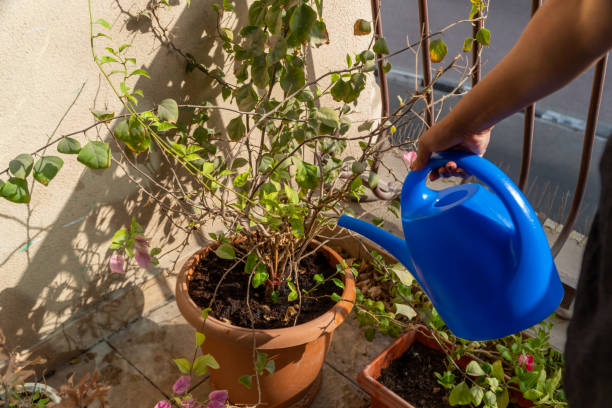
Once you identify whether the problem is overwatering or underwatering, the next step is not complicated. Most container plant watering problems can be corrected if you act early before weak roots, yellowing leaves, and severe plant stress start spreading through the plant.
How to Check Soil Moisture Correctly in Container Plants
You don’t need expensive tools to check soil moisture before watering.
For smaller pots, simply lift the container and feel its weight. If the pot feels heavy, there is usually enough moisture inside the soil. If it feels noticeably lighter, the soil is likely drying out and may need watering.
For bigger pots, use a toothpick, wooden stick, or bamboo skewer to check the moisture deeper inside the potting mix. Insert it near the pot rim rather than directly into the root zone to avoid disturbing roots.
If the stick comes out completely clean and dry, the soil needs watering.
If it comes out with slightly moist soil attached, there is still moisture inside and watering can wait.
If it comes out wet with soil sticking heavily to it, avoid watering until the soil dries further.
One simple habit can prevent a lot of plant loss: avoid fixed watering schedules. Not every container dries at the same speed. Even when the topsoil looks dry, always check deeper soil moisture before reaching for the watering can.
What to Do if Your Potted Plant Is Underwatered
If a plant is under water, don’t rush to repot it. Repotting adds another layer of stress when the plant is already struggling.
Start by removing severely wilted, brown, or completely dried plant parts that are unlikely to recover. If a leaf is only partially damaged, keep the healthy portion.
One simple check is to gently feel a leaf. Underwatered leaves often feel thin, limp, or slightly like a deflated balloon. Some foliage may also become dry and crispy around the edges.
After removing damaged growth, focus on restoring consistent moisture.
The goal is not to keep the soil soggy. The goal is to avoid the cycle of bone-dry soil followed by excessive watering. Try to keep the potting mix evenly moist while the plant recovers.
Move the plant away from harsh afternoon sunlight and place it in bright indirect light if possible. Avoid direct floor placement on hot terraces because heated floors can increase soil temperature and dry the pot faster.
Using pot stands or trays can reduce heat transfer from concrete surfaces. Good airflow is also important because it helps the soil dry evenly without creating excessive moisture buildup.
How to Recover an Overwatered Plant in a Container
Overwatered plants are often more difficult to recover than underwatered plants because the real damage usually happens below the soil surface.
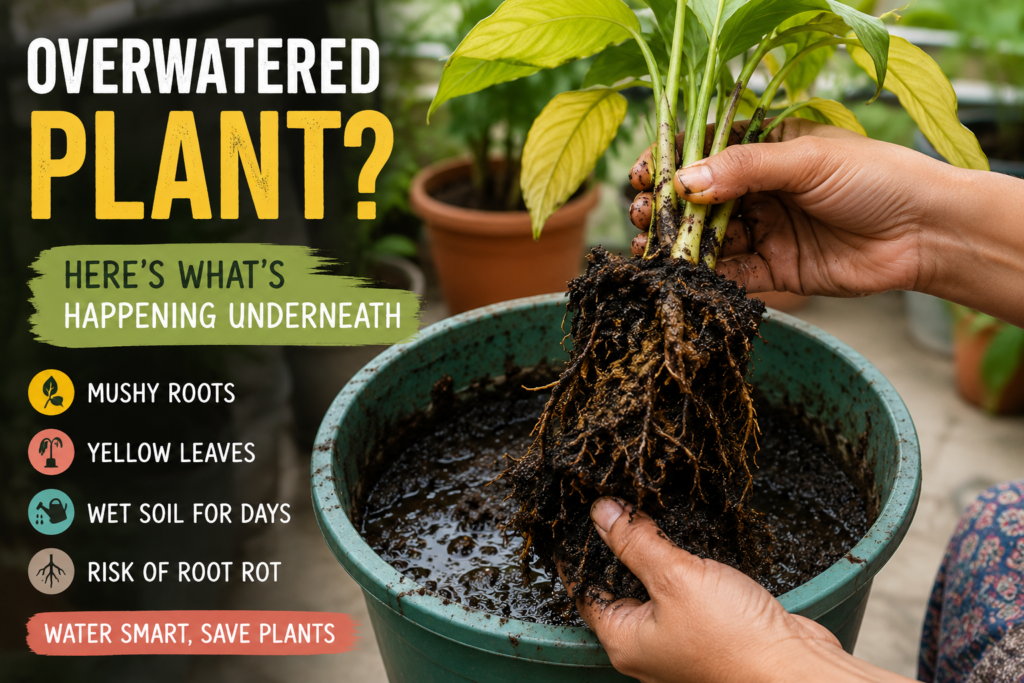
In many cases, checking the roots becomes necessary. Gently remove the plant from the pot and inspect the root system. Dark, mushy, foul-smelling roots are usually signs of rot and should be removed carefully.
Shake or wash away the old soil as gently as possible without causing unnecessary root damage. Remove only the rotted roots and keep as many healthy roots as possible.
After trimming, allow the roots to air dry briefly before repotting into a fresh potting mix that is light, airy, and well-draining. After root rot, improving airflow around the roots becomes more important than feeding the plant.
Avoid fertilizers during recovery. The plant needs time to rebuild healthy roots first.
For succulents, wait around 24–48 hours after repotting before watering. For most foliage and flowering plants, a light watering after repotting is usually enough. Avoid deep watering until the plant starts settling into its new soil.
Keep recovering plants in a location with good airflow and some distance from nearby plants. This reduces humidity buildup and helps prevent fungal problems from spreading.
If you use non-porous containers, consider pots with side ventilation or additional airflow around the container. Regardless of the pot material, proper drainage holes are essential.
Most importantly, give the plant time. Recovery is often slower than damage.
Easy Watering Habits That Help Prevent Future Watering Mistakes
- Use a well-draining potting mix.
- Choose pots with proper drainage holes.
- Place plants where airflow is good.
- Avoid fixed watering schedules.
- Avoid overcrowding plants on shelves and racks.
- Match plant placement to the correct sunlight conditions.
- Always check soil moisture before watering.
- Observe plants regularly for early signs of underwatering stress.
- Use watering cans with gentle water flow to avoid disturbing soil structure.
The right watering can gives better control and helps reduce common watering mistakes. See the best options here: Struggling with Water Pots? These Watering Cans Help
When to Water Based on Soil Condition Instead of a Fixed Schedule
Morning watering is usually the safest option for most balcony and terrace gardens.
During the afternoon, soil temperatures are often high and moisture evaporates quickly. In the evening, the potting mix may remain wet for longer periods, especially during humid weather, increasing the risk of overwatering problems.
Morning watering gives plants the entire day to absorb moisture while allowing excess water to evaporate naturally.
The biggest lesson I learnt in container gardening is that there is no perfect watering schedule. There are no universal gaps between watering days that work for every plant.
Every container behaves differently.
The combination of soil mix, pot size, pot material, weather, sunlight, airflow, and plant type changes how quickly moisture disappears from the pot.
That is why soil checks matter more than schedules.
A simple soil moisture check, combined with the right potting mix and regular observation, can prevent most watering imbalances before they turn into yellow leaves, weak roots, slow growth, root rot, or plant loss. Once you stop watering by habit and start watering based on soil condition, diagnosing and preventing watering problems becomes much easier.
Small soil mistakes can slowly weaken roots and damage potted plants over time. Learn the warning signs here: Beginner Soil Mistakes That Slowly Damage Potted Plants
Still Unsure Whether Your Plant Needs More Water or Less Water?
Learning watering in potted plants doesn’t happen just by reading blogs or knowing the theory. Even when you understand the difference between overwatering and underwatering, it doesn’t mean you’ll never make watering mistakes again.
I certainly did.
Some of my plant losses happened because I overlooked overwatering signs. The soil looked fine, the plant looked thirsty, and I watered again. Only later did I realize the problem wasn’t lack of water but too much moisture sitting around the roots.
The truth is that watering is one of those container gardening skills that develops through observation and experience. You can learn the signs, understand the causes, and know the solutions, but real confidence comes from spending time with your plants and seeing how they respond.
In fact, one of the lessons many gardeners remember most clearly comes after losing a plant to a watering mistake. I’m not saying that to be sarcastic. That’s genuinely how I learnt many of these watering lessons myself.
The reason I share these experiences is not to make watering seem complicated, but to help beginner gardeners avoid some of the common Indian container gardening mistakes that cost plants, time, and confidence.
If this blog helped you understand the difference between overwatering and underwatering, that’s a great start. If you’re still unsure, don’t overthink it. Observe the soil, check moisture before watering, pay attention to how your plants respond, and keep learning from them.
Over time, you’ll start recognizing the patterns. What feels confusing today will eventually become second nature.
Happy gardening!
🪴 Most beginners fail because they skip the basics. Don’t make that mistake. See the step-by-step container gardening guide