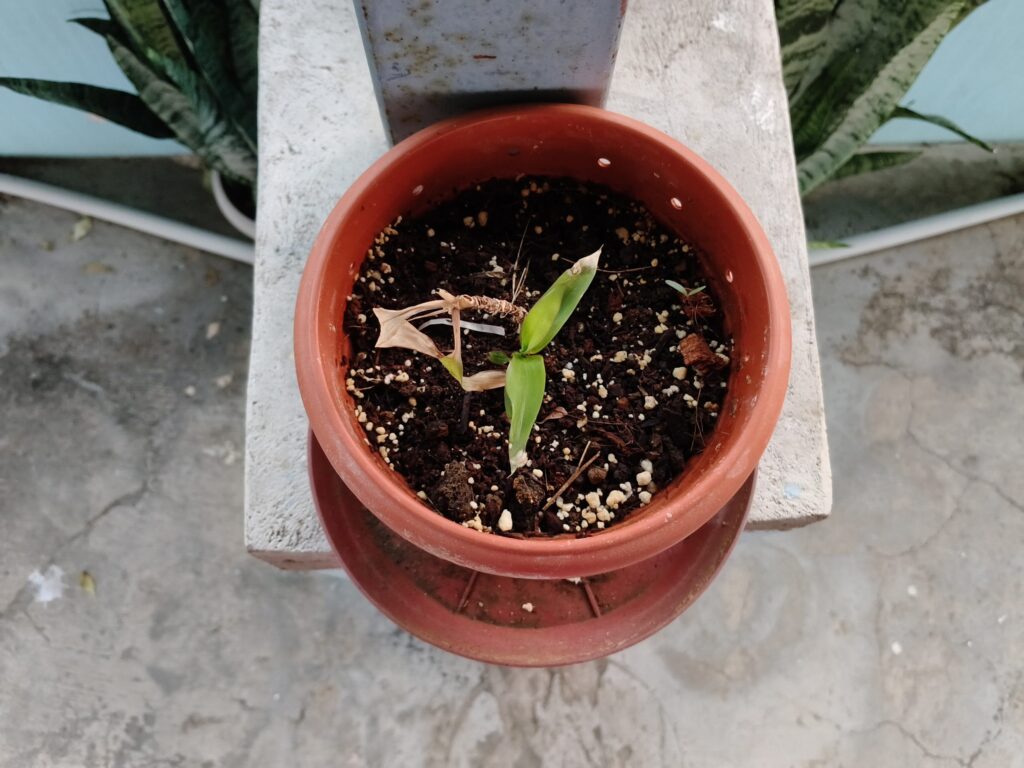
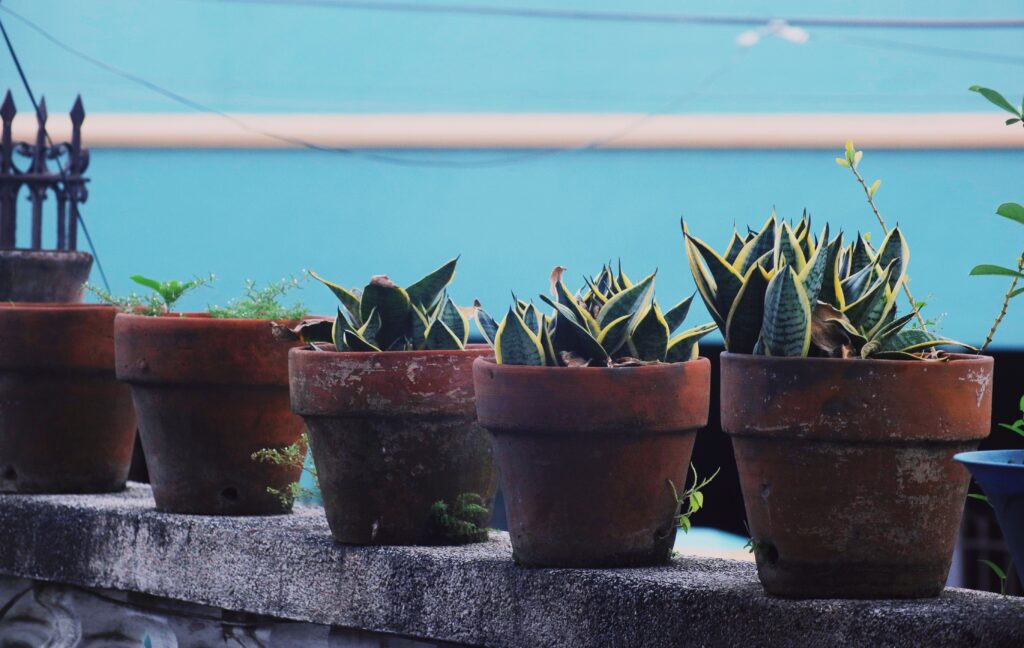
When it comes to choosing the right pot size for plants, even experienced gardeners can get a little confused. But why? Because there are too many issues tied along with pot size.
A bigger pot means more soil than the plant may actually need. That creates more soil volume, which can hold excess moisture for longer. It also means more organic matter around a smaller root system, which can sometimes create over-fertilizing issues. Too much organic matter and constantly damp soil can also attract pests and, in outdoor gardens, even unwanted visitors like reptiles.
Balance in feeding and filling the right amount of soil is important for potted plants. And honestly, it’s not a big work or something you need to do frequently to repot a plant when it actually outgrows its current pot.
To put it simply, gardeners usually face two kinds of situations with pot size.
One is: “I brought this plant from a nursery in its nursery pot. How much should I up-pot it?”
Another is: “I already have this potted plant in my garden. Lately, its growth has slowed and it seems to have outgrown the pot. If I need to repot it, what is the right up-pot size?”
Even though these two questions sound different, the problem is actually one thing:
“What is the right pot size for my potted plant when I first plant it in my garden or when I need to repot it?”
To understand this better, you need to know how much space your plant needs around its root ball and how that surrounding space works for healthy root and plant growth.
In container gardening, pot size matters more than you may think. Your pot is the container that holds the soil and creates the plant’s small growing environment. So, its size affects the amount of soil, how much moisture can be held, how nutrients are retained, and how quickly or slowly the moisture inside the pot dries.
When we talk about pot size, you may think it is mainly about plant height, dense foliage, how large the plant will eventually become, or how spacious and attractive the plant looks in that pot.
But pot size is not simply about the visible plant. It depends much more on your plant’s root type, root size, growth pattern, and moisture tolerance. These factors matter when deciding how much root space the plant actually needs.
Also, while choosing a pot, you need to consider the plant’s growth stage and available root space, especially when you are growing plants in balcony or terrace gardens where the container is the plant’s entire growing environment.
And in this blog, I’ll help you choose the right pot size your plant actually needs so it can thrive in it. And remember, there’s no universal best pot size based simply on plant height. Choosing the right pot is more about understanding what your plant needs right now—and that’s what we’ll look at next.
How Can You Tell What Pot Size Your Plant Needs?
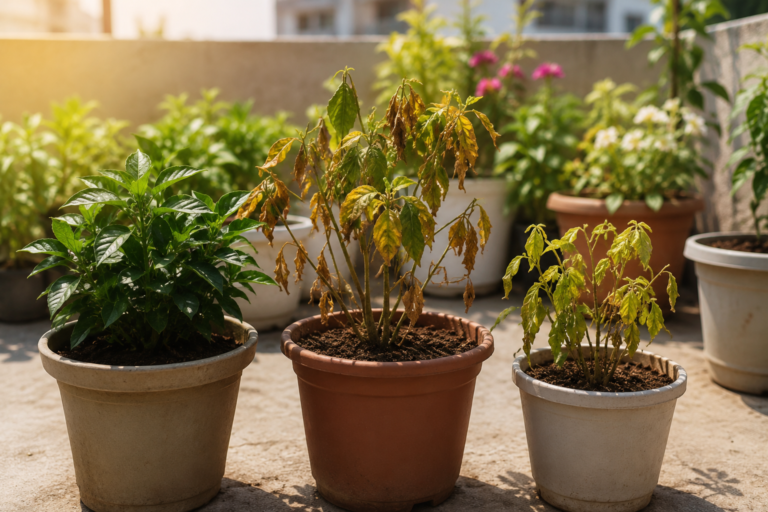
Before you up-pot, whether it’s a newly purchased nursery plant or an established plant already growing in your garden, first make sure it actually needs a new pot. A plant growing slowly, soil drying too fast, water running straight through, or roots appearing from the drainage holes can make you think it is time to repot—but you need to look at what is happening around the root ball first.
These signs help you decide whether you really need to up-pot or whether the plant can stay in its current pot a little longer. Once you know that, choosing the right pot size becomes much easier.
For newly purchased nursery plant:
Don’t rush to repot a newly purchased nursery plant right after bringing it home. Give the plant 2–3 days to settle into your garden conditions first, especially when you are moving it from a nursery into a balcony or terrace garden.
Then start inspecting it. If you brought the plant in a black nursery bag, check the bottom or drainage holes and see whether tiny roots are peeking through. If there are no roots coming out and the grow bag is still unstable, you can simply pot it into a same-sized pot, loosening the roots gently.
If the red soil around the root ball is tightly compacted, you can soak and carefully remove the compacted soil before planting it into the same-sized pot with a well-draining, airy soil mix and less organic matter.
The same idea applies to nursery plants already growing in pots. If you don’t see roots circling the bottom or coming through the drainage holes, there may be no need to immediately up-pot. You can loosen the compacted root ball, clean the pot if needed to avoid carrying over pest issues, and plant it back into the same-sized pot.
If you do see roots circling the bottom or peeking through the drainage holes, then it may be time to give the plant more root space. I’ll guide you through choosing the right pot size in the upcoming section.
For an established container plant:
If the plant is already growing in your garden, you may notice some changes before you even take the root ball out of the pot.
The growth may become slow, there may be little or no new growth or flowering, and the soil may start drying much faster than usual because the root ball has less space to hold moisture. In balcony and terrace gardening, these changes can become more noticeable during hot weather when pots already dry faster.
Before taking the root ball out of the existing pot, first check the bottom drainage holes for roots peeking through. Also observe how watering behaves. Does the water run straight through the pot? Is the soil drying much faster than it used to? Are you watering more often even though the plant’s basic conditions have not changed?
If you see these signs together, the plant may be ready for more root space, and you can consider up-potting it. I’ll guide you through choosing the right pot size in the upcoming sections.
A tall plant, a bushy fuller plant, or a plant that has stayed in the same pot for a long time does not necessarily mean it needs repotting. It’s not simply the plant you need to look at—it’s the roots and the soil behaviour that show you whether the current pot is still suitable.
Spot over-sized pot with this simple signs:
Sometimes the problem goes in the opposite direction. A pot can be too large for the plant, and you can often notice it from these simple signs:
- A smaller root ball sitting inside a much bigger pot with excess soil volume around it.
- Soil taking days to dry even when the pot has good drainage and the growing medium is well-aerated.
- A small plant sitting in a very spacious container while the soil around the root ball stays wet for too long, with the plant frequently developing brown or black areas.
Plant size can tell you how the plant is growing, but the roots decide how much pot space it actually needs.
So before choosing a bigger pot just because the plant looks bigger, first understand what is happening around its root ball. Once you can read these signs, choosing the right pot size for your plant becomes a much more practical decision.
Your plant may not be the problem — the pot could be working against it. Find out why some pots fail: Why Some Pots Fail in Container Gardening
Why Does the Right Pot Size Depend on the Plant's Current Root Space?
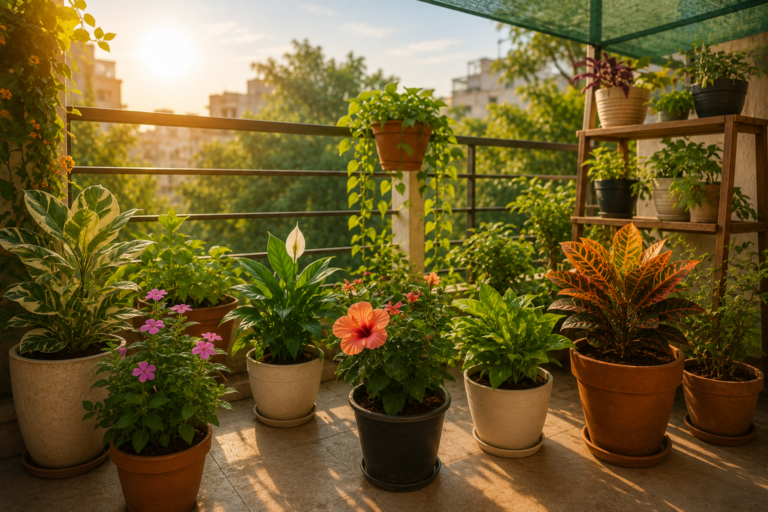
You may see huge plants growing in the ground, but if you ever have to dig them up, you’ll notice something interesting: their roots can spread widely around the plant instead of simply growing straight down. That’s also why builders often avoid planting large, heavy-rooted trees too close to houses, compound walls, or underground pipelines—the roots can travel much farther than the plant above the soil suggests.
In pots, this root behaviour changes because there is no unlimited space for the roots to spread. The container creates a boundary. As the roots reach the sides and bottom, they start growing around the available space and can become tightly packed or root-bound.
That means the roots use the available space inside the pot as much as they can, and eventually the plant may outgrow that container. This is where we need to give the roots a new, slightly bigger home rather than simply giving them the biggest pot we can find.
Consider your current plant has a root ball that is around 2 inches across. That root ball needs some balanced space around it to continue growing. The new pot should not be almost the same size as the root ball, but it also doesn’t need to be a huge container with several inches of unused soil around a small root system.
That surrounding soil volume matters because it affects how much moisture the pot can hold, how quickly it dries, and how much space is available for the roots to explore. The right-sized pot gives the root ball enough room to expand while keeping the amount of surrounding soil reasonably balanced.
What can happen when the pot is too small:
A pot that is too small leaves very little growing medium around the root system. As roots occupy most of the available space, there is less soil volume to temporarily hold water and nutrients for the plant.
Think of a healthy potting mix as a small reservoir. After watering, the growing medium holds some moisture, and the roots gradually absorb what they need. When there is very little soil volume left around a crowded root system, that moisture reserve can become much smaller.
The soil volume also helps buffer the root environment. It holds moisture and nutrients around the roots and gives the plant a little more room to access what it needs between watering cycles.
When that available soil volume becomes too small, the plant may start showing signs such as soil drying very quickly, needing water more frequently, slow or stunted growth, wilting, or generally struggling during hot weather.
This can become especially noticeable in balcony and terrace gardening, where containers can already lose moisture quickly under strong Indian sunlight and heat.
What can happen when the pot is too large:
This is a very common mistake among gardeners, including my past self. I also used to think that a bigger pot meant less watering, fewer repotting cycles, and more space for the roots.
But it doesn’t always work that way.
If the root ball is around 2 inches and the pot is 10 inches, you essentially have a tiny root system sitting inside a very large volume of soil and organic matter.
To understand what happens here, remember that soil can dry naturally even without roots, but how quickly it dries depends on the weather, temperature, airflow, sunlight, and the properties of the growing medium. A plant also pulls moisture from the soil through its roots—but how much it can use depends on its current growth stage, root size, and root development.
So it’s not simply “big plant = more water.” The root system has a major role in how much moisture the plant can actually use from that container.
When a small root ball is placed inside a much larger pot, a lot of the surrounding soil may not yet be occupied by roots. That unused soil can stay moist for much longer, while the soil immediately around the active root zone may behave differently.
This can create a situation where one pot has different moisture behaviour in different areas: the soil around the roots may be drying while the unused soil farther away is still holding plenty of moisture.
That excess moisture can keep the growing medium wet for too long. If the conditions remain damp, fungal problems and root stress can become more likely, especially when the root zone does not have enough air-filled space.
And then there is the feeding side.
More soil also means more total growing medium. If you add large amounts of compost, manure, or fertilizer to a disproportionately large pot, you may end up providing far more nutrients than the small root system can use at that stage. That can create an unnecessarily strong root-zone environment and contribute to root stress or fertilizer burn.
This is why “the plant will eventually grow into this huge pot” is not always a good reason to choose one.
The goal is not to fill the plant’s future with soil today. The goal is to give its current root system enough balanced space to grow.
We’re getting closer to understanding what that right amount of root space and surrounding soil actually looks like. Let’s use that to choose the right pot size in the next section.
If your container plants stopped growing suddenly, check the soil before blaming sunlight or fertilizer. Read: Plants Not Growing in Pots? Check Your Soil First
How Do You Choose the Right Pot Size for a Plant?
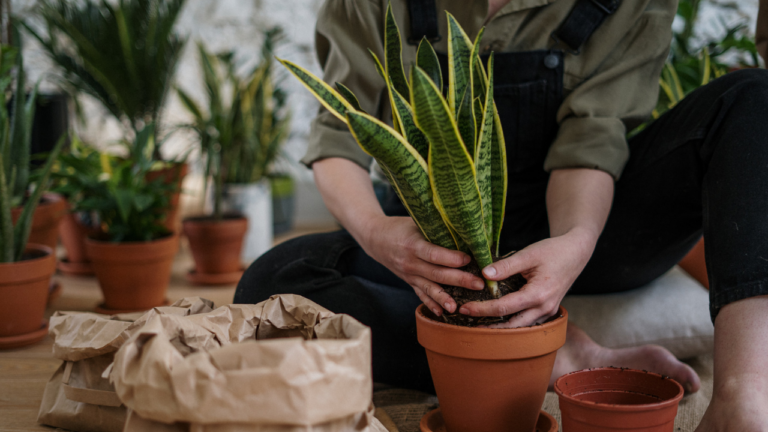
The rule I’m using for all my new planting, whether it’s a nursery plant or an existing plant that needs repotting, is my 2-inch bigger than the root ball rule. It’s my golden rule for maintaining a balanced soil environment around the roots.
I mostly stick to this because plants usually take months to outgrow their available root space. I don’t mind repotting them a little earlier if it helps reduce the chances of overwatering and overfeeding issues that can happen when there is too much unused soil around the roots.
Still, some fast-growing root types can make this rule harder to follow. For those plants, I may choose a pot around 3 or 4 inches bigger than the root ball, but I monitor the watering more carefully. I check the soil before watering and double-check that both the pot and soil are draining well so moisture doesn’t stay around the roots for too long.
This 2-inch-bigger rule is especially helpful for smaller seedlings and saplings. Until their roots establish and become thicker and more developed, they can be more sensitive to excess moisture around the root ball, so the risk of rot can be higher.
The rule is also easier for beginners to apply. And remember, when I say 2 inches bigger, I’m talking about the actual pot dimensions—depth, height, and diameter—not just the label saying “4-inch pot” or “6-inch pot.” Pot labels can vary, so if you already have pots at home, you can use them to understand the difference.
Put the existing pot into the next pot and look at the gap between them. If you can roughly see a 2-inch space around the existing pot, that gives you a simple visual idea of what a larger container looks like.
You can also check this Short to see what that 2-inch gap looks like in practice.
For a newly purchased nursery plant, this slower 2-inch-bigger-than-root-ball approach gives you room to up-pot gradually as the plant grows. Nursery plants are already adjusting to a new climate and environment after leaving the nursery. If they are also going through planting stress, putting them straight into a much bigger pot can increase the amount of moisture around the root zone.
Stressed roots may absorb water more slowly than usual. If you place that small root ball into a much larger volume of soil, there is simply more soil holding moisture around it, which can leave the root zone wetter for longer and reduce the healthy air space around the roots.
And with the signs I mentioned in the previous section, you already know how to recognize when a plant has actually outgrown its pot.
If your plant is not showing those signs, you don’t need to up-pot just because you bought a new pot or because the plant looks bigger. For a newly purchased plant with a compacted root ball, you can gently soak and remove the compacted soil when appropriate and plant it into a suitable-sized pot.
If an established plant is growing normally and showing no signs of being outgrown, just leave it alone. Keep watering balanced, give it the right amount of sunlight, and feed organic fertilizer at appropriate intervals. That’s it.
Because roots don’t particularly enjoy unnecessary disturbance. Up-potting or repotting just for aesthetics, or simply because the plant has become bigger above the soil, can disturb and stress the root system when it doesn’t actually need more space.
If the roots have occupied almost the entire available pot and there is no longer enough surrounding soil space for healthy root growth, yes, it’s time to repot. If there is still enough balanced space around the root ball, there is no need to rush.
And pot size can be upgraded gradually as the plant grows. You don’t need to make a huge jump to the final pot size, and you also don’t want to leave a genuinely outgrown plant sitting in the same container for months.
Give the roots the space they need now, then give them more space when they actually need it. That balance is what makes pot-size decisions much easier.
🌱 Healthy growth starts with the container itself — not the care routine. Click to uncover the overlooked truths
What Should You Do After Choosing the Right Pot Size?
Choosing the right pot size is not about finding the biggest pot your plant can eventually grow into. It’s about giving the roots the right amount of space right now.
Whether you brought a new nursery plant home or you already have an established plant in your balcony or terrace garden, first look at the root space, check whether the plant actually needs more room, and then choose the next suitable pot size. Don’t choose based only on how tall, bushy, or attractive the plant looks.
Once you choose the pot, observe how the plant and soil behave. Is the soil drying at a balanced speed? Is the plant growing normally? Is the pot holding too much moisture? These simple observations tell you whether the pot size is working well for your plant in your Indian gardening conditions.
And remember, the right pot size today doesn’t have to be the final pot size forever. As the roots grow and occupy the available space, you can slowly upgrade the pot instead of making a huge jump.
If you want to understand container gardening beyond pot size, you can continue with my Container Gardening Guide. Once you know the size, you can also learn which pot material is good for plants. And if your plant still struggles even after choosing the right size, learn how to tell if your pot is causing the problem.
You don’t need to predict your plant’s entire future growth. Just understand how much space its roots need right now—and give them that much.
🪴 Most beginners fail because they skip the basics. Don’t make that mistake. See the step-by-step container gardening guide
FAQ:
What size pot should I use for a newly bought nursery plant?
Don’t rush to move a nursery plant into a huge pot as soon as you bring it home. Give it a few days to settle into your balcony or terrace garden, then check the root ball and drainage holes. If the roots need more space, my simple rule is to choose a pot around 2 inches bigger than the root ball and up-pot gradually as the plant grows.
How do I know if my plant needs a bigger pot?
Look at the roots and soil behaviour, not just the plant above the soil. Roots coming through drainage holes, roots circling the pot, very fast soil drying, slow growth, or the plant becoming unstable can indicate that the current pot is becoming too small. If the plant is growing normally and there is still enough root space, there is no need to rush.
Should I choose a pot based on plant height?
No. Plant height, foliage, or how bushy the plant looks doesn’t tell you exactly how much pot space it needs. Root size, root type, growth stage, and moisture needs matter more. A tall plant can still be comfortable in its current pot if the roots have enough space.
Is a bigger pot always better for container plants?
No, and this is one of the easiest beginner mistakes. A very large pot creates more unused soil around a smaller root system, which can hold moisture for longer and increase the risk of root stress. The goal is not to give the plant the biggest possible home, but a balanced amount of soil and root space.
How much bigger should my plant’s new pot be?
My simple rule is around 2 inches bigger than the current root ball for most regular up-potting. Some fast-growing root systems may need around 3–4 inches more, but they need closer attention to soil moisture and drainage. Also, check the actual pot dimensions rather than relying only on labels such as “6-inch pot” or “8-inch pot.”
Can I keep my plant in the same pot if it is growing well?
Yes. If your plant is growing normally, the soil is behaving well, and the roots still have enough available space, there is no reason to disturb it simply because it has become bigger above the soil. Roots don’t need to be disturbed just for aesthetics. Let the plant continue growing and upgrade the pot when the roots actually need more space.