Morning sun isn’t always better. Afternoon sun isn’t always harmful either. The real difference lies in how sunlight affects your container plants, and understanding that can save you from yellowing leaves, dry soil, stressed roots, and unnecessary plant losses.
Read the full blog to discover how morning and afternoon sun behave on Indian balconies and terraces, which one your potted plants actually need, and how to choose the right spot before moving your containers.
Healthy plants need the right quality and duration of light—not just an outdoor spot. Discover what’s missing: Why Your Container Plants Aren’t Getting Enough Light
A lot of gardeners, including my past self, believe that morning sunlight is always better for container plants. That isn’t entirely wrong. But it’s also not the complete picture.
Before I really understood how sunlight changes throughout the day, I used to think, this sun is good, that sun is bad. If a plant struggled on my balcony or terrace, I’d simply move it somewhere else without understanding what was actually happening.
Some of you might even think all sunlight is the same. Not even close.
Sunlight is different based on its intensity, pattern, and duration. Intensity is how harsh or gentle the sunlight feels. Pattern is how the sunlight reaches your balcony or terrace, whether it’s blocked, filtered, or uninterrupted by nearby buildings, walls, trees, or railings. Duration is simply how many hours your container plants receive sunlight.
Without understanding these differences, it’s easy to label a spot as full sun, partial sun, or indirect sunlight and expect every potted plant to grow well there. That’s usually where the confusion begins. One container plant thrives in the exact same spot while another develops yellow leaves, dry soil, weak roots, slow growth, or constant stress despite your best beginner plant care efforts.
Before deciding whether morning sun or afternoon sun is better for your balcony or terrace plants, it’s worth understanding how each one behaves under Indian gardening conditions. Once I learned this, I stopped moving pots around based on guesswork and started placing plants where they actually performed better.
What Are the Signs My Potted Plants Are Getting Too Much Afternoon Sun?
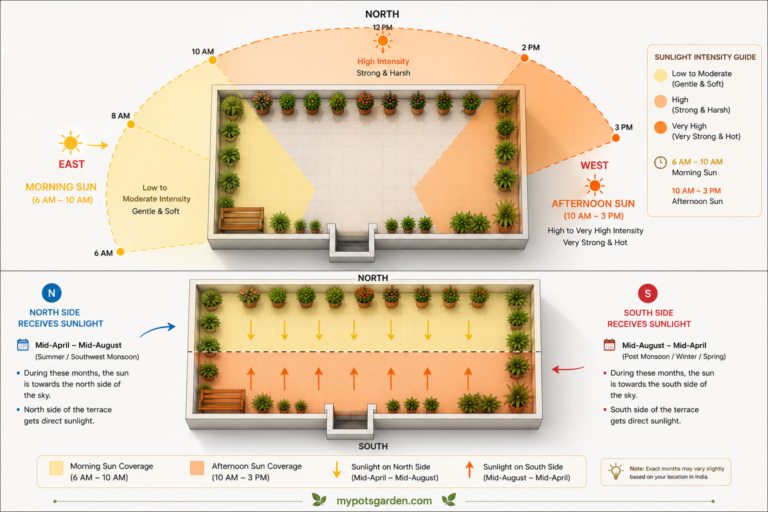
To understand this you need to know how morning and afternoon sun works. The above image explains how sunlight works. See the image before you read this section.
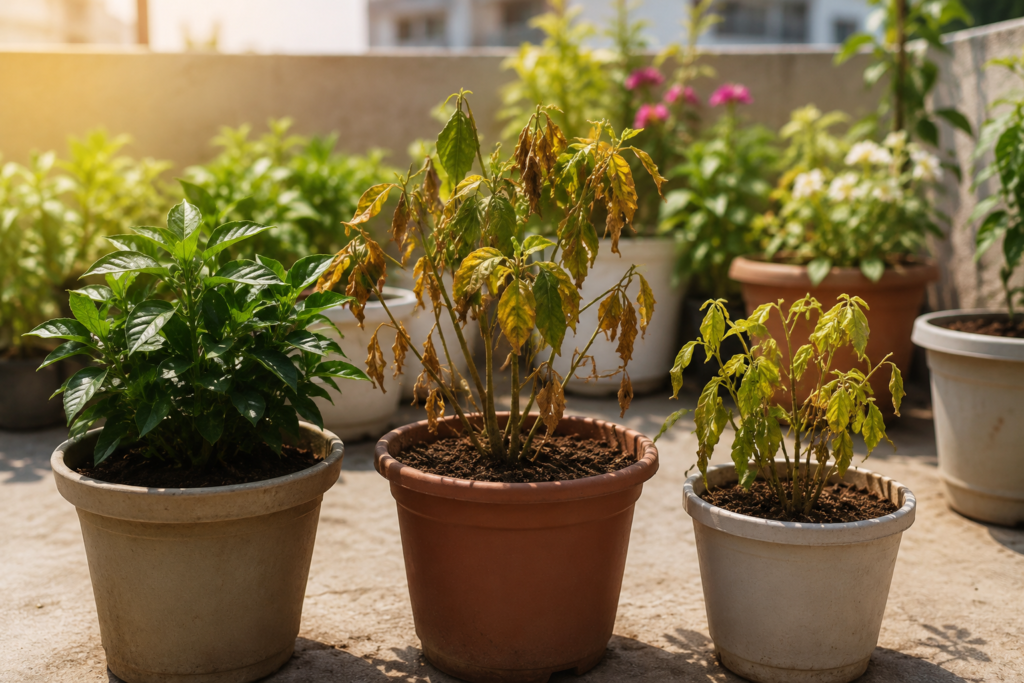
If your container plants look healthy in the morning but start struggling after noon, the problem may not be watering at all. In many Indian balconies and terraces, the difference between morning sun and afternoon sun is much bigger than most beginners realize. Understanding this one difference can help you prevent crispy leaves, dry soil, heat stress, and even plant loss.
Morning sunlight, if the sky is clear and the day is sunny, usually gives around 4 hours of uninterrupted gentle sunlight (6 AM–10 AM). After around 10 AM, the sunlight gradually becomes more intense.
Afternoon sunlight, to be more exact, reaches its peak between 12 PM and 3 PM. But under Indian gardening conditions, I also consider 10 AM to 12 PM as part of the harsh afternoon heat because you can already feel the intensity increasing. So, those 5 hours of strong sunlight, with 3 hours of peak heat, are what usually create sun scorching, heat stress, and moisture imbalance in potted plants.
One more thing I learned while growing plants on my terrace. If your house is east-facing, the south side of your balcony or terrace receives stronger sunlight for roughly half the year, while the north side receives stronger sunlight during the other half as the sun’s seasonal path changes. Understanding this alone can completely change where you place your pots throughout the year.
This is one advantage of container gardening. Unlike plants growing in the ground, you can move your pots whenever needed. If you identify the following signs early, you can often save your plants before heat stress becomes permanent.
Why Are My Plant Leaves Turning Brown or Crispy?
Indian balconies and terraces have another problem besides direct sunlight—they store heat.
Concrete floors, nearby walls, and terrace surfaces absorb heat throughout the day and slowly release it back. For container plants, this means the pot and the soil are heated not only from above by sunlight but also from below by the hot floor. That’s why simple things like pot stands, bottom trays, or slightly raising the container make a noticeable difference.
When the soil temperature rises, it loses moisture much faster. At the same time, sunlight increases water loss through the leaves. The water inside the leaf veins evaporates quickly while the soil is already drying because of the surrounding heat.
This combination dehydrates the plant faster than watering can keep up. Since the leaf edges receive water last, they are usually the first part to become brown, dry, and crispy.
Why Does My Potting Soil Dry Out So Quickly Every Day?
Dry soil isn’t caused by sunlight alone.
Several things work together, including your potting mix, how much water the amendments can hold, your balcony’s microclimate, wind exposure, humidity, and even the material of the pot.
In my experience, there are usually three different heat sources causing this problem.
The first is floor heat and nearby concrete surfaces, which heat the pot itself and gradually dry the soil from below.
The second is direct sunlight, which increases evaporation from both the soil surface and the leaves. As plants lose more water, they pull more moisture from the soil, making the pot dry even faster.
The third is hot, dry wind with low humidity, which removes moisture from the soil much faster than many beginners expect.
Pot material also plays a huge role. Clay pots lose moisture much faster because they are porous, while plastic, grow bags, glazed ceramic, or other non-porous containers usually retain moisture for longer.
Why Do Healthy Plants Suddenly Wilt in the Afternoon Even After Watering?
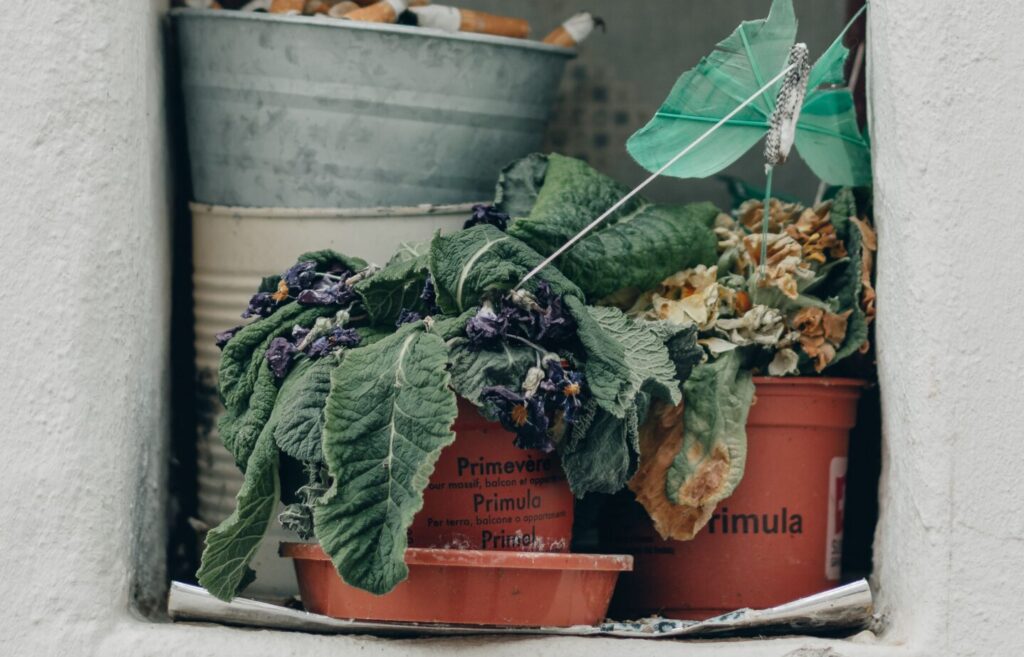
If your plants look perfectly healthy in the morning, recover again by evening, but keep wilting only during the afternoon, that’s usually heat stress, not necessarily underwatering.
The plant is simply losing water faster than it can replace it.
During intense afternoon heat, moisture evaporates so quickly that the roots don’t always get enough time to absorb water before more is lost. Even the water already inside the leaves disappears faster because of the high sunlight intensity.
As a result, the plant temporarily loses turgor pressure, causing leaves to droop or wilt even though the soil was watered earlier.
This usually happens when the plant is exposed to more heat than it can comfortably tolerate.
Even healthy sun-loving plants can struggle under Indian summers. Our temperatures regularly cross 33°C, and in many places reach 40°C or more. During September 2025, my own terrace touched around 40°C, so I’m definitely not exaggerating how intense Indian sunlight can become.
Whenever you notice early signs of sun scorching or heat stress, don’t wait. Simply moving the pot slightly or adding a shade net can often prevent much bigger problems later.
Which Common Balcony Plants Prefer Gentle Morning Sun Instead of Harsh Afternoon Sun?
In general, foliage plants, indoor houseplants grown outdoors, and delicate ornamental plants usually perform much better in gentle morning sunlight than in harsh afternoon heat.
This isn’t because they love shade. It mostly depends on how much energy the plant needs from photosynthesis.
Flowering plants, fruiting plants, and vigorous growers require more sunlight because they need more glucose to support new growth, roots, flowers, and fruits.
Foliage plants usually need less energy compared to flowering or fruiting plants. On the other hand, succulents and semi-succulents store water inside their thick, fleshy leaves, allowing them to tolerate stronger sunlight much better.
Plant age matters too.
Seedlings and young saplings cannot handle intense heat as well as mature plants, so gentle morning sunlight is usually the safest option while they establish strong roots.
One thing I’ve learned over the years is this—no plant enjoys excess heat.
Even full-sun plants can struggle when the temperature becomes too high and the water balance inside the plant starts breaking down. Instead of blindly following plant labels, watch how your plant responds after placing it in its ideal spot.
If it shows signs of light deficiency, slowly move it towards more sunlight. If it starts showing sun scorching, crispy leaves, or afternoon heat stress, move it back before permanent damage happens.
Your plants will always tell you what they need—you just have to learn how to read the signs.
Brown leaf edges, scorched leaves, and wilting may be signs your container plants are getting too much sun. Learn more: Signs Your Container Plants Are Getting Too Much Sun
Why Does Afternoon Sun Affect Container Plants More Than Morning Sun?
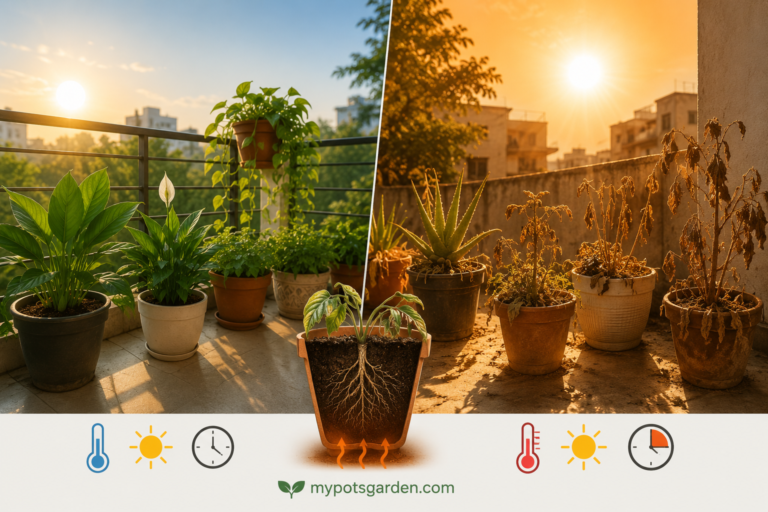
Many beginners think sunlight is just sunlight. I used to think the same. But once I started observing my balcony plants closely, I realized morning sun and afternoon sun behave very differently, especially for container plants.
To understand why afternoon sun affects potted plants more than morning sun, you first need to understand how these two types of sunlight behave. Morning sunlight before 10 AM is usually gentler, lower in intensity, and available for a shorter period. Afternoon sunlight, on the other hand, lasts longer and becomes much more intense. That difference alone can decide whether your container plants stay healthy or start showing heat stress.
Why Do Pots Heat Up Faster Than Garden Soil?
It’s not just because of direct sunlight.
One thing I slowly realized while gardening is that the floor itself becomes a heat source. Indian balconies and terraces are mostly built with concrete or tiles. These surfaces absorb sunlight throughout the day and then release that heat back into the surroundings.
The nearby walls, railings, grills, and even terrace parapets do the same thing.
All this surrounding heat gradually warms the pot, increasing the temperature inside the potting soil. Once the soil heats up, it starts losing moisture much faster. At the same time, direct sunlight makes the leaves lose water through evaporation.
Now both things are happening together.
The soil is drying from below because of the heated floor, while the plant is losing moisture from above because of sunlight. This moisture loss often happens faster than your watering can replace it, which is why heat stress becomes much worse during the afternoon.
How Does the Direction of My Balcony or Terrace Change Sun Intensity?
The direction of your balcony or terrace also changes how much sunlight your plants receive.
The east side usually receives gentle morning sunlight, while the west side gets stronger sunlight from around 3 PM to 6 PM, which is often much hotter.
Then there are the north and south sides, and this is where many beginners get confused.
Under Indian gardening conditions, the sun’s position changes throughout the year. During one part of the year, the north, northeast, and northwest sides receive longer hours of direct sunlight. During the other part, the south, southeast, and southwest sides receive more intense sunlight as the sun shifts its seasonal path.
Your house direction, nearby buildings, trees, compound walls, and even neighboring apartments all influence this pattern. That’s why sunlight on your balcony isn’t fixed—it changes with both the seasons and your surroundings.
Why Does the Indian Summer Afternoon Feel Much Harsher for Potted Plants?
For me, it mainly comes down to two things working together—direct sunlight and floor heat.
Everything else, like pot size, pot material, airflow, soil amendments, and watering schedule, only increases or reduces their effect.
Most of us simply place our pots directly on the terrace floor. During Indian summers, those concrete surfaces can become extremely hot, especially when temperatures reach 40°C or more.
That heat transfers directly into the container.
Plastic pots, metal containers, and many repurposed pots heat up much faster than we usually expect. Once the container becomes hot, the soil temperature rises quickly, making it even harder for roots to stay cool and retain moisture.
That’s why the same afternoon sunlight often feels much harsher than the morning, even when the total sunlight hours don’t seem very different.
Why Can the Same Plant Handle Morning Sun but Not Afternoon Heat?
Morning sunlight before 10 AM is much less intense. You don’t even need gardening tools to notice this.
Simply open the weather app on your phone and watch how the temperature changes throughout the day. The increase from morning to afternoon is enough to explain why the same plant behaves differently.
As afternoon sunlight becomes stronger, the heated floor adds even more warmth to the potting soil.
Now the plant starts losing moisture much faster than it can absorb it.
Miss one watering during a hot day, and even a healthy plant may suddenly wilt by afternoon. That doesn’t always mean the plant dislikes sunlight—it often means the heat has become greater than the plant can comfortably handle.
Understanding this difference between morning sun and afternoon sun makes it much easier to choose the right place for your container plants instead of moving them around by trial and error. In the next section, we’ll look at simple ways to reduce afternoon heat stress without giving up the sunlight your plants still need.
Not all plants need full-day sun. Discover how to match sunlight to your container plants: How Much Sunlight Do Container Plants Need?
How Can I Choose the Best Sunlight for Balcony and Terrace Container Plants?
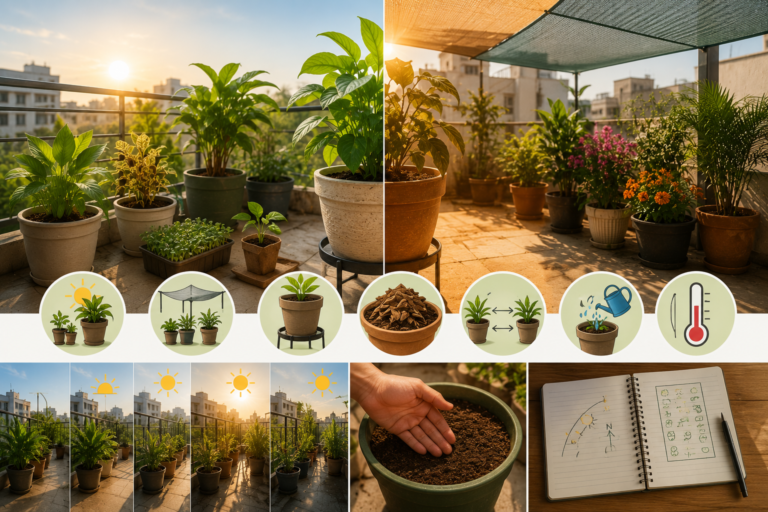
Which Plants Grow Best in Morning Sun?
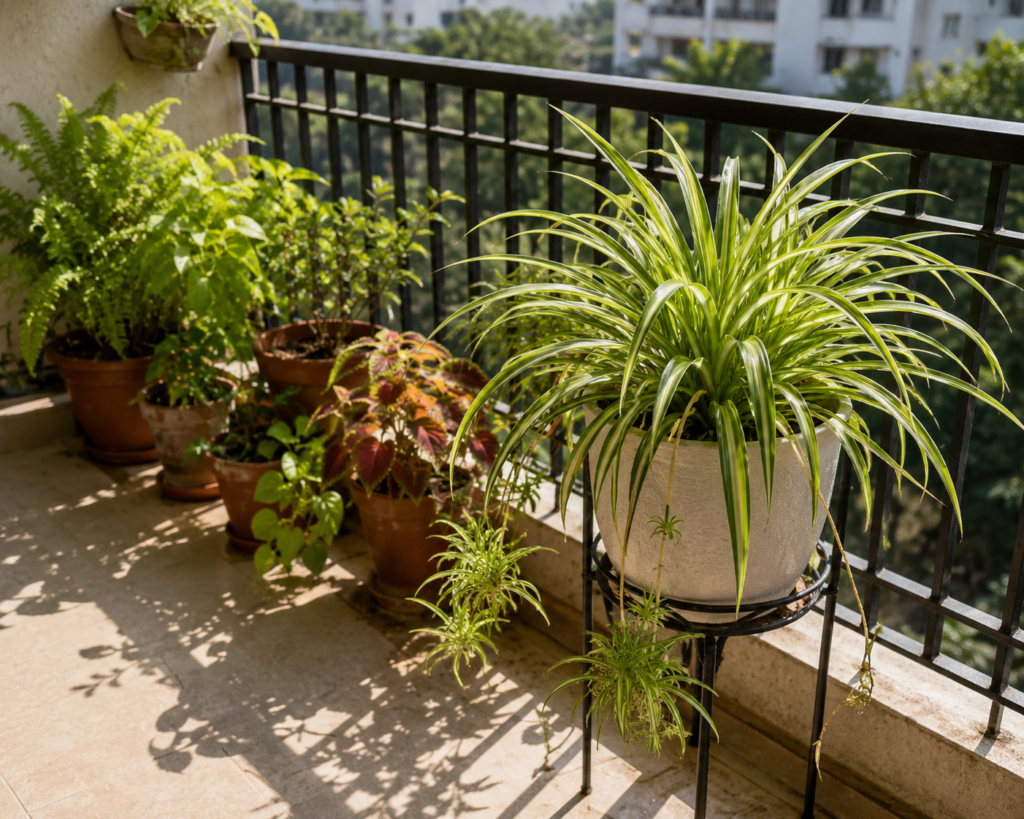
If your balcony or terrace gets around 3–4 hours of morning sunlight, that space is ideal for many foliage plants, houseplants, seedlings, saplings, and microgreens. Most of these plants enjoy the gentle morning light without having to deal with the harsh afternoon heat.
These plants generally have lower sunlight requirements.
On the other hand, flowering plants, herbs, leafy greens, and most vegetable plants usually need 5–6 hours or more of direct sunlight for healthy growth. But remember, needing more sunlight doesn’t mean they enjoy scorching afternoon heat. There’s a difference between getting enough sunlight for photosynthesis and being exposed to excessive heat that stresses the plant.
Succulents and drought-tolerant plants can handle stronger sunlight much better because they store water inside their thick leaves. Even then, floor heat is something many plants don’t tolerate well. When the container and soil become too hot, moisture disappears quickly, creating an unhealthy imbalance inside the potting soil for both roots and beneficial soil life.
When Is Afternoon Sun Still Safe for Container Plants?
Afternoon sun isn’t always harmful.
If you reduce its intensity using shade nets, old cotton sarees, or other breathable shade materials, improve airflow around the plants, and avoid placing containers directly on the hot terrace floor, many plants can safely receive afternoon sunlight.
Season also makes a difference.
During late monsoon, winter, and cooler months, afternoon sunlight is usually much less intense than during peak summer. On cloudy days, many plants can comfortably handle it.
But one thing I’ve learned from Indian weather is not to trust the season completely.
Even during the monsoon, an unexpectedly hot sunny day can suddenly raise temperatures much higher than you expect. So instead of relying only on the calendar, keep observing how your plants respond.
Filtering the sunlight is often more effective than avoiding it completely.
How Can I Protect Pots From Harsh Afternoon Heat Without Moving Them Every Day?
You don’t always have to keep shifting your pots around. A few simple changes can make a huge difference.
- Arrange plants with enough spacing to improve airflow.
- Use shade nets, cotton cloth, or an old saree to reduce harsh sunlight intensity.
- Raise containers using pot stands or bottom trays to reduce heat transfer from the floor.
- Avoid placing pots right next to hot walls, grills, or reflective surfaces.
- Apply mulch like coconut husk chips or dry leaves to slow moisture loss.
- Check soil moisture regularly and water before it becomes completely bone dry.
- If possible, increase humidity around the growing area instead of frequently spraying water on the leaves, which usually gives only temporary relief.
Small changes like these often reduce heat stress much more than constantly moving every pot.
How Do I Test Whether My Balcony Gets Morning Sun, Afternoon Sun, or Both?
The easiest tool is simply observation.
Spend one or two days watching your balcony or terrace. Take a photo of the same spot every hour from 6 AM to 6 PM.
Those photos will tell you almost everything.
You’ll know how many hours of sunlight the spot receives, whether it’s morning sun, afternoon sun, or both, and how the sunlight pattern changes throughout the day.
To get a rough idea of sunlight intensity, place an empty pot filled with potting soil in that location. As the day progresses, touch the soil and container carefully. You’ll quickly notice how much the pot heats up compared to a shaded area, giving you a practical idea of how intense that location really becomes.
Keep in mind that sunlight patterns change with the seasons and the sun’s position. A reading you take today will usually stay fairly accurate for the next three to four months, but it won’t remain exactly the same all year.
The more you observe your garden over different seasons, the less you’ll rely on guesswork. After one full year of watching how sunlight moves across your balcony or terrace, you’ll know exactly where each plant will be happiest without having to experiment every summer.
🌞 Your balcony may look bright — but is it truly “plant-bright”? Find out how to measure sunlight correctly
So, Is Morning Sun Always Better Than Afternoon Sun for Container Plants?
Not exactly.
Sunlight cannot simply be categorized as good or bad. What matters is its intensity, duration, and how your particular plant responds to it.
Plants need sunlight for photosynthesis, where they produce glucose. That glucose fuels root growth, new leaves, flowering, fruiting, and overall healthy plant growth.
But photosynthesis doesn’t depend on sunlight alone.
It also needs water and carbon dioxide. When a plant is placed in excessive afternoon heat, it loses moisture much faster. As the soil dries and the plant becomes dehydrated, that balance begins to break down. That’s when you may notice slow growth, drooping leaves, heat stress, or other common potted plant problems, even if the plant is technically getting enough sunlight.
The goal isn’t to avoid sunlight.
The goal is to understand the sunlight available in your balcony or terrace—its pattern, duration, and intensity—and then choose plants that suit those conditions.
If your space receives mostly morning sunlight, it’s perfect for plants that prefer gentle light or need fewer sunlight hours. If your balcony receives strong afternoon sun, don’t assume you can’t grow plants there. Reduce the intensity with shade nets, improve airflow, and use the simple heat-management tips we discussed above to make that space much more plant-friendly.
Over the years, I’ve realized that successful container gardening isn’t about finding the “perfect” sunlight.
It’s about understanding what your plants need, learning to read the early signs they show, and observing how sunlight moves across your growing space throughout the year.
That’s exactly why I created this entire sunlight series—to help beginner gardeners understand sunlight step by step instead of relying on guesswork.
I hope this guide helped you see your balcony or terrace a little differently. If you’re still unsure about your sunlight conditions, explore the other blogs in this sunlight series—they’ll help you solve the rest of your container gardening sunlight questions.
Happy Gardening! 🌿
🌞 Sunlight doesn’t work the way beginners think it does in containers. Read the hard sunlight lessons here
Frequently Asked Questions About Morning vs Afternoon Sun for Container Plants
FAQ 1: Can I Grow Plants if My Balcony Gets Only Morning Sun?
Yes, absolutely. In fact, many container plants actually prefer gentle morning sunlight. Foliage plants, most houseplants kept outdoors, seedlings, saplings, and microgreens usually grow well with 3–4 hours of morning sun. If you want to grow flowering plants or vegetables, you may need a spot that receives 5–6 hours of direct sunlight. The important thing isn’t whether it’s morning or afternoon—it’s whether that sunlight matches your plant’s needs.
FAQ 2: Is Afternoon Sun Always Bad for Container Plants?
No. Afternoon sun itself isn’t bad, excess heat is the real problem. If your pots sit directly on a hot concrete terrace, the soil heats up from below while the leaves lose moisture from above. That’s why many plants struggle. Using shade nets, pot stands, mulch, and better airflow can make afternoon sunlight much safer. During cooler months like late monsoon or winter, afternoon sun is often much less harsh than it is in peak summer.
FAQ 3: How Do I Know if My Balcony Gets Too Much Sun for My Plants?
The easiest way is to observe both your plants and your space. If your plants show crispy brown leaf edges, afternoon wilting, or the potting soil dries out much faster than usual, those are signs the sunlight may be too intense. I also recommend taking a photo of your balcony every hour from 6 AM to 6 PM for a day or two. You’ll clearly see how sunlight moves, how many hours each spot receives, and which areas become the hottest. Once you understand your space, placing plants becomes much easier than relying on guesswork.